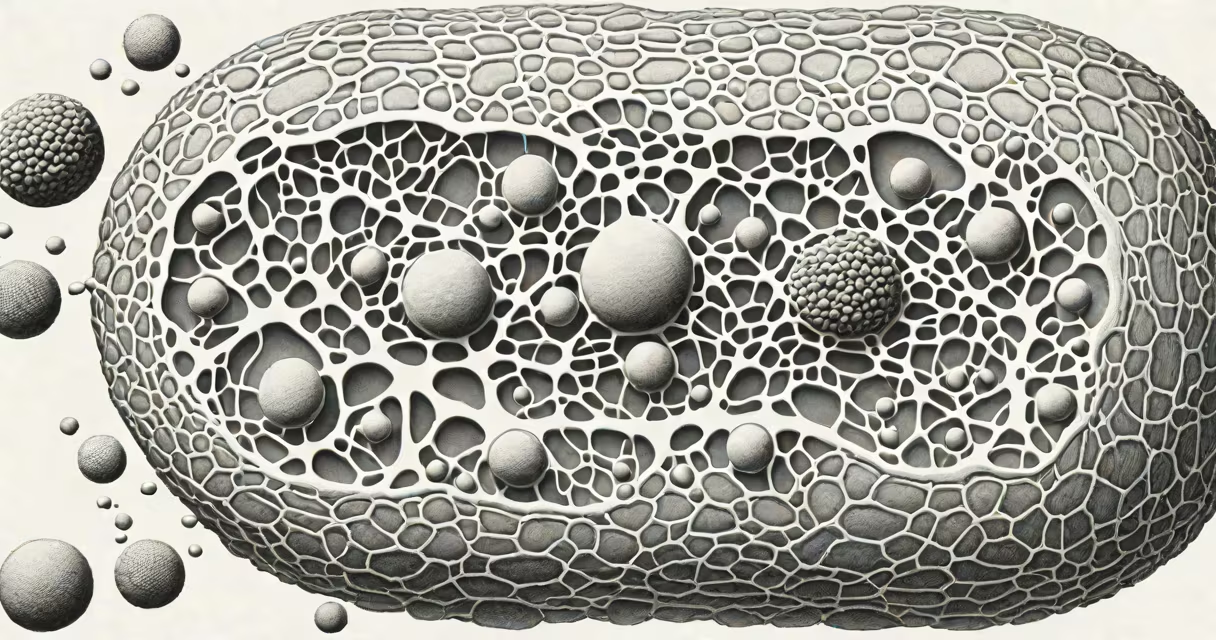
The eukaryotic cell is a biological unit characterized by a membrane-bound nucleus containing genetic material and numerous specialized organelles enclosed within membranes. This structural complexity supports advanced metabolic processes, intracellular transport, and regulated gene expression-hallmarks of multicellular life.
At its core, the eukaryotic cell differs from prokaryotes by housing DNA within a nuclear envelope. This separation allows for sophisticated regulation of transcription and translation, enabling greater cellular specialization. The presence of mitochondria, endoplasmic reticulum, Golgi apparatus, lysosomes, and a changing cytoskeleton defines the functional hierarchy of these cells.
Cellular organization in eukaryotes enables compartmentalization of biochemical reactions. For example, protein synthesis begins in the rough endoplasmic reticulum, proceeds through the Golgi for modification, and is then delivered to specific locations via vesicles. This system prevents interference between incompatible processes and increases efficiency.
Inside the eukaryotic cell, energy production occurs primarily in mitochondria. These organelles convert glucose and oxygen into ATP through oxidative phosphorylation, yielding approximately 36 ATP molecules per glucose molecule-far more efficient than glycolysis alone.
Protein trafficking follows a precise pathway. Ribosomes attached to the rough ER synthesize proteins destined for secretion or membrane integration. These proteins enter the ER lumen, fold correctly, and are transported to the Golgi apparatus. There, they undergo glycosylation and sorting before being packaged into vesicles for delivery to lysosomes, the plasma membrane, or secretion.
Autophagy-a process where damaged organelles are engulfed by autophagosomes and degraded in lysosomes-maintains cellular health. Defects in this system are linked to neurodegenerative diseases such as Alzheimer's, where misfolded proteins accumulate due to impaired clearance.
The eukaryotic cell contains several key organelles, each with distinct roles:
| Organelle | Primary Function | Membrane-Bound? |
|---|---|---|
| Nucleus | Stores DNA; controls gene expression | Yes |
| Mitochondria | Produces ATP via cellular respiration | Yes |
| Rough ER | Synthesizes proteins for export | Yes |
| Golgi apparatus | Modifies, sorts, and packages proteins | Yes |
| Lysosome | Degrades waste and pathogens | Yes |
| Cytoskeleton | Maintains shape; enables intracellular transport | No (fibrous network) |
Plant cells include additional structures: a rigid cell wall made of cellulose, chloroplasts for photosynthesis, and a large central vacuole for storage and turgor pressure. Animal cells lack these features but possess centrosomes that organize microtubules during cell division.
A notable distinction: while both plant and animal cells are eukaryotic, their organelle composition reflects differing energy sources. Plants generate ATP through both mitochondria and chloroplasts, whereas animals rely solely on mitochondrial respiration.
The eukaryotic cell forms the foundation of all multicellular organisms. In humans, muscle cells contain densely packed mitochondria to meet high energy demands during contraction. Neurons maintain extensive endoplasmic reticulum networks to support rapid neurotransmitter synthesis and release.
In plants, guard cells regulate stomatal opening using ion pumps in their plasma membranes. When potassium ions enter, water follows osmotically, causing the cell to swell and the pore to open-enabling gas exchange for photosynthesis.
One non-obvious fact: eukaryotic cells evolved from symbiotic relationships. The endosymbiotic theory explains that mitochondria originated from free-living alpha-proteobacteria that were engulfed by ancestral archaeal hosts. Evidence includes mitochondrial DNA resembling bacterial genomes and double membranes consistent with phagocytic uptake.
Research from the National Center for Biotechnology Information confirms that mitochondrial DNA is maternally inherited in humans, supporting the endosymbiotic origin. Similarly, chloroplasts share homology with cyanobacteria, reinforcing the evolutionary link.
Many assume that all cells with nuclei are eukaryotic-but this is incorrect. Some protists have multiple nuclei, yet still qualify as eukaryotes. The defining feature is not the number of nuclei but the presence of membrane-bound organelles and a nuclear envelope.
Another error: equating complexity with size. While some eukaryotic cells, like human oocytes, reach 100 micrometers in diameter, others-such as yeast cells-are smaller than many prokaryotes. Size varies widely based on function, not classification.
I once observed a live culture of *Paramecium*, a unicellular eukaryote, under a compound microscope. Its cilia beat in coordinated waves, and food vacuoles formed at the oral groove. Watching it ingest bacteria confirmed that even single-celled eukaryotes perform complex behaviors impossible in prokaryotes.
The eukaryotic cell is a highly organized biological unit defined by a nucleus enclosed in a membrane and the presence of specialized organelles. Its internal architecture enables complex functions essential for multicellularity, including regulated metabolism, protein trafficking, and controlled cell division. Understanding the eukaryotic cell clarifies the basis of animal, plant, fungal, and protist life.