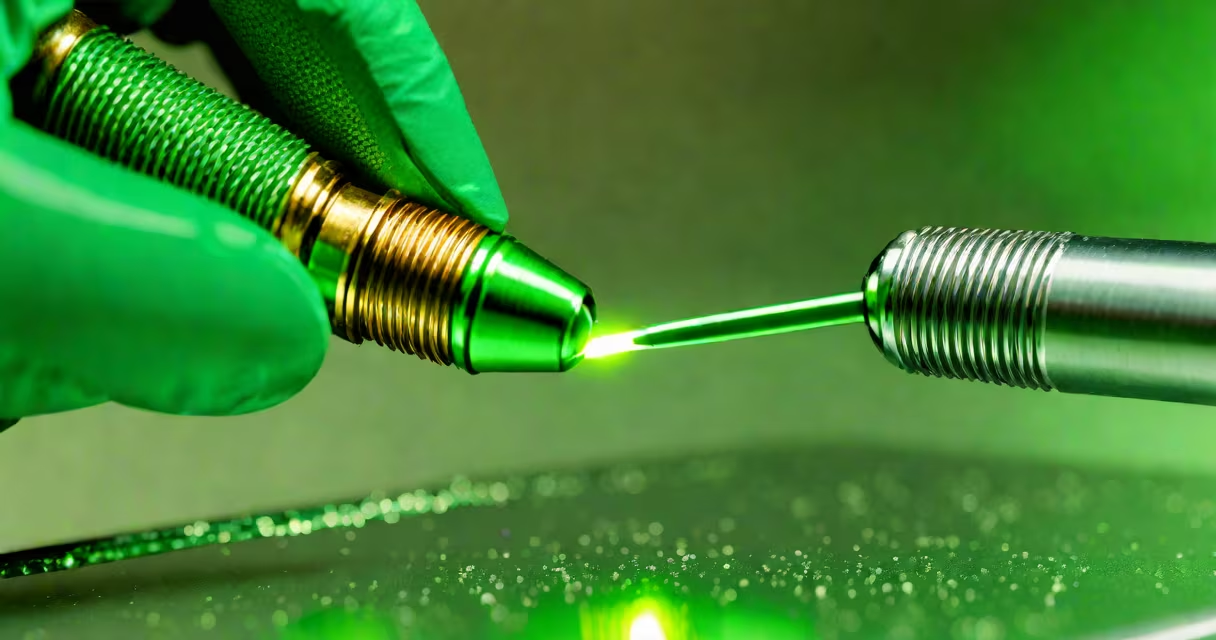
TIG tungsten for aluminum refers to the selection and use of specific tungsten electrode types-primarily pure tungsten or 2% thoriated-with proper amperage and alternating current (AC) settings to produce high-quality, contamination-free welds on aluminum alloys.
Aluminum's high thermal conductivity and oxide layer require precise control during TIG welding. The electrode must maintain a stable arc and resist contamination from aluminum's oxide residue. Using the wrong tungsten type leads to poor arc stability, excessive spatter, and weld defects such as porosity or cracking.
For aluminum, the most effective electrodes are pure tungsten (100% W) or 2% thoriated tungsten (W-Th2). These types handle AC better than ceriated or lanthanated variants, which are optimized for DC applications. Pure tungsten offers excellent arc starting and stability under AC, while 2% thoriated provides longer life and easier ignition-ideal for extended welding sessions.
TIG welding uses a non-consumable tungsten electrode to generate an electric arc that melts the base metal and filler rod. For aluminum, alternating current (AC) is essential because it alternates between positive and negative polarity, breaking up the oxide layer on the surface during the positive half-cycle and melting the metal during the negative half-cycle.
The electrode tip must remain sharp and clean. A rounded or contaminated tip causes arc wandering, inconsistent penetration, and increased risk of tungsten inclusions in the weld. Proper grinding-typically a 60° cone shape-is required to maintain arc focus and reduce heat dispersion.
Using DCEN (direct current electrode negative) with aluminum results in poor cleaning action and rapid oxidation. AC mode, typically set at 120-150 Hz with a balance control favoring the negative half-cycle, ensures consistent oxide removal and even heat distribution.
Not all tungsten electrodes perform equally on aluminum. The following table outlines key types, their recommended applications, and performance traits:
| Electrode Type | Recommended Use | Advantages | Disadvantages |
|---|---|---|---|
| Pure Tungsten (100% W) | Low to medium amperage AC welding | Excellent arc stability, low cost, easy to grind | Shorter lifespan, prone to burn-off at high currents |
| 2% Thoriated (W-Th2) | Medium to high amperage AC welding | Longer life, easier arc starting, stable arc | Radioactive-handle with care; banned in some regions |
| Ceriated (2% CeO₂) | DC welding only | Good arc start, long life, low emission | Not suitable for AC-fails to clean oxide layer |
| Lanthanated (1.5-2% La₂O₃) | DC welding only | Stable arc, good longevity, low emission | Not effective in AC mode for aluminum |
For aluminum, avoid ceriated and lanthanated electrodes unless using DC. These types lack the cleaning action needed to break down the tenacious aluminum oxide layer (Al₂O₃), which forms instantly upon exposure to air and has a melting point of ~2,050°C-higher than aluminum's 660°C.
A frequent error is using 1% or 2% ceriated electrodes for aluminum welding. While they work well on steel or stainless steel with DC, they fail under AC due to poor arc stability and inability to clean oxides effectively. This leads to incomplete fusion and weak joints.
Another misconception is that a larger diameter electrode allows higher amperage. While larger electrodes handle more current, they also spread heat and reduce precision. For thin aluminum sheets (under 3mm), a 1/16" (1.6mm) electrode is optimal. For thicker sections (6mm+), increase to 1/8" (3.2mm).
One non-obvious fact: tungsten electrodes degrade faster when used with argon gas containing moisture or impurities. Even small amounts of oxygen or nitrogen in shielding gas cause rapid electrode erosion and contamination. Always use 99.99% pure argon and check cylinder pressure before use.
To weld a 3mm thick aluminum sheet using TIG, follow these steps:
After completing the weld, inspect for uniform bead width, no undercutting, and absence of discoloration (which indicates overheating). A properly executed weld on 3mm aluminum should show a smooth, consistent profile with minimal warping.
I once repaired a custom aluminum motorcycle frame using pure tungsten and AC settings. The original weld failed due to contamination from a ceriated electrode used in DC mode. After switching to pure tungsten and adjusting the balance control, the repair passed a pressure test at 150 psi with no leaks.
Incorrect tungsten selection leads to costly rework. According to the American Welding Society (AWS), improper electrode choice accounts for 30% of TIG welding defects in aluminum fabrication. Defects like porosity or lack of fusion reduce structural integrity and compromise safety in aerospace, automotive, and marine applications.
For industrial use, AWS Standard D1.4 (Structural Welding Code-Aluminum) mandates the use of pure tungsten or 2% thoriated electrodes for AC welding. The standard specifies that electrodes must be free of cracks, chips, or surface contaminants before use.
When working with aluminum, always match the electrode type to the current type (AC vs DC), thickness, and application. Using the right tungsten prevents defects, reduces material waste, and improves weld consistency.