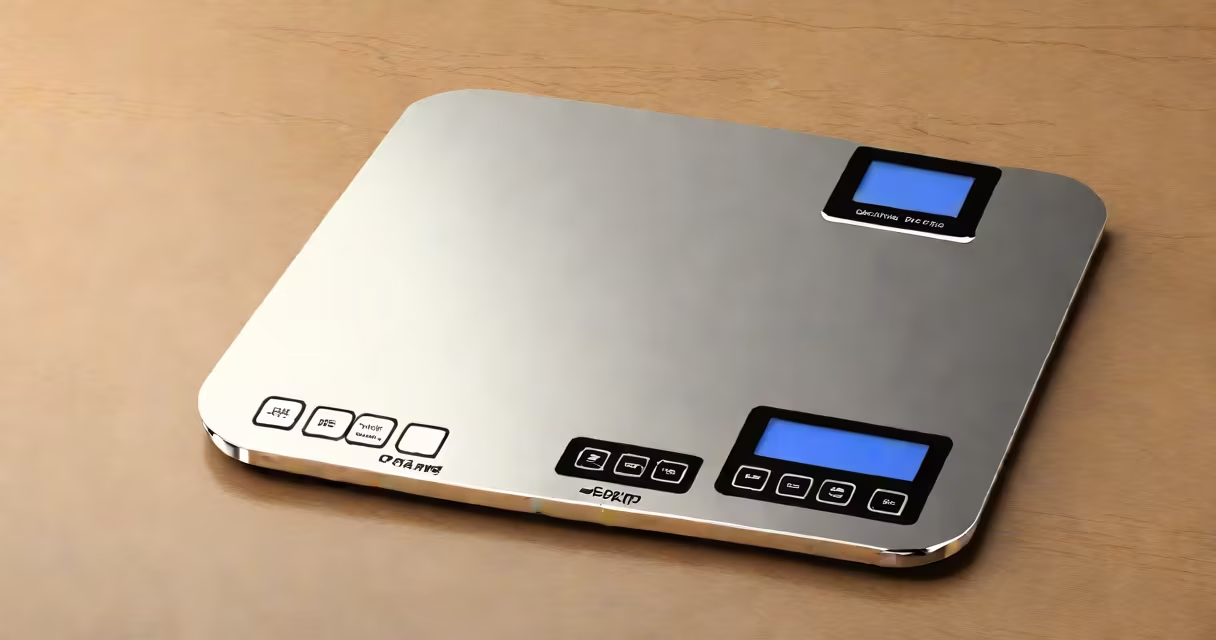
A weighing scales definition refers to a device that measures the mass or weight of an object using mechanical force, electronic sensors, or gravitational reference. These tools rely on comparing an unknown mass against a known standard or converting force into a digital readout.
Modern weighing scales operate through either mechanical use or electronic transduction. Mechanical models use levers and springs to balance weight against a calibrated counterweight. Electronic versions apply strain gauges or load cells that convert pressure into electrical signals processed by a microcontroller. Both systems require periodic calibration to maintain accuracy.
The International Bureau of Weights and Measures (BIPM) defines the kilogram as the base unit of mass, which underpins all scale measurements. National metrology institutes like NIST in the U.S. enforce standards for industrial and legal-use scales. A scale used in a pharmaceutical lab must meet stricter tolerances than one in a home kitchen.
Weighing scales determine mass by measuring the force exerted by gravity on an object. This force, called weight, is proportional to mass but varies slightly with location due to differences in gravitational acceleration. Most consumer scales assume a standard gravity value (9.80665 m/s²) to convert force into mass units.
In a spring-based mechanical scale, the object's weight stretches a calibrated spring. The displacement is measured by a pointer on a dial or a digital encoder. The greater the mass, the farther the spring extends. This principle dates back to the 18th century and remains in use for low-precision applications like luggage scales.
Digital scales use load cells-metal elements deformed under load. Strain gauges attached to the load cell detect minute changes in resistance. These changes are amplified and converted into a digital value displayed on a screen. Load cells can resolve to 0.1 grams on high-end laboratory models.
Common types differ by application, precision, and mechanism. The table below outlines major categories:
| Type | Precision Range | Typical Use | Calibration Frequency |
|---|---|---|---|
| Mechanical balance | ±0.5 g | Classroom demonstrations, historical labs | Monthly |
| Digital kitchen scale | ±0.1 g | Cooking, baking, small ingredient batches | After each use |
| Bathroom scale | ±0.5 kg | Body weight tracking | Quarterly |
| Industrial platform scale | ±10 g | Warehouse inventory, shipping | Bi-weekly |
| Laboratory analytical scale | ±0.001 mg | Pharmaceutical formulation, research | Before each use |
Each type serves distinct environments. Kitchen scales often use quartz crystal oscillators for timing strain gauge readings. Industrial scales feature IP67-rated enclosures to resist dust and moisture. Laboratory scales include draft shields to reduce air currents that affect sensitive measurements.
Every sector relying on material quantity uses weighing scales. In food production, a 500g batch of spice mix must be consistent across batches. A deviation of 2% can alter flavor profiles or trigger regulatory non-compliance. The FDA mandates that commercial food scales be traceable to NIST standards.
Medical settings depend on accurate weight measurement for dosing. A patient weighing 72 kg requires different medication amounts than one at 68 kg. In clinical trials, even 0.5 kg variation can skew results. Hospitals use hospital-grade scales with anti-vibration mounts and automatic zero-reset features.
One non-obvious fact: most bathroom scales report weight in kilograms or pounds but calculate mass based on assumed gravity. If used at high altitude-where gravity is weaker-the reading will be lower than actual mass. A scale calibrated at sea level may show 70 kg at 3,000 meters elevation when the true mass is 70.3 kg. This difference matters in scientific contexts.
People often confuse weight and mass. Weight is a force measured in newtons; mass is a property of matter measured in kilograms. A scale displays mass assuming constant gravity. On the Moon, an object weighs less but has the same mass. A scale designed for Earth would still show the same mass reading.
Another misconception is that digital scales are always more accurate than analog ones. A well-maintained mechanical balance with a 100g capacity and 0.1g resolution can outperform a cheap digital scale with a 5kg limit and 1g resolution. Accuracy depends on design, materials, and maintenance-not just electronics.
I once tested five kitchen scales labeled "0.1g precision." Only two met the stated tolerance after calibration. The others varied by ±0.5g. This happened because internal components degraded during transport. The lesson: verify performance, don't trust marketing claims.
Legal-for-trade scales must pass certification by agencies like the National Type Evaluation Program (NTEP) in the U.S. These scales are legally binding for transactions. A grocery store scale must be accurate within 0.5% of the true weight. Failure to comply risks fines and loss of license.
Non-legal scales, such as those used at home or in non-commercial labs, do not require certification. They are designed for convenience, not compliance. Their error margins are larger and not auditable.
When selecting a scale, match the function to the required precision. A recipe calling for 120g of flour demands a scale accurate to ±0.5g. A warehouse scale handling 1-ton containers needs ±1kg tolerance. Using a low-precision tool for high-stakes tasks introduces risk.