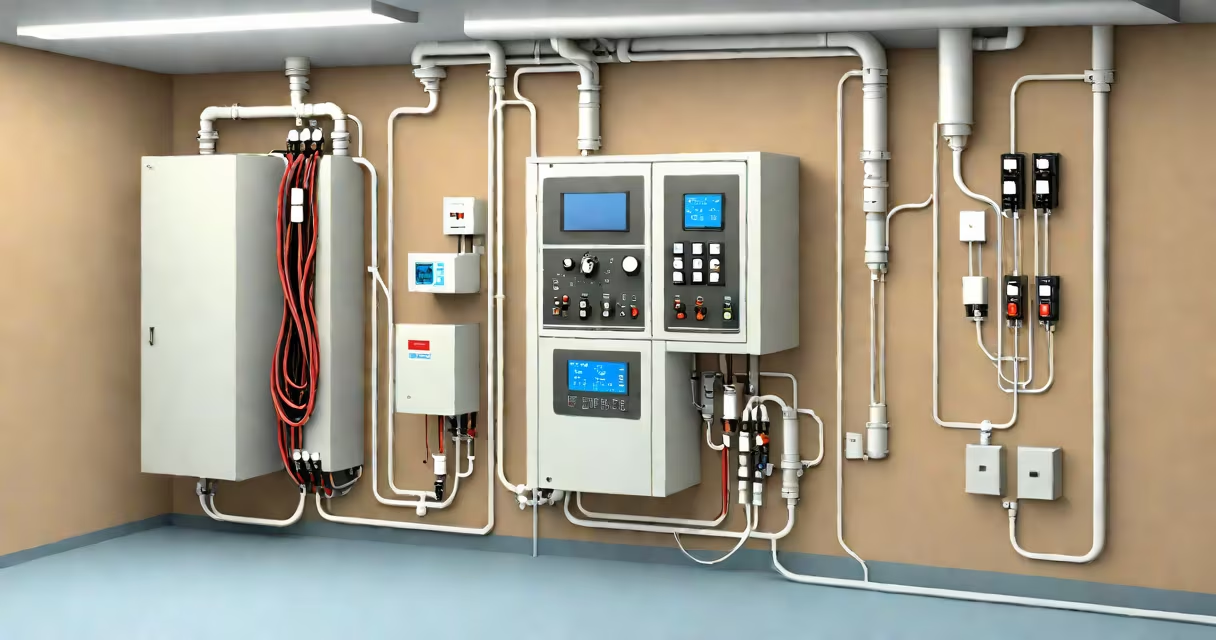
HVAC controls are the electronic and mechanical systems that regulate temperature, humidity, airflow, and equipment operation within heating, ventilation, and air conditioning systems. These controls ensure indoor environments remain comfortable and energy-efficient by responding to real-time conditions and user settings.
At their core, HVAC controls interpret data from sensors and user inputs to activate or adjust components like furnaces, chillers, fans, dampers, and valves. A basic setup includes a thermostat, wiring, and a control panel. More advanced systems integrate building management software and networked devices.
The primary function is maintaining setpoint temperatures while minimizing energy waste. For example, a residential system turns off the furnace when room temperature reaches 72°F and restarts it when it drops below 70°F. Commercial systems use predictive algorithms to anticipate load changes based on occupancy schedules and weather forecasts.
Controls operate through a feedback loop: a sensor measures current conditions, the controller compares them to the desired setpoint, and then activates or deactivates equipment accordingly. This process repeats continuously to stabilize the environment.
For instance, a room thermostat detects a drop in temperature. It sends a signal to the HVAC control panel, which verifies the request against safety overrides (like preventing the furnace from running during a gas leak). Once cleared, the panel energizes the furnace relay, turning on the heat until the sensor confirms the target temperature is reached.
Modern systems use programmable logic controllers (PLCs) or direct digital controls (DDC). DDC systems sample data every 1-5 seconds, allowing precise adjustments. A hospital's central plant may monitor 200+ zones simultaneously, adjusting supply air temperature based on occupancy and outdoor conditions.
Systems vary by complexity and application. The following table outlines common control types:
| Type | Use Case | Key Components | Example Application |
|---|---|---|---|
| Manual Controls | Basic residential setups | Thermostat, switches, relays | Older homes with single-zone heating |
| Programmable Thermostats | Residential and small commercial | Timer, sensors, Wi-Fi module | Smart thermostats like Nest or Ecobee |
| Direct Digital Control (DDC) | Larger buildings, hospitals, offices | PLC, BMS integration, networked sensors | University campus climate management |
| Building Automation Systems (BAS) | High-efficiency facilities | SCADA, dashboards, analytics engines | Green-certified office towers |
Each type scales in capability. Manual systems require human input. Programmable thermostats automate daily routines. DDC systems handle complex sequences like pre-cooling before peak electricity hours. BAS platforms coordinate multiple subsystems across entire campuses.
Key elements include sensors (temperature, humidity, CO₂), actuators (valves, dampers), controllers (thermostats, PLCs), and communication protocols (BACnet, Modbus). These components must be compatible to avoid signal loss or misinterpretation.
A common failure point is mismatched sensor ranges. A sensor rated for -20°C to 60°C installed in a freezer zone may fail at -30°C. According to ASHRAE Standard 130, control systems must be calibrated annually to maintain accuracy within ±0.5°C.
I once observed a malfunction in a school's HVAC system where a faulty humidity sensor caused continuous fan operation. The error went undetected for three weeks because the control panel didn't log anomalies. After replacing the sensor and enabling audit trails, energy use dropped 18% in the first month.
Many assume HVAC controls are purely mechanical or limited to temperature adjustment. In reality, they manage air quality, pressure differentials, and equipment health. A well-tuned system reduces wear on compressors and extends component life.
Another misconception is that smart thermostats replace all need for professional oversight. While devices like the Google Nest learn usage patterns, they don't account for structural changes (e.g., new windows) or local climate shifts. A study by the National Institute of Standards and Technology found that 41% of smart thermostat installations required manual recalibration within six months.
Also, HVAC controls aren't interchangeable between systems. A residential thermostat won't work with a commercial chiller's variable frequency drive (VFD). Compatibility requires matching voltage, signal type (4-20 mA vs. 0-10 V), and protocol standards.
Properly designed HVAC controls reduce energy consumption by 15-30% compared to unmanaged systems. The U.S. Department of Energy reports that optimized control strategies save $0.10-$0.25 per square foot annually in commercial buildings.
They also improve occupant comfort and productivity. A 2021 study published in *Energy and Buildings* showed that consistent indoor temperatures improved concentration levels by 15% in office workers. Poor control leads to hot spots, drafts, and excessive noise from cycling equipment.
For example, a retail store in Phoenix upgraded from manual thermostats to a DDC-based system with occupancy sensors. During summer, the system reduced cooling runtime by 27% during low-traffic periods. Annual savings exceeded $1,800 in utility costs.
Understanding what are hvac controls is essential for anyone involved in building operations, design, or maintenance. These systems are not just about keeping rooms warm or cool-they're critical infrastructure for health, safety, and efficiency.
What are hvac controls? They are the decision-making layer behind climate management. Without them, even the most useful heating or cooling units cannot deliver reliable comfort or efficiency.