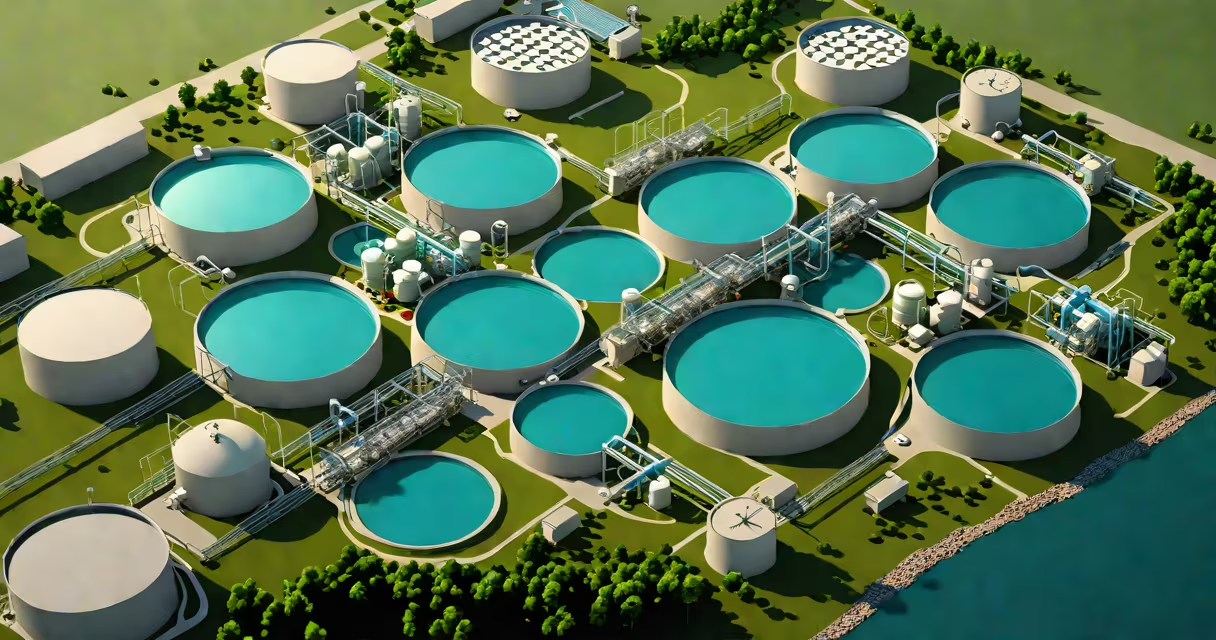
Treatment plants are engineered facilities that remove contaminants from wastewater and industrial effluent before releasing treated water into natural waterways. These systems protect human health, prevent environmental degradation, and ensure compliance with federal and state regulations.
They process sewage from homes, businesses, and factories using physical, chemical, and biological methods. The goal is to reduce pollutants like pathogens, organic matter, nutrients (nitrogen and phosphorus), and heavy metals to safe levels. Without treatment plants, rivers and groundwater would carry disease-causing organisms and toxic substances.
The U.S. Environmental Protection Agency (EPA) estimates that over 16,000 publicly owned treatment works (POTWs) operate across the country, serving more than 280 million people. These facilities treat approximately 34 billion gallons of wastewater daily, according to EPA data from 2022.
Wastewater enters treatment plants through underground pipes, often traveling via gravity flow. The first stage is screening, where large debris like rags, sticks, and plastics are removed using metal grates. This prevents damage to downstream equipment.
After screening, water flows into grit chambers, where sand, gravel, and other dense particles settle out. These materials are collected and disposed of separately. Once solids are removed, the water moves to primary sedimentation tanks, where heavier organic solids sink to the bottom as sludge.
At this stage, about 50% of suspended solids and 30% of biochemical oxygen demand (BOD) are removed. BOD measures the amount of oxygen needed by microorganisms to break down organic matter-high BOD indicates pollution risk.
Modern treatment plants use multiple stages. The most common system is the activated sludge process, which relies on aerobic bacteria to consume organic waste. Air is pumped into tanks to support microbial activity. After treatment, excess biomass is separated and either recycled or sent to anaerobic digesters for energy recovery.
A table below outlines the main treatment stages and their functions:
| Stage | Primary Function | Typical Removal Rate |
|---|---|---|
| Screening | Remove large solids | 95%+ of debris > 25 mm |
| Grit removal | Extract sand and grit | 90% of particles > 0.2 mm |
| Primary settling | Settle organic sludge | 50% suspended solids, 30% BOD |
| Biological treatment | Degrade organics using microbes | 85-95% BOD reduction |
| Secondary settling | Separate biomass from water | 90% biomass removal |
| Disinfection | Kill pathogens with chlorine or UV light | 99.9% reduction in coliforms |
Some plants use advanced treatment methods such as membrane bioreactors (MBRs) or reverse osmosis for high-purity reuse. These are common in arid regions like California, where reclaimed water supports irrigation and industrial cooling.
Treatment plants are essential in urban areas with populations exceeding 10,000. They are required under the Clean Water Act, which mandates that discharges meet National Pollutant Discharge Elimination System (NPDES) permits. Failure to comply results in fines and enforcement actions.
For example, the Hyperion Treatment Plant in Los Angeles processes 450 million gallons of wastewater per day. It uses a combination of primary, secondary, and tertiary treatment to meet stringent state standards before releasing water into the Pacific Ocean. The plant's output contains less than 10 mg/L of BOD and fewer than 100 fecal coliforms per 100 mL.
Industrial zones also require specialized treatment. A semiconductor manufacturing facility in Arizona uses a closed-loop system to recycle 90% of its process water. The wastewater undergoes pH adjustment, heavy metal precipitation, and ultrafiltration before reuse-reducing freshwater intake by 1.2 million gallons annually.
Treatment plants are not the same as septic systems. Septic tanks serve individual homes or small clusters and rely on natural bacterial breakdown in soil. They do not handle large volumes or complex industrial pollutants. When septic systems fail, they can contaminate groundwater with nitrates and pathogens-leading to outbreaks of gastrointestinal illness.
Another misconception is that treated water is safe to drink. While treatment reduces harmful substances, it does not eliminate all trace contaminants. For example, pharmaceutical residues and microplastics may persist. Drinking water still requires separate filtration and disinfection at municipal drinking water plants.
A key distinction often missed: treatment plants don't create clean water-they restore water to a usable state. The process recovers resources like biosolids (used as fertilizer) and biogas (burned for electricity). The Orange County Water District in California uses advanced purification to convert wastewater into potable water, producing 100 million gallons daily for groundwater recharge.
During a visit to a treatment facility in Portland, Oregon, I observed the final disinfection stage. Chlorine gas was injected into a pipe at a rate of 3.5 mg/L, then neutralized with ammonia to form chloramines. The resulting water met EPA standards for recreational contact and fish habitat.
Treatment plants are critical infrastructure that safeguard public health and environmental quality. They manage billions of gallons of waste daily, transforming raw sewage into water that meets strict safety thresholds. Understanding what they do helps clarify their role in sustainable communities.