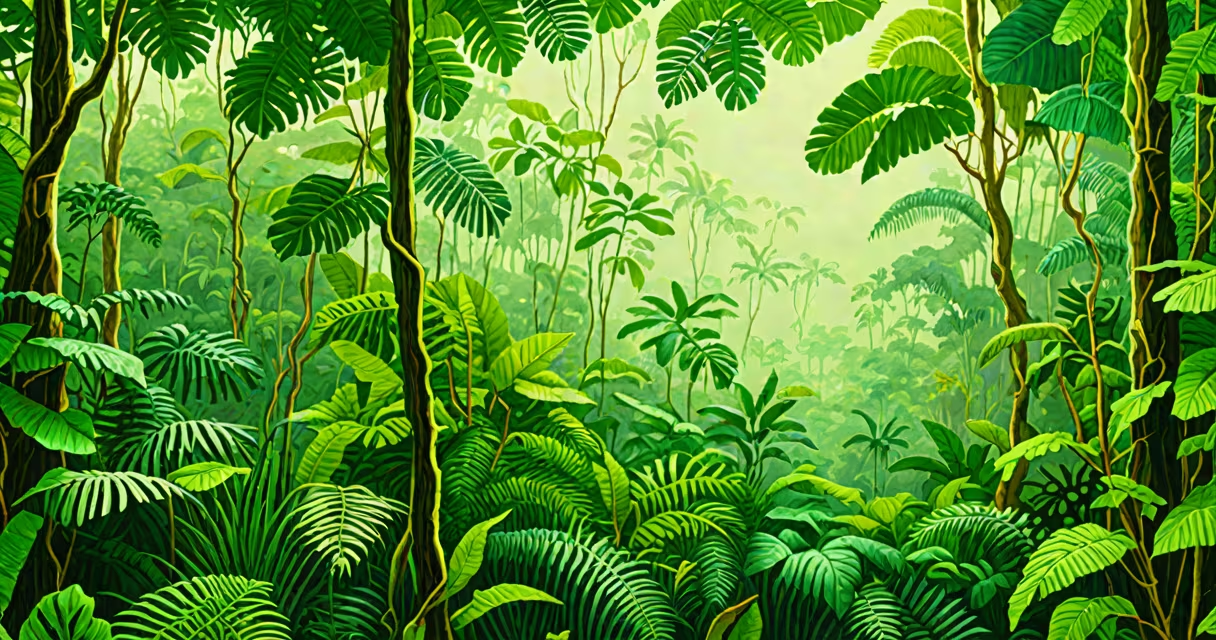
Tropical and temperate rainforests are the two primary types, distinguished by climate, geographic distribution, and ecological structure. Tropical rainforests occur near the equator with consistent warmth and high annual rainfall. Temperate rainforests exist in coastal regions between 40° and 60° latitude, experiencing cooler temperatures and seasonal variation.
Tropical rainforests thrive in warm, humid conditions year-round. They cover less than 10% of Earth's land surface but contain over half of the planet's terrestrial species. The Amazon Basin in South America, the Congo Basin in Central Africa, and parts of Southeast Asia host the largest tropical rainforests. These ecosystems maintain average temperatures between 25°C and 27°C (77°F-81°F) and receive 1,750 to 2,500 mm (69-98 inches) of rain annually. Canopies reach heights of 30-40 meters (98-131 feet), supporting complex vertical layers including emergent, canopy, understory, and forest floor zones.
Temperate rainforests form in oceanic climates with mild winters and abundant precipitation. They are found along the Pacific Northwest coast of North America (from northern California to southern Alaska), parts of Chile, New Zealand, and western Scotland. These forests experience cooler average temperatures (8°C-15°C or 46°F-59°F) and rely on fog drip during dry seasons. Annual rainfall ranges from 1,500 to 3,000 mm (59-118 inches), often delivered via persistent maritime storms. Dominant tree species include Sitka spruce, western hemlock, red alder, and Douglas fir. Unlike tropical systems, temperate rainforests have distinct seasonal cycles affecting growth patterns and decomposition rates.
| Type | Climate Zone | Temperature Range | Annual Rainfall | Key Tree Species | Geographic Examples |
|---|---|---|---|---|---|
| Tropical | Equatorial (0°-10° latitude) | 25°C-27°C (77°F-81°F) | 1,750-2,500 mm (69-98 in) | Emergent hardwoods, kapok, mahogany | Amazon (Brazil), Congo (DR Congo), Borneo (Indonesia) |
| Temperate | Coastal mid-latitudes (40°-60°) | 8°C-15°C (46°F-59°F) | 1,500-3,000 mm (59-118 in) | Sitka spruce, western hemlock, Douglas fir | Northwest USA (Washington, Oregon), Chilean Patagonia, Fiordland (New Zealand) |
A common misconception is that all rainforests are hot and dense. This overlooks temperate rainforests' existence and ecological significance. While tropical rainforests dominate media attention due to biodiversity, temperate rainforests store vast carbon reserves in their slow-decomposing organic soils and massive trees. A single hectare of old-growth temperate rainforest can sequester up to 1,000 metric tons of carbon-equivalent to removing 200 cars from the road annually.
Another misunderstanding is equating rainforest with jungle. Jungle refers to dense, tangled vegetation often found in tropical regions, especially in areas with disturbed or secondary growth. Not all tropical rainforests are jungles, and temperate rainforests rarely qualify as such. The term "jungle" lacks scientific precision and is not used in formal ecology classifications.
In 2022, the World Resources Institute reported that tropical rainforests lost 11.3 million hectares of tree cover between 2001 and 2021, primarily due to agriculture and logging. Meanwhile, temperate rainforests face threats from clear-cutting and infrastructure development. In British Columbia, Canada, over 70% of original temperate rainforest has been logged since the 1950s. Both types are critical for climate regulation, yet temperate systems remain underrepresented in conservation policy despite their high carbon storage capacity.
I once stood beneath a 120-meter-tall Sitka spruce in the Tongass National Forest, Alaska. The air was cool and thick with moisture. Mosses hung from branches like green lace. The silence was profound-not empty, but filled with subtle sounds: dripping water, distant bird calls, the creak of ancient wood. That moment clarified something important: temperate rainforests aren't just colder versions of tropical ones. They're different ecosystems with unique adaptations. Their slow decay rates allow soil to accumulate thick organic layers, creating habitats for rare fungi and amphibians like the Pacific giant salamander.
Understanding the two types of rainforests matters because their responses to climate change differ. Tropical rainforests may face increased drought stress due to shifting rainfall patterns. Temperate rainforests, reliant on consistent moisture from coastal fog, risk drying out as ocean currents shift. Research published in Nature Ecology & Evolution (2021) found that temperate rainforest resilience depends heavily on intact watershed systems and connected canopy networks. Loss of even small patches can disrupt microclimates and reduce species survival rates.
Both types of rainforests support global biodiversity and climate stability. Recognizing their differences ensures accurate conservation strategies. Tropical rainforests demand protection from deforestation and habitat fragmentation. Temperate rainforests require policies focused on sustainable forestry and watershed preservation. Misclassifying them leads to ineffective interventions.
For deeper insight into another biological system, explore the two types of kidney stones.