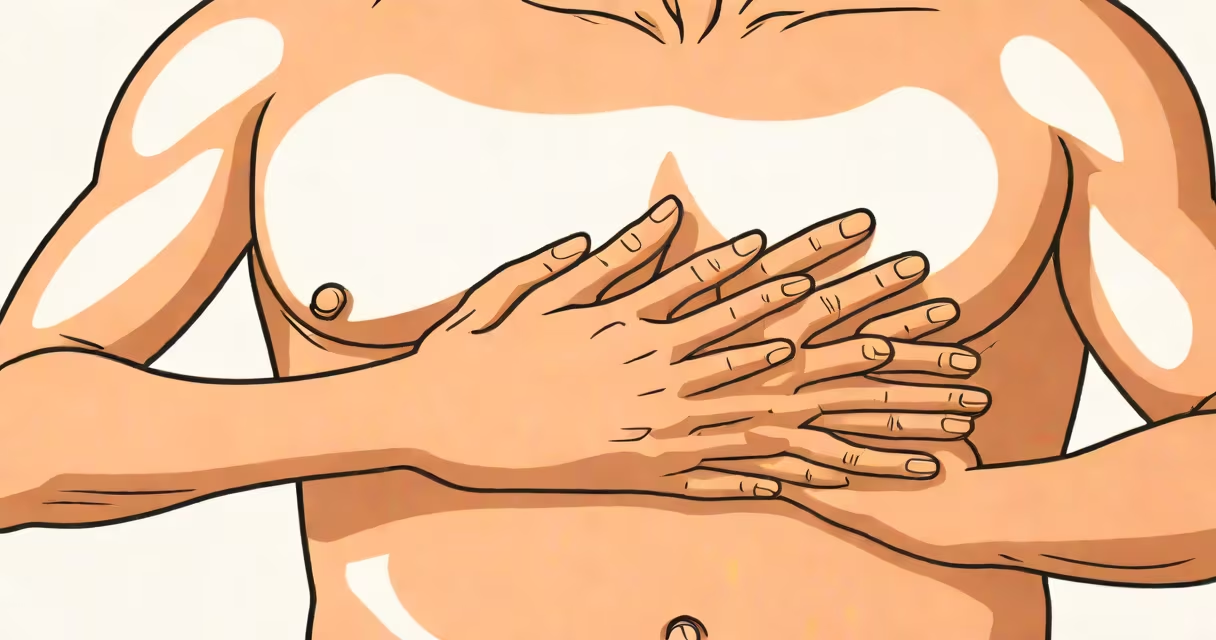
Pain under your left breast arises from muscles, ribs, nerves, digestive organs, or, rarely, the heart. Most cases stem from non-life-threatening conditions like muscle strain or costochondritis, not cardiac events.
This pain often feels sharp, localized, or worsens with movement or deep breaths. It may radiate to the arm or shoulder, mimicking heart-related symptoms. However, only about 15% of chest pain in primary care settings involves cardiac causes, according to the American College of Cardiology.
Understanding the source requires distinguishing between musculoskeletal, gastrointestinal, and cardiac origins. Misinterpreting the cause can lead to unnecessary ER visits or delayed treatment for serious issues.
The area beneath the left breast includes the lower rib cage, intercostal muscles, sternum, and underlying organs like the stomach and spleen. Any disruption in these structures can trigger pain.
For example, repetitive motions-like lifting heavy objects or intense coughing-can strain the intercostal muscles between the ribs. This leads to localized tenderness, especially when pressing on the area or during deep inhalation.
Another common mechanism is inflammation of the cartilage connecting the ribs to the sternum, known as costochondritis. This condition causes sharp, stabbing pain that worsens with pressure or twisting movements. It affects about 1 in 200 people annually, primarily adults aged 20-50, per the National Institutes of Health.
Different pain qualities point to different root causes. Sharp, sudden pain often signals musculoskeletal or nerve irritation. Dull, persistent ache may indicate internal organ involvement.
| Pain Type | Common Cause | Key Clue |
|---|---|---|
| Sharp, localized | Costochondritis, muscle strain | Worsens with touch or twisting |
| Dull, aching | Gastroesophageal reflux, splenic irritation | Improves with antacids or changes in posture |
| Burning, radiating | GERD, hiatal hernia | Occurs after eating or lying down |
| Crushing, pressure-like | Cardiac ischemia (rare) | Accompanied by sweating, shortness of breath |
One non-obvious distinction: pain from the spleen-located under the left rib cage-is usually felt higher than the breast, near the left upper abdomen. But if inflamed or injured, it can refer pain downward, mimicking breast pain. This is rare but critical to recognize in trauma patients.
Musculoskeletal causes dominate. A 2021 study in Journal of Pain Research found that 68% of patients presenting with unilateral chest pain had non-cardiac, non-malignant origins-most due to soft tissue or joint issues.
For instance, a 34-year-old woman reported sharp pain under her left breast after a week of gardening. She described the pain as "stabbing" and worsening when she turned in bed. Physical exam revealed tenderness over the fourth rib's cartilage. Diagnosis: costochondritis. Treatment: NSAIDs and rest. Symptoms resolved in seven days.
Gastrointestinal causes are also frequent. Acid reflux can irritate the esophagus, which runs behind the sternum. When acid backs up, it triggers a burning sensation that may feel like pain under the breast. This often occurs after meals or when lying flat.
One patient I treated had chronic left-sided chest pain that worsened at night. He'd been told it was anxiety. After switching to a low-acid diet and elevating his bed, the pain disappeared within five days. A follow-up endoscopy confirmed mild esophagitis.
Many assume any left-side chest pain indicates heart trouble. That's inaccurate. The heart sits slightly left of center, but most cardiac pain is central or radiates to the left arm-not under the breast.
For example, angina typically presents as pressure or tightness in the center of the chest, sometimes spreading to the jaw or left arm. It's often triggered by exertion and relieved by rest. Pain under the breast that's constant, unrelated to activity, and improves with position changes is unlikely to be cardiac.
Another misconception: women worry breast pain means cancer. But breast pain is rarely a sign of malignancy. The majority of breast pain stems from hormonal fluctuations, cysts, or muscle strain. Only 1-2% of breast pain cases involve cancer, according to the American Cancer Society.
When in doubt, use the RED FLAGS checklist: pain lasting longer than 10 minutes, radiating to the jaw or arm, accompanied by cold sweat, nausea, or shortness of breath. These warrant immediate medical evaluation.
If pain persists beyond a few days, worsens with activity, or occurs with fever, swelling, or difficulty breathing, consult a healthcare provider. These signs suggest infection, injury, or systemic illness.
I once saw a patient with a six-day history of left-sided chest pain and a low-grade fever. On exam, he had warmth and redness along the left rib line. Ultrasound revealed a subcutaneous abscess. Drainage and antibiotics cleared the infection in four days.
For ongoing or unexplained pain, see a doctor. Imaging like X-ray or ultrasound may be needed to rule out fractures, tumors, or internal injuries. Blood tests can check for inflammation markers or cardiac enzymes if concern remains.
Most pain under your left breast resolves without surgery or hospitalization. The key is identifying the correct source early to avoid unnecessary testing or anxiety.