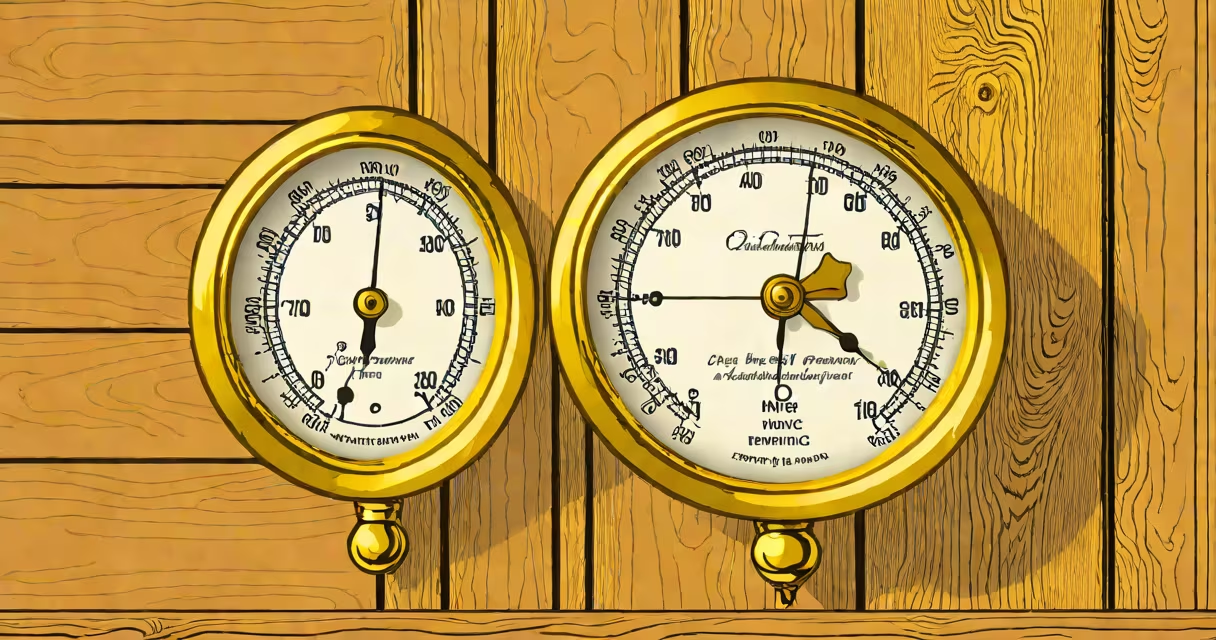
A barometer measures atmospheric pressure-the weight of air above a given location. It is essential for weather prediction, altitude determination, and scientific research.
Atmospheric pressure changes with weather systems. High pressure usually brings clear skies; low pressure often signals storms. Barometers detect these shifts, enabling forecasts and safety planning.
The term "barometer" comes from Greek *báros* (weight) and *metron* (measure). The first known version was invented by Evangelista Torricelli in 1643 using a column of mercury.
Barometers operate on the principle that air exerts pressure. As altitude increases, air becomes less dense, reducing pressure. A barometer tracks these changes in real time.
Mercury barometers use a sealed glass tube filled with mercury inverted into a dish of mercury. Air pressure pushes mercury up the tube. At sea level, standard pressure holds mercury at 760 mm. Changes in height indicate pressure shifts.
Aneroid barometers use a small, flexible metal chamber sealed under vacuum. As external pressure changes, the chamber expands or contracts. This movement activates levers and needles on a dial, displaying pressure values.
Two primary types exist: mercury and aneroid. Each serves different purposes based on accuracy, portability, and environment.
| Type | Principle | Accuracy | Use Cases |
|---|---|---|---|
| Mercury | Column of mercury in a vacuum tube | High (±0.1 mm Hg) | Scientific labs, historical records |
| Aneroid | Flexible metal chamber responding to pressure | Moderate (±1 hPa) | Aviation, home weather stations, hiking |
Mercury barometers remain the gold standard for precision. They are still used in meteorological observatories and calibration labs. However, their toxicity and fragility limit field use.
Aneroid barometers dominate practical applications. They are lightweight, durable, and safe. Modern versions integrate with digital sensors and display pressure in hectopascals (hPa), inches of mercury (inHg), or millibars (mb).
People often confuse barometers with thermometers or hygrometers. A thermometer measures temperature; a hygrometer measures humidity. Only a barometer tracks air pressure.
Another error is assuming barometers predict rain directly. They don't. Instead, they show pressure trends. A falling pressure reading suggests storm development. A rising trend indicates clearing weather.
Some think barometric pressure affects health. While some individuals report joint pain during pressure drops, scientific evidence linking pressure changes to illness remains weak. The American Meteorological Society notes no consistent correlation between barometric pressure and human symptoms.
Weather services rely on barometers to track high- and low-pressure systems. For example, the National Weather Service uses automated barometric sensors across the U.S. to generate storm warnings.
In aviation, pilots use altimeters calibrated to barometric pressure. An altimeter measures altitude based on air pressure. If pressure settings are incorrect, altitude readings drift-potentially causing crashes. The FAA mandates regular barometric calibration for flight safety.
I once used a handheld aneroid barometer during a mountain hike in Colorado. At base camp, it read 1013 hPa. After climbing 1,500 meters, the reading dropped to 875 hPa. The drop matched expected pressure decline with elevation. This confirmed the device's reliability in real terrain.
Modern smartphones include barometric sensors for fitness tracking and weather apps. Apple's iPhone 6 and later models feature a built-in barometer for altitude-based step counting and weather updates. These sensors are derived from aneroid designs but miniaturized and integrated.
Atmospheric gauge pressure refers to pressure measured relative to ambient conditions. It is not a device. The barometer is the physical tool that measures it. Confusing the two leads to technical errors in engineering and meteorology.
Barometers are not interchangeable with other instruments. Their design, calibration, and purpose are specific to atmospheric conditions.
Historical note: The word "barometer" entered common use after Torricelli's experiment. His mercury tube showed that air pressure could support a column of liquid. This proved air had weight-a revolutionary idea in 17th-century science.
Today, barometers remain important. From predicting hurricanes to calibrating aircraft instruments, they deliver measurable data that shapes decisions daily.