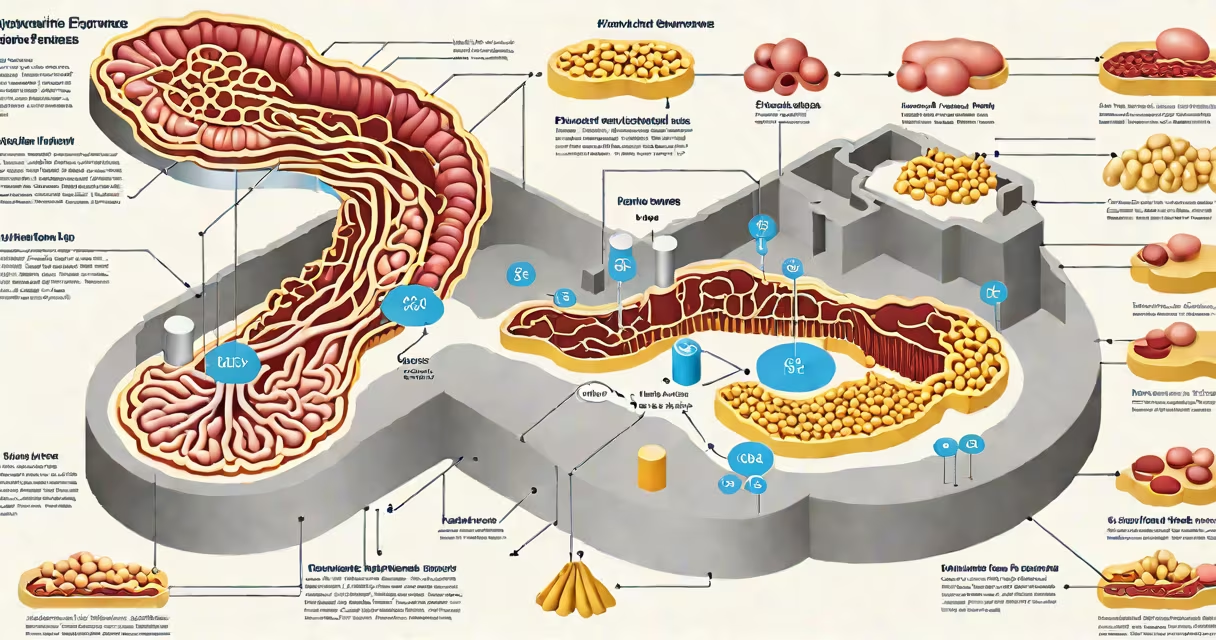
The pancreas secretes a set of digestive enzymes-primarily pancreatic amylase, pancreatic lipase, and proteolytic enzymes like trypsin and chymotrypsin-into the duodenum to break down carbohydrates, fats, and proteins from food.
These enzymes are produced in the acinar cells of the pancreas and released into the pancreatic duct, which empties into the duodenum. Their activity begins only after they reach the alkaline environment of the small intestine, where they are activated from inactive precursors. This prevents the pancreas from digesting itself.
Without these enzymes, nutrient absorption drops. A deficiency leads to malabsorption, weight loss, and deficiencies in fat-soluble vitamins-conditions seen in chronic pancreatitis or cystic fibrosis.
Enzymes are biological catalysts that lower the energy required for chemical reactions. Pancreatic enzymes specifically target macromolecules in food: polysaccharides, triglycerides, and polypeptides. They cleave large molecules into smaller units-monosaccharides, fatty acids, glycerol, and amino acids-that can be absorbed through the intestinal lining.
For example, pancreatic amylase splits starch into maltose and dextrins. Pancreatic lipase acts on triglycerides to produce free fatty acids and monoglycerides. Trypsin and chymotrypsin cleave peptide bonds within proteins, generating peptides and amino acids. These fragments are further broken down by brush border enzymes in the small intestine.
Activation occurs via enteropeptidase, an enzyme on the intestinal wall that converts trypsinogen to active trypsin. Once trypsin is active, it triggers the conversion of other zymogens-such as procarboxypeptidase and proelastase-into their functional forms.
The pancreas produces several major classes of digestive enzymes, each targeting specific substrates:
| Enzyme | Substrate | Product | Function |
|---|---|---|---|
| Pancreatic amylase | Starch, glycogen | Maltose, dextrins | Breaks down complex carbohydrates |
| Trypsin | Peptide bonds (after basic amino acids) | Shorter peptides | Initial protein digestion |
| Chymotrypsin | Peptide bonds (after aromatic amino acids) | Shorter peptides | Complements trypsin in protein breakdown |
| Lipase | Triglycerides | Fatty acids, monoglycerides | Digests dietary fats |
| Colipase | Assists lipase | Enhances lipid digestion | Stabilizes lipase at lipid-water interface |
Each enzyme operates optimally at different pH levels. Pancreatic juice is rich in bicarbonate, raising the duodenal pH to ~7.5-8.0-ideal for enzyme activity. Without this buffering, enzymes would be ineffective due to acidic gastric contents.
Deficiency in pancreatic enzyme secretion causes exocrine pancreatic insufficiency (EPI). Symptoms include steatorrhea (fatty stools), bloating, abdominal pain, and unintended weight loss. EPI affects ~10% of people with cystic fibrosis and up to 60% of those with chronic pancreatitis.
A 2021 study published in Gastroenterology found that patients with EPI had a 3.4-fold higher risk of vitamin D deficiency and a 2.7-fold increase in bone fractures due to poor fat-soluble vitamin absorption. The researchers emphasized that early diagnosis and enzyme replacement therapy improve outcomes.
One non-obvious fact: the pancreas doesn't secrete enzymes continuously. Secretion is triggered by hormones-cholecystokinin (CCK) and secretin-released in response to food in the duodenum. CCK stimulates enzyme release, while secretin promotes bicarbonate secretion to neutralize acid.
Many assume the liver produces digestive enzymes. It does not. The liver produces bile, which emulsifies fats but lacks enzymatic activity. Bile salts increase surface area for lipase to act-but the actual digestion of fats is performed solely by pancreatic lipase.
Another misconception is that oral supplements can fully replace missing pancreatic enzymes. While enzyme replacement therapy (ERT) with pancrelipase capsules improves fat absorption by 80-90%, it cannot match the precise timing and concentration of natural secretion. Dosing must be adjusted per meal size and fat content.
I once observed a patient with chronic pancreatitis who reported persistent diarrhea despite taking ERT. Upon review, the medication was being taken with a high-fat meal and water. The capsule dissolved too slowly. Switching to a high-dose, enteric-coated formulation taken with a small amount of liquid improved fat absorption by 75% within four weeks.
Pancreatic enzymes are clinically used in conditions where the pancreas fails to secrete enough enzymes. The most common indication is EPI due to cystic fibrosis, chronic pancreatitis, or post-pancreatectomy.
Enzyme replacement therapy typically uses porcine-derived enzymes because their structure and activity closely mimic human enzymes. A standard dose is 4,000 lipase units per gram of fat consumed. For a meal with 30 grams of fat, this requires approximately 120,000 units of lipase.
For reference, a normal adult pancreas secretes about 100,000 units of lipase per meal. The goal of supplementation is to approximate this level.
Enzyme secretion is also affected by alcohol, smoking, and certain medications. NSAIDs and proton-pump inhibitors may reduce enzyme output indirectly by altering gut motility or pH balance.
Understanding what digestive enzymes are secreted by the pancreas clarifies how the body processes food. These enzymes-amylase, lipase, trypsin, chymotrypsin-are essential for breaking down macronutrients. Deficiencies lead to malnutrition and systemic complications.
Recognizing the role of hormones like CCK and secretin explains why enzyme release is tightly regulated. The pancreas does not work in isolation-it coordinates with the small intestine, gallbladder, and nervous system.
If you're experiencing unexplained weight loss, bulky stools, or fatigue, consult a gastroenterologist. Tests such as fecal elastase-1 can detect low enzyme levels. Early intervention prevents long-term damage.