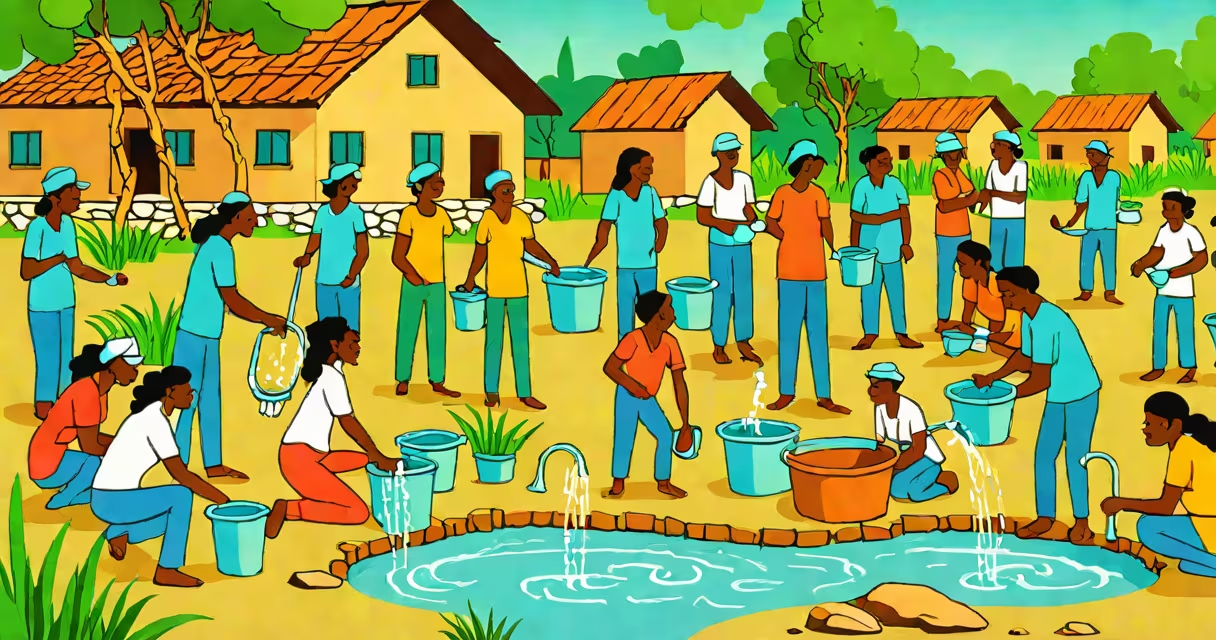
Non-governmental organizations (NGOs) are independent groups that tackle social, environmental, economic, and humanitarian issues without government control. They operate globally and locally, driven by missions such as poverty reduction, climate action, human rights protection, and disaster relief.
NGOs function outside state authority and typically rely on donations, grants, and volunteer labor. They are distinct from for-profit businesses and government agencies. Their work includes delivering healthcare in remote areas, advocating for policy changes, monitoring elections, and supporting refugees. The International Red Cross, Greenpeace, and Doctors Without Borders are well-known examples.
According to the United Nations Office for the Coordination of Humanitarian Affairs (OCHA), over 100,000 NGOs operate worldwide, with more than 60% focused on health, education, and emergency response. These organizations often partner with national governments and international bodies like the UN to scale impact.
NGOs run on a structure that balances mission focus with operational efficiency. Most have a board of directors, executive leadership, field teams, and support staff. Funding comes from private donors, foundations, corporate sponsorships, and international aid agencies.
Field operations vary widely. An NGO working on maternal health in Malawi may train local midwives, distribute prenatal kits, and conduct community workshops. Meanwhile, an environmental NGO in Brazil might monitor deforestation using satellite data and lobby for protected land designations. Both models require coordination between headquarters and on-the-ground staff.
Transparency is critical. Reputable NGOs publish annual reports detailing finances, program outcomes, and governance. The Global Fund to Fight AIDS, Tuberculosis and Malaria requires all grantees to submit audited financial statements and impact assessments. This accountability helps maintain donor trust and ensures resources reach intended beneficiaries.
NGOs fall into categories based on their primary focus. Some specialize in emergency response, others in long-term development or advocacy. The table below outlines major types and their functions.
| Type | Focus Area | Example | Key Activity |
|---|---|---|---|
| Humanitarian Aid | Disaster relief, food security, shelter | International Rescue Committee (IRC) | Providing emergency supplies after conflict or natural disasters |
| Development & Poverty Alleviation | Education, microfinance, infrastructure | BRAC (Bangladesh) | Running schools and small business loans in underserved regions |
| Environmental Protection | Climate change, biodiversity, pollution | World Wildlife Fund (WWF) | Funding conservation projects and lobbying for wildlife laws |
| Human Rights & Advocacy | Freedom of speech, gender equality, refugee rights | Amnesty International | Investigating abuses and calling for legal reforms |
| Health & Medical Services | Disease prevention, mental health, access to care | Doctors Without Borders (MSF) | Deploying medical teams to war zones and disease outbreaks |
Some NGOs blend multiple roles. For example, CARE International combines emergency aid with long-term development programs in 100 countries. After the 2010 Haiti earthquake, CARE distributed food, set up temporary shelters, and later helped rebuild schools and water systems.
Many people assume NGOs are all large, Western-funded institutions. In reality, over 70% of NGOs are locally based and led by individuals from the communities they serve. A 2022 report by the Center for Global Development found that grassroots NGOs in Kenya and Nepal had higher success rates in community health initiatives than foreign-led counterparts due to cultural familiarity and trusted relationships.
Another myth is that NGOs are ineffective because of overhead costs. The reality is that transparency standards vary. Charity Navigator rates nonprofits based on financial efficiency, but a high administrative cost doesn't always indicate poor performance. For example, an NGO running a mobile clinic in rural Colombia may spend 30% of its budget on transportation and fuel-necessary expenses that enable outreach to isolated populations.
A lesser-known fact: many NGOs are legally structured as non-profits under national law, but they are not automatically tax-exempt. In the U.S., the IRS requires 501(c)(3) status for tax benefits. In India, NGOs must register under the Societies Registration Act or the Companies Act. Legal compliance affects funding eligibility and public credibility.
Water.org, co-founded by actor Matt Damon, addresses water scarcity in low-income regions. Instead of relying solely on donations, it uses a model called WaterCredit-a microloan system that allows families to finance household water connections and toilets.
In 2021, Water.org disbursed $15 million in loans across 15 countries. Over 1.5 million people gained access to safe water or sanitation. The organization tracks outcomes through quarterly surveys and third-party audits. Its success rate in loan repayment exceeded 97%, demonstrating that sustainable solutions can combine finance with social impact.
I visited a WaterCredit project site in rural Uganda in 2019. A woman named Aisha used a $200 loan to install a rainwater harvesting system. Her children stopped missing school due to waterborne illness. The project didn't just deliver infrastructure-it empowered her to manage her family's health and time.
What do NGOs do? They identify unmet needs and mobilize resources to meet them. Whether through emergency aid, long-term development, or systemic advocacy, NGOs fill gaps left by governments and markets. Their effectiveness depends on clear missions, transparent operations, and deep community engagement.
Understanding what do NGOs do helps clarify their role in shaping global progress. They are not replacements for state services but essential partners in building resilient societies. As the World Bank notes, effective development requires collaboration between governments, private actors, and civil society-where NGOs play a central role.