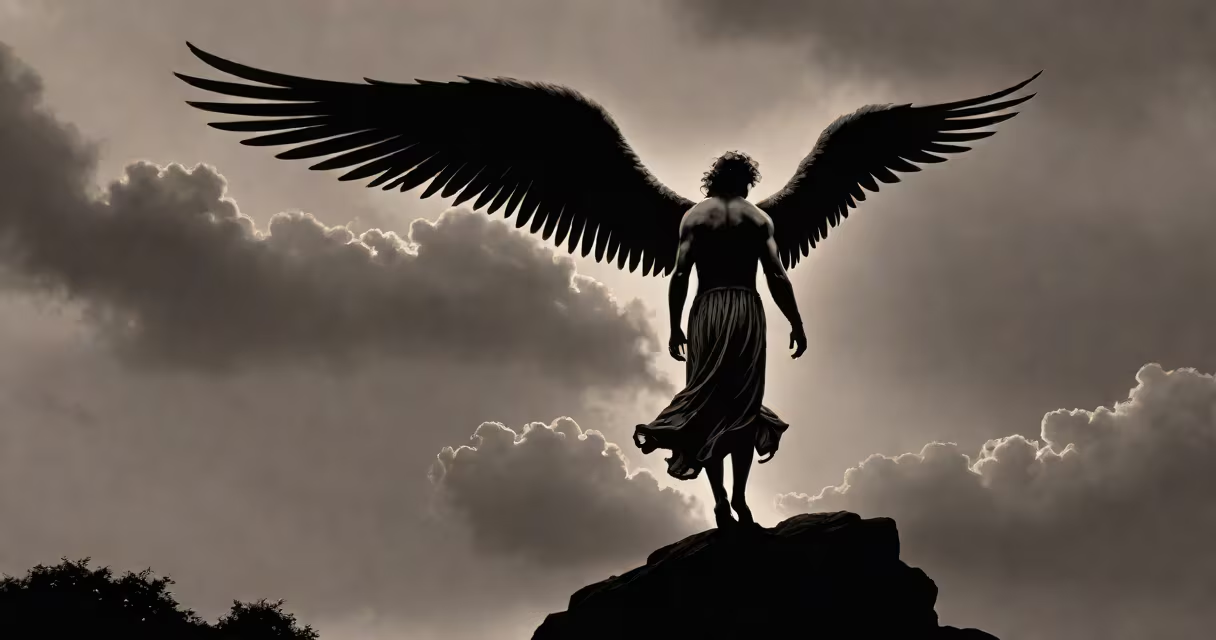
A fallen angel is a celestial being who lost divine favor due to rebellion or disobedience, most commonly associated with Lucifer's fall from grace. The term originates in Judeo-Christian tradition, though interpretations vary widely across scripture, theology, and cultural narratives.
The idea stems from passages like Isaiah 14:12-15, which describes a "morning star" (Hebrew: Helel) who fell from heaven due to pride. Though not explicitly called an angel in the original text, later Christian theologians identified this figure as a high-ranking angel who challenged God's authority. The Book of Enoch expands this narrative, detailing the Watchers-angels who descended to Earth, married humans, and sired giants, leading to divine punishment.
Modern usage extends beyond religious texts. In literature, film, and music, fallen angels symbolize tragic beauty, moral ambiguity, or internal conflict. Characters like Azazel in *Supernatural* or Lucifer Morningstar in *Lucifer* reflect this duality: useful, intelligent, yet estranged from divine purpose.
Early Jewish texts such as the Book of Enoch (circa 3rd century BCE) describe angels who transgressed by taking human wives and teaching forbidden knowledge. These beings were cast out and imprisoned beneath the earth. The term "fallen" in this context implies expulsion rather than inherent evil-moral failure led to exile, not eternal damnation.
In mainstream Christianity, the fall of Satan is tied to the story of Adam and Eve. The Gospel of Luke (10:18) records Jesus saying, "I saw Satan fall like lightning from heaven." This moment is interpreted as a spiritual victory, not a literal descent. The Council of Trent (1546) affirmed that Satan was once a good angel who chose sin, reinforcing the idea of free will as central to the fall.
Islamic tradition acknowledges jinn and angels but does not support the notion of a rebellious angel. Iblis, often equated with Satan, is described as a jinn who refused to bow to Adam-not an angel. This distinction prevents confusion between Islamic and Christian cosmologies.
Fallen angels are categorized differently depending on theological structure. The following table outlines major classifications:
| Type | Description | Source/Context |
|---|---|---|
| Rebel Angels | Angels who opposed God's will; Lucifer is the archetype. | Christian doctrine, especially Augustine and Aquinas |
| Watchers | Angels who descended to Earth and corrupted humanity. | Book of Enoch, Dead Sea Scrolls |
| False Prophets | Deceptive spirits posing as angels; warned against in Scripture. | 2 Corinthians 11:14, Matthew 24:24 |
| Redemptive Figures | Some traditions view fallen angels as capable of repentance and return. | Apocryphal writings, mystical Judaism |
Early Church Fathers like Origen believed in the possibility of redemption even for fallen beings-a view later rejected as heretical. This shows that interpretations have evolved over time, even within orthodoxy.
Many assume fallen angels are inherently evil or synonymous with demons. That's incorrect. In Christian theology, demons are distinct from angels. While both are spiritual beings, demons are often seen as fallen souls or spirits without a divine origin. Angels are created beings; demons are corrupt entities.
Another misconception is that all fallen angels became devils. The Bible never states that Lucifer became Satan. The identification grew from allegorical readings of Isaiah 14 and Ezekiel 28, both of which refer to earthly kings. Scholars like N.T. Wright argue that conflating these figures distorts the original intent.
Even in popular culture, the portrayal is inconsistent. In *Paradise Lost*, Milton presents Satan as tragic and eloquent-his fall driven by pride and desire for autonomy. This literary interpretation influenced centuries of art and literature, but it diverges from doctrinal positions that emphasize moral failure over personal drama.
One clear example is the depiction of Lucifer in Renaissance art. In Sandro Botticelli's *The Tempest*, Lucifer appears as a noble figure, wings spread, surrounded by chaos. His expression suggests sorrow, not malice-reflecting the idea that his fall was a tragedy of choice, not destiny.
More recently, the TV series *Lucifer* (2016-2021) portrays the character as a charming, morally complex being who rejects divine judgment. While fictional, the show reflects modern interest in reimagining fallen angels not as monsters, but as individuals going through identity and purpose.
I once attended a lecture at the University of Oxford where a scholar analyzed medieval manuscripts showing angels with broken wings. These images weren't depictions of evil-they were visual metaphors for loss, regret, and the cost of free will. The artist's notes read: "He did not fall because he was bad-but because he was free."
A fallen angel is not the same as a demon, a ghost, or a soul in purgatory. Demons are typically viewed as independent malevolent spirits. Ghosts are spirits of the dead. Purgatory is a Catholic doctrine about purification after death. Fallen angels are specifically created spiritual beings who chose to oppose God.
Also, the term does not apply to people who feel spiritually lost. While someone may metaphorically call themselves a "fallen angel," that usage is poetic, not theological. The concept remains rooted in sacred texts and formal doctrine.
Understanding what a fallen angel means requires distinguishing between myth, doctrine, and metaphor. The core idea-free will leading to consequence-is central to many religious systems. It raises questions about accountability, redemption, and the nature of goodness.
For those exploring spiritual themes, knowing the difference between a fallen angel and other supernatural figures avoids misinterpretation. The concept is not about fear, but about the weight of choice. As the Catechism of the Catholic Church states: "God created man free, and he preserved him in freedom until the moment of temptation."