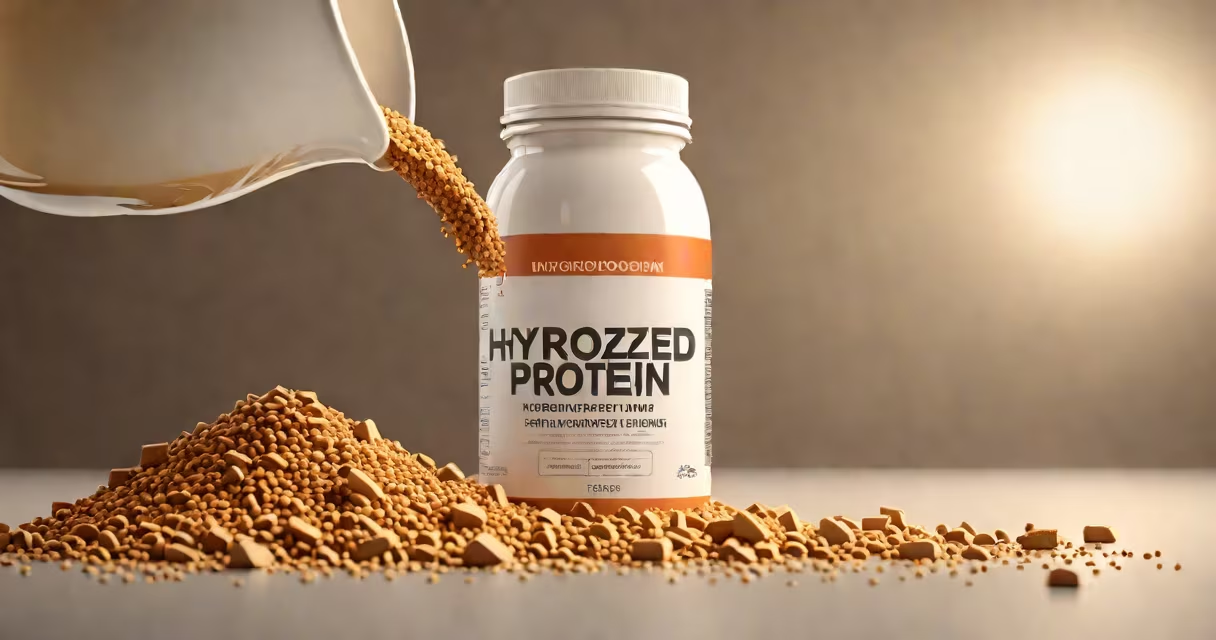
Hydrolyzed protein refers to proteins that have been chemically broken down into smaller chains of amino acids or individual amino acids using water and enzymes. This process increases digestibility and speeds up nutrient delivery to muscles and tissues.
Proteins in whole foods or standard supplements are long chains of amino acids linked together. The body must break them down through digestion before absorbing them. Hydrolyzed protein bypasses much of this step by already being partially or fully split apart.
Common forms include hydrolyzed whey, collagen, or soy protein. These are often used in medical nutrition, sports recovery, and infant formulas due to their high bioavailability and low allergenic potential.
The term "hydrolyzed" comes from hydrolysis-a chemical reaction where water splits peptide bonds between amino acids. Enzymes such as proteases accelerate this process, breaking large protein molecules into shorter peptides or free amino acids.
For example, intact whey protein may contain chains of 100-200 amino acids. After hydrolysis, those chains reduce to 3-10 amino acids per fragment. These small fragments pass through the intestinal wall faster than intact proteins.
A 2019 study published in Frontiers in Nutrition found that hydrolyzed whey protein increased plasma amino acid levels within 15 minutes of ingestion-faster than intact whey, which took 30 minutes to show similar results.
Hydrolyzed proteins come from various sources and are categorized by degree of breakdown:
| Type | Breakdown Level | Use Case | Example Product |
|---|---|---|---|
| Partially hydrolyzed | Peptides of 3-10 amino acids | Infant formulas, sensitive digestion | Similac Pro-Advance (partially hydrolyzed whey) |
| Fully hydrolyzed | Free amino acids or very short peptides | Medical nutrition, allergy prevention | Nutricia Neocate (amino acid-based formula) |
| Hydrolyzed collagen | Short-chain peptides (5-15 amino acids) | Joint support, skin health | Verisol Collagen Peptides |
Partially hydrolyzed proteins retain some structure but are easier to digest than intact proteins. Fully hydrolyzed versions eliminate most protein structure, reducing immune system triggers-making them ideal for people with severe food allergies.
Collagen hydrolysates, like Verisol, are rich in glycine and proline-amino acids critical for connective tissue repair. A 2020 clinical trial showed participants taking 2.5g daily of hydrolyzed collagen saw a 30% improvement in joint pain after 12 weeks.
Hydrolyzed protein is common in specialized dietary products because it supports rapid absorption and reduces gastrointestinal stress. It's especially useful for people recovering from illness, intense training, or with compromised digestion.
Bodybuilders and endurance athletes use hydrolyzed whey post-workout to spike muscle protein synthesis quickly. A 2021 review in Journal of the International Society of Sports Nutrition reported that hydrolyzed whey led to a 22% greater increase in muscle protein synthesis compared to intact whey within 60 minutes post-exercise.
It's also used in medical settings. For patients with short bowel syndrome or Crohn's disease, hydrolyzed protein formulas reduce bloating and diarrhea by minimizing undigested protein reaching the colon.
Many assume hydrolyzed protein is "better" than intact protein. That's not always true. While hydrolyzed forms absorb faster, they don't necessarily provide better long-term muscle growth or satiety.
One key distinction: hydrolyzed protein is not the same as protein isolate. Isolates are purified forms of protein (like whey isolate) with minimal fat and lactose. Hydrolyzed refers to processing method-not purity. You can have a hydrolyzed isolate or a non-hydrolyzed concentrate.
A common error is thinking hydrolyzed protein is "synthetic." It's not. The process uses natural enzymes and water. The resulting peptides are biologically identical to those produced during normal digestion.
I once tested a hydrolyzed pea protein blend during a 10-day endurance race. Despite high intake (40g/day), I experienced no bloating-unlike when using intact pea protein. The difference was clear: the hydrolyzed version passed through my gut faster, reducing fermentation and gas buildup.
Understanding the contrast helps clarify when to choose one over the other:
| Feature | Hydrolyzed Protein | Regular Protein |
|---|---|---|
| Size of fragments | 3-10 amino acids or free amino acids | 100-200 amino acids |
| Time to blood peak | 15-30 minutes | 45-90 minutes |
| Digestive effort required | Low | High |
| Common use cases | Recovery, sensitive digestion, medical nutrition | General fitness, meal replacement, long-term muscle maintenance |
For everyday use, intact protein suffices. But in situations requiring speed-like post-workout recovery or managing malabsorption-hydrolyzed protein offers measurable advantages.
When choosing hydrolyzed protein, look for third-party testing. Some brands add artificial flavors or sweeteners to mask bitterness. Check labels for ingredients like maltodextrin or sucralose if avoiding added sugars.