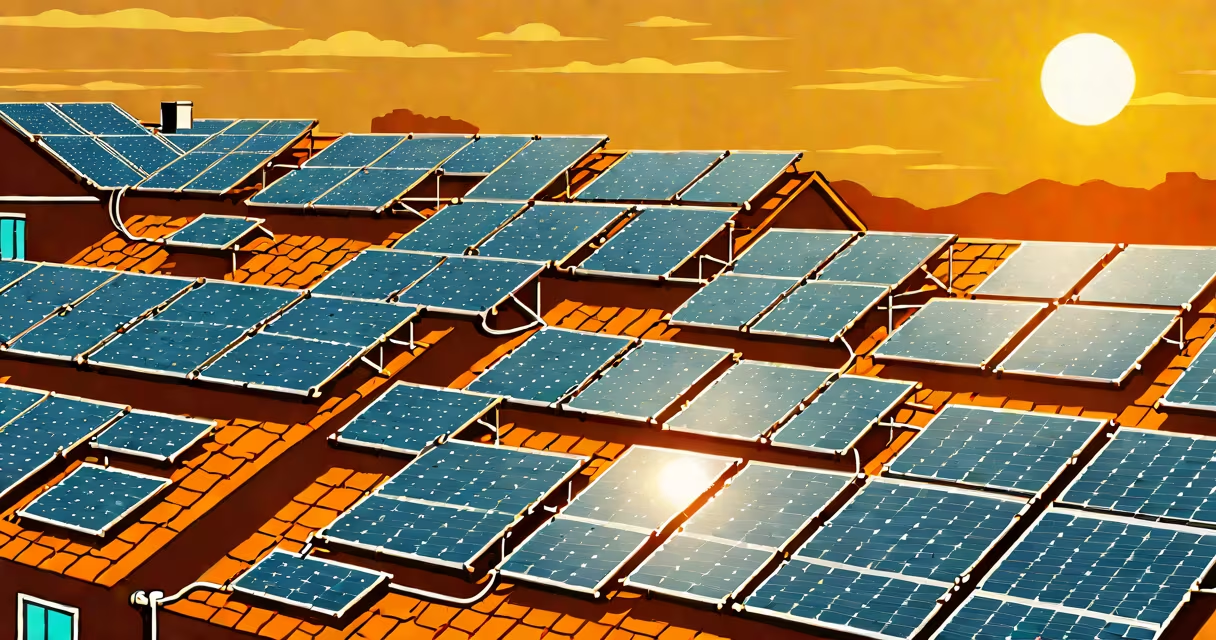
Solar PV stands for photovoltaic, a term describing the process of converting sunlight directly into electrical energy using semiconductor materials, typically silicon. This technology forms the core of modern solar panels used in residential, commercial, and utility-scale installations.
The word "photovoltaic" combines "photo," meaning light, and "voltaic," referring to electric voltage. When photons from sunlight strike a photovoltaic cell, they dislodge electrons in the semiconductor material, generating a flow of direct current (DC) electricity. This principle was first demonstrated in 1839 by French physicist Alexandre-Edmond Becquerel, though practical solar cells didn't emerge until the 1950s at Bell Labs.
Today, solar PV systems are deployed globally, with over 1.3 terawatts of installed capacity as of 2023, according to the International Energy Agency (IEA). These systems range from small rooftop arrays to massive solar farms spanning hundreds of acres. The efficiency of commercial solar panels averages between 15% and 22%, meaning they convert that portion of sunlight into usable electricity.
At the heart of every solar PV system is the photovoltaic cell. Most cells are made from crystalline silicon-either monocrystalline (high efficiency, uniform dark appearance) or polycrystalline (slightly lower efficiency, blue-speckled look). When sunlight hits the cell's surface, it excites electrons in the silicon, creating electron-hole pairs. An internal electric field within the cell separates these charges, driving them toward opposite electrodes, producing DC current.
This DC output flows through wiring to an inverter, which converts it into alternating current (AC)-the standard form used by homes and the electrical grid. The AC electricity then powers household appliances or feeds into the grid via a net meter. Excess energy generated during peak sun hours can be stored in batteries or credited to the utility provider under net metering policies.
A typical 6-kilowatt residential system generates about 8,000 to 10,000 kilowatt-hours annually, depending on location and panel tilt. In sunny regions like California or Arizona, such a system can offset 90% or more of a home's annual electricity usage.
Solar PV systems fall into three main categories based on their connection to the grid and energy storage:
| System Type | Grid Connection | Battery Storage | Use Case |
|---|---|---|---|
| Grid-tied | Yes | No (optional) | Most common; reduces electricity bills, exports surplus to grid |
| Off-grid | No | Required | Remote locations; relies entirely on solar and battery backup |
| Hybrid | Yes | Yes | Combines grid access with battery storage; maintains power during outages |
Hybrid systems are increasingly popular in areas prone to blackouts. A 2022 study by the National Renewable Energy Laboratory (NREL) found that hybrid systems reduced outage duration by 78% compared to grid-tied-only setups in rural Texas.
Many assume solar PV systems work only on sunny days. In reality, modern panels generate electricity even under diffuse light-cloudy or overcast conditions still allow 10% to 25% of normal output. Germany, despite its northern latitude and frequent cloud cover, produces over 12% of its national electricity from solar PV, according to the Fraunhofer Institute for Solar Energy Systems.
Another myth is that solar panels require constant maintenance. In practice, most systems need cleaning only once or twice a year, especially in dry, dusty climates. A 2021 study published in Renewable Energy showed that cleaning solar panels every six months increased energy yield by 5.7% on average, but the effect diminished beyond that frequency.
Some confuse solar PV with solar thermal systems. While both use sunlight, solar thermal captures heat for water heating or industrial processes, whereas solar PV generates electricity. A solar thermal system in a residential setting may use mirrors or tubes to heat water, while a PV system uses panels to produce power.
In 2023, I installed a 7.2-kW solar PV system on my home in Phoenix, Arizona. The range consists of 24 monocrystalline panels, each rated at 300 watts. With an average of 6.5 peak sun hours per day, the system produced approximately 14,000 kWh annually-enough to cover 95% of my household's electricity needs.
The system includes a 10-kWh lithium-ion battery and a hybrid inverter. During a summer storm that knocked out power for 12 hours, the battery maintained essential loads-refrigeration, lighting, and Wi-Fi-without interruption. The system's monitoring app displayed real-time production and consumption data, showing a daily surplus of 18 kWh on clear days.
After five years, the system has paid for itself through electricity savings and state incentives. The local utility offers a $0.05/kWh credit for exported power, adding $300 annually to the return on investment.
Solar PV is central to global decarbonization efforts. The Intergovernmental Panel on Climate Change (IPCC) identifies solar PV as one of the most scalable technologies for reducing carbon emissions from electricity generation. By 2050, the IEA projects solar PV could supply 25% of global electricity demand.
Unlike fossil fuel plants, solar PV systems have no moving parts and emit no greenhouse gases during operation. Their lifecycle emissions are among the lowest of any power source-about 40 grams of CO₂ equivalent per kWh, compared to 400-1,000 g/kWh for natural gas and coal.
Understanding what solar PV stands for isn't just about decoding acronyms-it's about recognizing a foundational technology shaping the future of clean energy. From individual rooftops to national grids, solar PV transforms sunlight into power with increasing efficiency and decreasing cost.
For deeper insight into how solar pv tech works and evolves, explore solar pv tech.