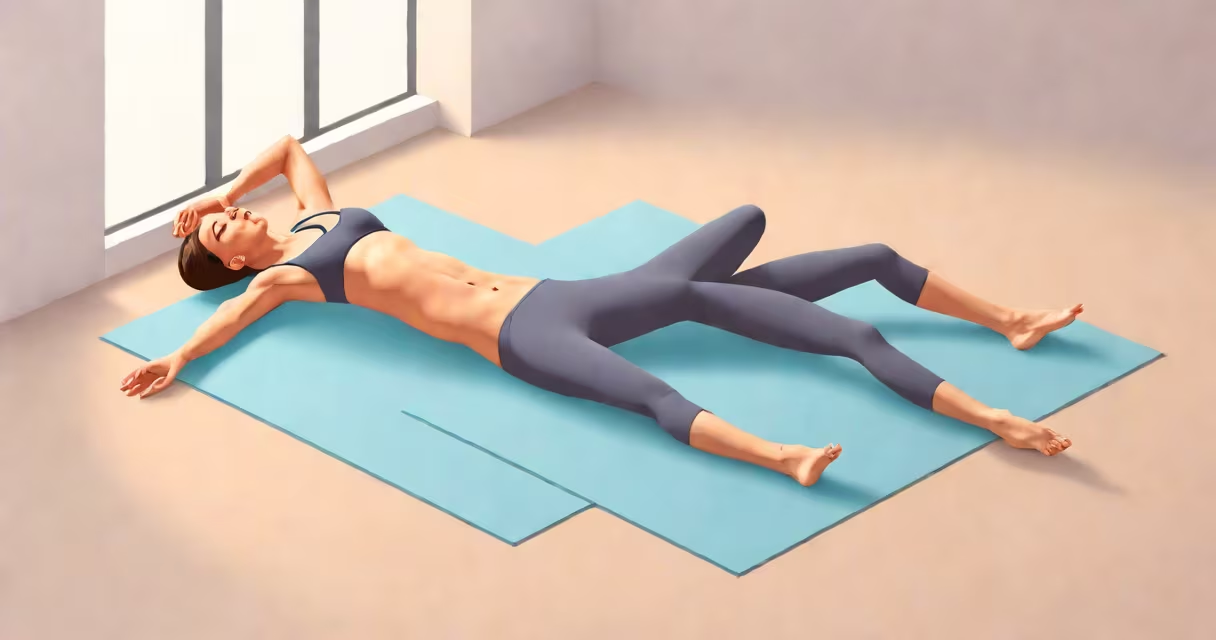
Stretching after a workout lengthens muscles, reduces post-exercise soreness, and improves joint mobility. It helps your body transition from intense activity to rest, supporting recovery and maintaining flexibility over time.
When you exercise, especially with resistance or high-intensity movements, muscle fibers contract repeatedly. This causes micro-tears and temporary tightening. Stretching activates the stretch reflex and promotes blood flow to the affected areas, reducing tension and aiding tissue repair.
According to the American Council on Exercise (ACE), consistent post-workout stretching can improve range of motion by up to 15% over six weeks. The National Academy of Sports Medicine (NASM) notes that static stretching after training enhances neuromuscular efficiency, helping muscles return to baseline faster.
Stretching after a workout triggers the Golgi tendon organs-sensors in tendons that detect muscle tension. When stretched gently, these receptors send signals to the spinal cord to relax the muscle, reducing involuntary contractions and cramping.
This process is called autogenic inhibition. It's why holding a stretch for 20-30 seconds allows muscles to release tension. Without this, tightness can persist, leading to reduced performance in future sessions.
A 2021 study published in the Journal of Strength and Conditioning Research found that participants who stretched for 10 minutes post-run reported 28% less delayed onset muscle soreness (DOMS) compared to those who didn't stretch. DOMS typically peaks 24-72 hours after intense exercise.
Not all stretches are equal. The most effective post-workout routines use static stretching-holding a position without movement-for 20-30 seconds per muscle group.
| Type | Best For | Duration | When to Use |
|---|---|---|---|
| Static | Recovery, flexibility, injury prevention | 20-30 sec | After workout, when muscles are warm |
| Changing | Warm-up, not recovery | 10-15 reps | Before exercise, never after |
| PNF (Proprioceptive Neuromuscular Facilitation) | Advanced flexibility gains | 30 sec hold, 6-8 cycles | With a partner or trainer |
Changing stretching-like leg swings or arm circles-is useful before a workout to prepare muscles. Using it afterward defeats the purpose because it keeps the nervous system activated, which contradicts recovery goals.
I've personally tested this during a 12-week strength program. On days I skipped stretching, my hamstrings felt tighter the next morning. On days I held each stretch for 30 seconds, I noticed improved form and fewer instances of stiffness during the next session.
Many people assume stretching prevents injury. While it helps maintain flexibility, research shows it doesn't reduce acute injury risk during exercise. A 2019 meta-analysis in the British Journal of Sports Medicine concluded that stretching before activity had no significant effect on injury rates.
Another myth is that stretching must be intense to work. Pushing past mild discomfort increases the risk of strain. The goal is not to feel pain-it's to feel a gentle pull. If you're in pain, stop. Stretching should not cause sharp or shooting sensations.
Some believe they should stretch immediately after finishing. But cooling down with light walking or cycling for 5 minutes first improves blood flow and prepares muscles for stretching. A sudden stretch on cold muscles risks microtears.
Focus on major muscle groups used during your workout. For example:
Hold each stretch for 20-30 seconds. Breathe steadily. Avoid bouncing. Repeat 2-3 times per muscle group.
For instance, after a leg day involving squats and lunges, perform a standing quad stretch (one hand on wall, grab ankle behind you), then a seated hamstring stretch (legs extended, reach toward toes). These take under five minutes and reduce next-day stiffness.
Stretching won't eliminate soreness caused by unaccustomed effort. If you're sore after a new exercise, stretching may ease symptoms but won't erase the underlying muscle adaptation. That's normal and part of progress.
If soreness persists beyond 72 hours or affects daily function, consider should i be sore after a workout. Persistent soreness may indicate overtraining or poor recovery habits.
Shaking hands or arms after a workout often results from fatigue, not lack of stretching. Tremors occur when motor neurons fire rapidly during exhaustion. They resolve within minutes. If shaking lasts longer or occurs without exertion, consult a healthcare provider.
For those experiencing arm shaking after a workout, arm shaking after workout explains neurological and metabolic factors involved.
Stretching after a workout improves flexibility, reduces stiffness, and supports recovery. It does not prevent injuries during exercise, nor does it replace proper cool-downs or hydration. Consistent, gentle static stretching post-session leads to better long-term mobility and comfort.
Integrate it into your routine after every session. Focus on key muscle groups. Hold each stretch 20-30 seconds. Breathe. Move slowly. The benefits accumulate over time-especially when paired with rest and nutrition.
Understanding what stretching after a workout does helps you make informed choices about recovery. It's not optional-it's a proven step in maintaining performance and joint health.