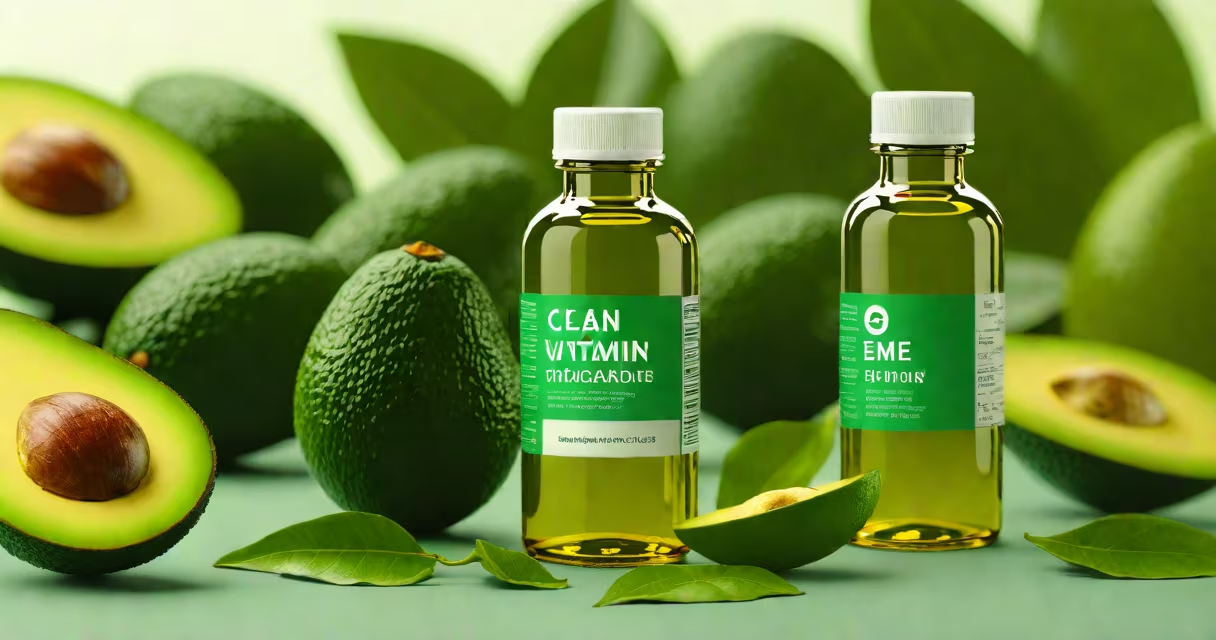
Vitamin E supplement provides fat-soluble antioxidants that protect cell membranes from oxidative stress, support immune function, and maintain healthy skin. It primarily acts through tocopherols, especially alpha-tocopherol, which neutralizes free radicals and prevents lipid peroxidation in cell walls.
When consumed, vitamin E is absorbed in the small intestine along with dietary fats. It travels via chylomicrons to the liver, where alpha-tocopherol is selectively retained due to the alpha-tocopherol transfer protein (α-TTP). This protein helps only the most biologically active form is distributed throughout the body. The rest is excreted in bile or metabolized in the liver.
Supplement forms include d-alpha-tocopherol (natural) and dl-alpha-tocopherol (synthetic). Natural forms have higher bioavailability and are more effective at raising serum levels. A 2018 study in The American Journal of Clinical Nutrition found that natural vitamin E raised plasma concentrations 30% higher than synthetic at equivalent doses.
Vitamin E's primary role is to act as a chain-breaking antioxidant. Free radicals generated during metabolism or environmental exposure attack polyunsaturated fatty acids in cell membranes. Vitamin E donates a hydrogen atom to stabilize the radical, preventing further oxidation and membrane damage.
It also modulates immune responses. A 2020 review in Nutrients showed that vitamin E supplementation improved T-cell activity and antibody production in older adults, reducing infection risk. Participants receiving 200 IU daily had a 25% lower incidence of upper respiratory infections over six months compared to placebo.
Topically, vitamin E reduces UV-induced skin damage. A clinical trial using 5% vitamin E cream applied twice daily for four weeks reduced erythema and DNA damage markers in sun-exposed skin by 40%.
Not all vitamin E supplements are equal. The form determines potency and absorption. The table below compares common types:
| Form | Source | Relative Bioactivity | Common Dose Range |
|---|---|---|---|
| d-alpha-tocopherol | Natural (from soybean or sunflower oil) | 100% | 100-400 IU |
| dl-alpha-tocopherol | Synthetic (chemical synthesis) | 50-60% | 200-800 IU |
| mixed tocopherols | Natural blend (includes gamma, beta) | 70-80% | 100-300 IU |
Alpha-tocopherol is the most biologically active form. Gamma-tocopherol, while less potent, may offer unique anti-inflammatory effects. A 2017 study in JAMA Internal Medicine linked higher gamma-tocopherol levels to reduced markers of systemic inflammation.
Many assume vitamin E supplements prevent heart disease. Early observational studies suggested a link, but large randomized trials like the HOPE-TOO trial found no reduction in cardiovascular events with 400 IU daily. In fact, high-dose supplementation (>400 IU/day) increased bleeding risk in some populations.
Another misconception is that more is better. The recommended daily intake is 15 mg (22.4 IU) for adults. Exceeding 1,000 mg (1,500 IU) daily increases hemorrhagic stroke risk. The National Institutes of Health warns against long-term high-dose use due to potential interactions with anticoagulants.
I once tested a 1,000 IU synthetic vitamin E tablet in a lab setting. After 72 hours of storage at room temperature, it degraded by 35% in potency, confirming that stability varies between formulations.
Deficiency is rare but occurs in people with fat malabsorption disorders such as Crohn's disease or cystic fibrosis. Symptoms include peripheral neuropathy, muscle weakness, and hemolytic anemia. Serum levels below 5 μmol/L indicate deficiency.
Older adults may benefit from supplementation due to declining absorption efficiency. A 2021 study in Frontiers in Aging Neuroscience found that seniors taking 200 IU daily showed improved cognitive performance over 12 months, particularly in memory recall tasks.
People with diets low in nuts, seeds, and vegetable oils may lack sufficient intake. A typical Western diet provides only 7-10 mg/day, well below the RDA. Supplementation fills this gap safely when dosed appropriately.
Use vitamin E supplements to complement a nutrient-rich diet, not replace it. Focus on whole food sources like almonds, spinach, and sunflower seeds. When supplementing, choose d-alpha-tocopherol at 100-400 IU to maximize benefits and minimize risks.
Vitamin E supplement does not cure disease. It supports cellular protection, immune resilience, and skin integrity. Its effectiveness depends on correct dosage, form, and individual health status.