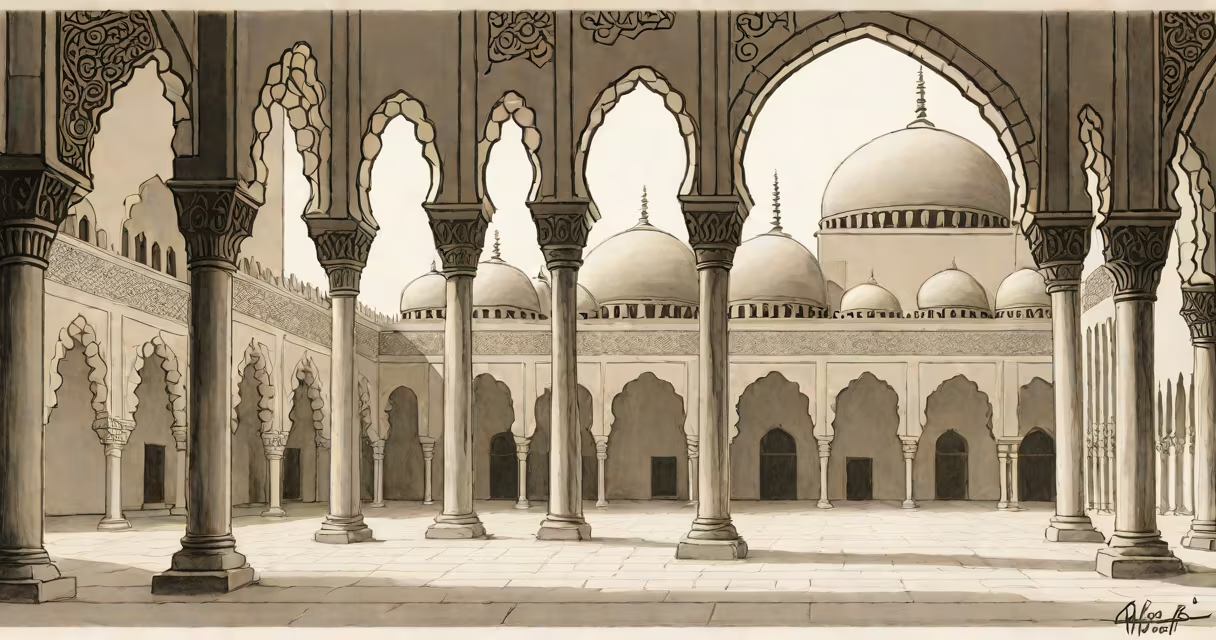
A waqf is a permanent charitable endowment in Islamic law, where property or assets are dedicated to religious, educational, or social purposes and never reverted to the donor's heirs. The income generated supports ongoing community needs such as mosques, schools, or hospitals.
Waqf originated in the early Islamic period and became institutionalized under classical Sharia law. It operates through a formal declaration that permanently transfers ownership of assets-land, buildings, or funds-to a charitable cause. The original owner cannot reclaim the asset, and the profits from it are used exclusively for the stated purpose. This structure ensures long-term sustainability of public welfare projects.
Modern waqf systems exist in countries like Egypt, Turkey, Indonesia, and Saudi Arabia. In Turkey, the Directorate of Foundations manages over 10,000 waqf properties. In Egypt, waqf institutions administer land valued at over $1 billion. These systems continue to serve communities through education, healthcare, and housing support.
The process begins with a formal declaration called a *waqfiyya*, a legal document specifying the asset, its intended purpose, and the beneficiaries. Once established, the waqf becomes irrevocable. The trustee-the *mutawalli*-manages the assets and distributes income according to the founder's instructions.
For example, a 13th-century waqf in Cairo designated a plot of land to generate rental income for a madrasa (Islamic school). The income funded teachers' salaries, student stipends, and book purchases. That same institution still operates today, funded entirely by waqf income.
Waqf differs from *sadaqah* (voluntary charity) because it creates a permanent, legally binding obligation. Unlike temporary donations, waqf assets remain in use indefinitely. The foundation may even grow through reinvestment of profits, ensuring continuous service delivery.
There are two primary categories based on the nature of the asset:
| Type | Asset Type | Management Responsibility | Example |
|---|---|---|---|
| Waqf al-mal | Money or financial assets | Trustee manages investments | Endowment for a university scholarship fund |
| Waqf al-'ayn | Physical property (land, buildings) | Trustee oversees maintenance and leasing | Land leased to farmers, income used for orphan care |
Some waqfs combine both forms. For instance, a waqf might include a building and a cash reserve for repairs and staffing. The key requirement is that the asset remains in perpetual use for the specified charitable goal.
Waqf is often mistaken for a form of tax or government funding. It is not. It is a private, religiously sanctioned act of piety and social responsibility. The founder retains no control over the assets after establishment.
Another misunderstanding is that waqf only benefits Muslims. While rooted in Islamic tradition, many waqf institutions serve diverse populations. In Ottoman Istanbul, waqf-funded hospitals treated Christians, Jews, and Muslims alike. Modern waqf projects in Africa and Southeast Asia provide clean water and food aid regardless of faith.
A lesser-known fact: waqf was historically used to fund scientific research. The House of Wisdom in Baghdad, which translated Greek and Persian texts into Arabic, was partially supported by waqf income. This shows waqf's role in advancing knowledge, not just religion.
In the 16th century, Sultan Suleiman the Magnificent established waqf trusts to maintain infrastructure across his empire. One waqf in Damascus funded a hospital, a library, and a public bathhouse. The income came from 37 plots of farmland and a textile workshop.
Records show the waqf generated enough revenue to cover staff salaries, medical supplies, and repairs. The system operated for over 400 years until the 20th century. Today, remnants of the complex still stand, and descendants of the original trustees still manage parts of the estate.
This example illustrates how waqf can outlive empires. The model persists in modern forms-such as waqf-based universities in Malaysia and waqf-supported refugee shelters in Syria-proving its adaptability and resilience.
Waqf is not the same as a modern nonprofit or a trust in Western law. While both involve asset management for public good, waqf is governed by Islamic jurisprudence (*fiqh*) and requires a specific religious intention (*niyyah*). A Western trust can be dissolved or altered by court order; a waqf cannot be revoked once validly established.
Also distinct from *zakat* (obligatory almsgiving), waqf is voluntary and permanent. Zakat is collected annually and distributed within a year. Waqf generates income continuously and serves a single purpose over centuries.
During my visit to a waqf-managed school in rural Morocco, I met a teacher who had served for 38 years-paid entirely from waqf income. The school's roof was repaired last year using waqf funds. No government subsidy. No foreign aid. Just a centuries-old commitment to education.
Understanding waqf reveals a model of sustainable giving deeply embedded in Islamic history. It is not a relic-it is a living structure for enduring social investment.
Waqf continues to shape communities worldwide. Its principles of permanence, accountability, and public benefit offer a proven alternative to short-term philanthropy. As global challenges grow, the enduring structure of waqf provides a blueprint for lasting impact.