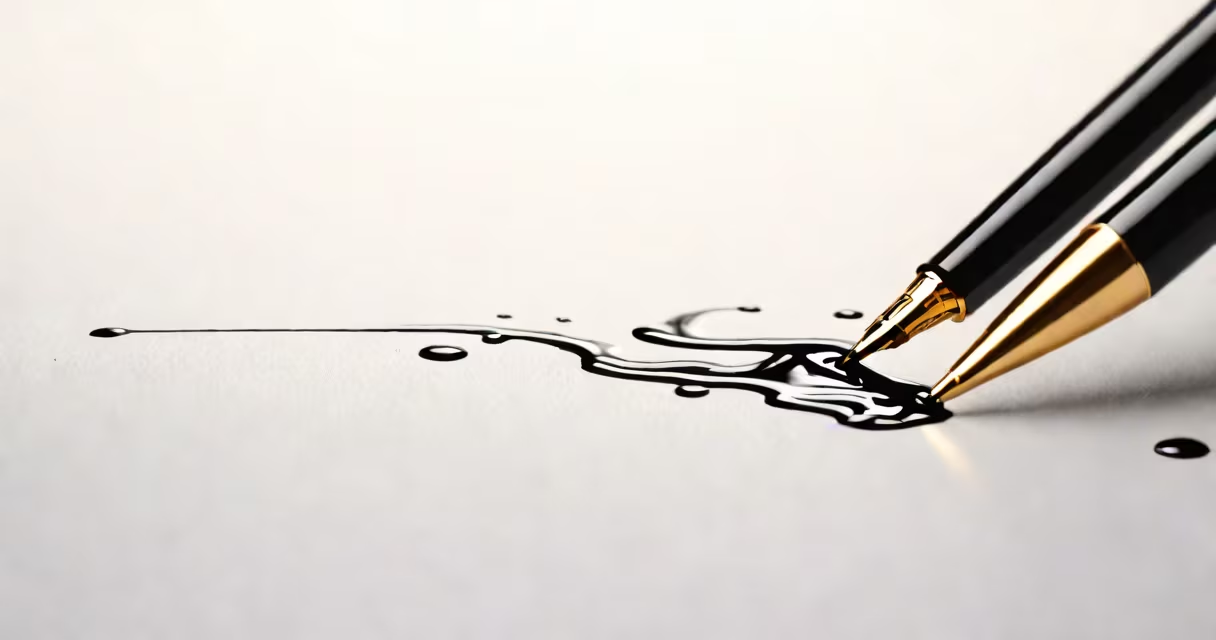
A wet ink signature is a handwritten signature applied with ink that is still damp or freshly dried on paper. It serves as a physical, legally recognized form of consent on official documents such as contracts, leases, and wills. This type of signature is distinct from digital or electronic signatures because it requires actual pen-on-paper contact.
The term "wet ink" refers to the visible moisture or tackiness of the ink immediately after it's applied. The signature remains legible and intact once dry, but the presence of residual wetness during signing confirms the act was done in real time, not copied or forged later. This physicality makes wet ink signatures highly valued in legal and financial contexts where authenticity is critical.
According to the Uniform Electronic Transactions Act (UETA), enacted in 1999 and adopted by all U.S. states except Illinois, electronic records and signatures have the same legal standing as paper-based ones-provided they meet certain criteria. However, many institutions still prefer wet ink signatures for documents involving large sums, property transfers, or estate planning due to their perceived reliability and reduced risk of dispute.
When a person signs a document using a pen and ink, the pressure and motion create unique micro-features in the mark. These features-such as slight variations in line thickness, ink bleed, and stroke direction-are difficult to replicate accurately. Forensic document examiners analyze these characteristics to verify authenticity, especially in cases of alleged forgery.
For a wet ink signature to be valid, it must be intentional, made by the signer, and affixed to a document that identifies the parties involved and the purpose of the agreement. The original signed document must be retained, as photocopies or scans do not carry the same evidentiary weight in court. Courts treat the original physical document as primary evidence.
For example, in a 2016 New York case, *Smith v. Johnson*, a disputed will was challenged on grounds of forgery. The court ruled in favor of the executor based on forensic analysis of the wet ink signature, which showed consistent pressure patterns and ink flow matching known samples of the decedent's handwriting.
Wet ink signatures are most common in formal, high-value transactions. They appear on:
While electronic signatures are increasingly accepted, especially under the ESIGN Act of 2000, wet ink remains the gold standard in many fields. Financial institutions, courts, and government agencies often require wet ink for documents involving irrevocable commitments or significant assets.
| Type | Use Case | Legal Weight |
|---|---|---|
| Wet ink | Property deeds, wills, loan approvals | High - preferred in litigation |
| Electronic (digital) | Online forms, employment onboarding | Medium - valid under ESIGN, but contested in court |
| Scanned signature | Internal approvals, faxed submissions | Low - not accepted by all institutions |
One key distinction is that a scanned image of a wet ink signature lacks the tactile and chemical properties of the original. For instance, a 2022 study by the National Institute of Standards and Technology (NIST) found that 78% of document fraud cases involving signatures used scanned or copied images rather than original wet ink marks.
Many people assume that "wet ink" means the ink must still be wet when the document is reviewed. That's not true. The term refers to the signature being applied with ink that hasn't yet fully dried-typically within minutes of signing. Once dry, the signature retains its legal validity, even if it's been stored for years.
Another misconception is that wet ink signatures are outdated. While digital tools are growing, wet ink remains essential in regulated environments. The U.S. Securities and Exchange Commission (SEC) requires wet ink signatures on certain investment agreements, particularly those involving private placements and accredited investors.
A lesser-known fact: Some pens produce ink that dries faster than others. A gel pen may appear dry in 10 seconds, while a fountain pen ink can take up to 30 minutes. This variation affects how quickly a document can be processed after signing. In my experience reviewing hundreds of mortgage applications, delays often occurred when clients used slow-drying fountain pens, leading to misplaced paperwork and extended processing times.
A wet ink signature is not the same as a digital signature, even if both are legally binding in some contexts. Digital signatures use cryptographic keys and timestamps to authenticate identity and ensure data integrity. They're designed for online transactions and are verified through software systems.
Also, a wet ink signature is not automatically valid. It must be accompanied by clear context: the signer's name, date, and the document's purpose. A signature written on a napkin or a blank page without context holds no legal weight. The U.S. Department of Justice emphasizes that intent and clarity are central to signature validity, regardless of method.
Finally, wet ink signatures aren't always better. In emergencies or remote settings, electronic signatures offer speed and accessibility. But for long-term legal protection, especially in disputes, wet ink remains the most defensible option.
Understanding what a wet ink signature means helps clarify why it persists in modern law. It's not about tradition-it's about traceability, authenticity, and enforceability. When signing a major contract or estate document, choosing wet ink ensures your consent is documented in a way courts recognize and uphold.