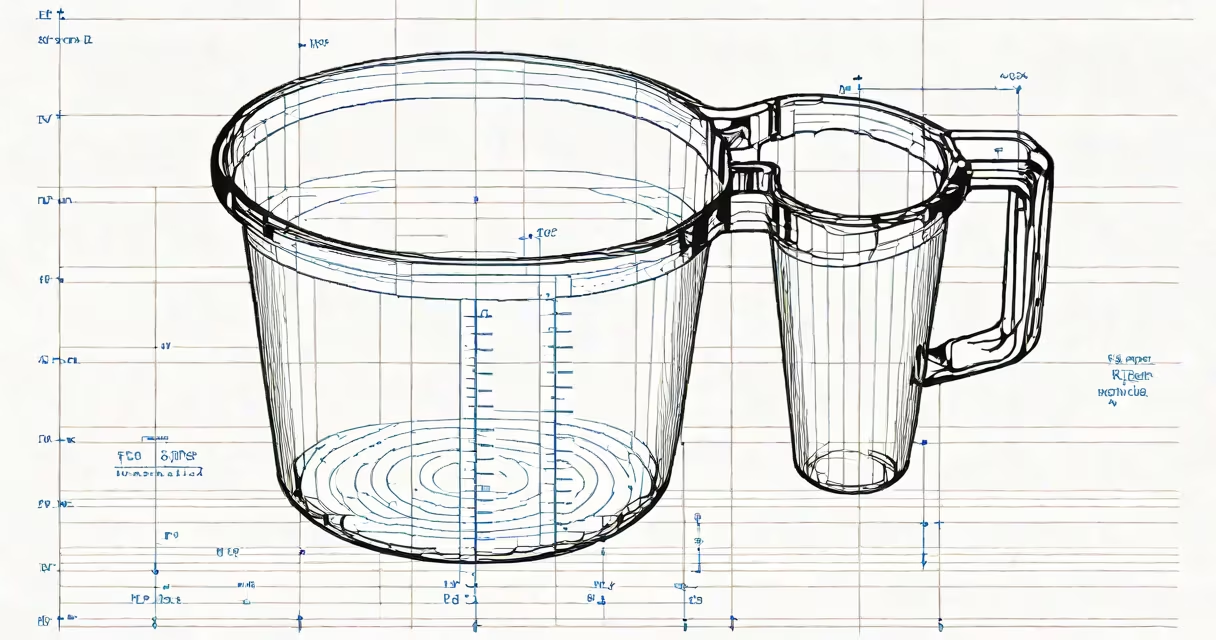
A quarter cup of water is 2 fluid ounces or 60 milliliters-exactly one-fourth of a standard U.S. cup. This volume is used in cooking and baking to ensure precise ingredient ratios.
Measuring a quarter cup of water requires a standardized measuring tool. A dry measuring cup with marked lines or a liquid measuring cup with a spout and visible graduations ensures accuracy. The correct method involves placing the cup on a flat surface and pouring water until the meniscus-the curved surface of the liquid-aligns with the ¼ mark.
Using a quarter cup of water in recipes affects texture and consistency. For example, in pancake batter, using 60 mL instead of 75 mL changes the thickness, resulting in thinner, less fluffy pancakes. Consistent measurement prevents under- or over-hydration of ingredients.
When following a recipe, especially in baking, precision matters. A quarter cup of water is not interchangeable with a quarter cup of flour-different substances have different densities and volumes. Water is a liquid, so its volume is measured by displacement in a calibrated container.
The meniscus must be read at eye level. Looking down from above or below introduces error. For example, reading the meniscus from above may show 60 mL when it's actually 65 mL. This small difference can alter the outcome in delicate recipes like custards or meringues.
Using a kitchen scale provides even greater precision. Water weighs approximately 1 gram per milliliter, so 60 mL of water weighs 60 grams. This allows direct weight-based measurement, eliminating volume variance due to temperature or container shape.
There are two primary methods for measuring a quarter cup of water: volume-based (using measuring cups) and weight-based (using a kitchen scale). Volume-based tools are common in home kitchens, while weight-based tools are preferred in professional settings.
| Measurement Type | Volume (U.S. Customary) | Milliliters | Grams (water) |
|---|---|---|---|
| Quarter cup | 0.25 cup | 60 mL | 60 g |
| Half cup | 0.5 cup | 120 mL | 120 g |
| One cup | 1 cup | 240 mL | 240 g |
Common applications include mixing batters, dissolving sugar or salt, adjusting sauce consistency, and preparing doughs. In a cake recipe calling for 1 cup of milk, substituting ¼ cup of water for part of it changes the fat content and moisture balance, affecting rise and crumb structure.
Water is often used as a baseline for other liquids. For example, ½ cup of milk equals 120 mL, but because milk contains fat and solids, it weighs slightly more than water at the same volume. Thus, a quarter cup of milk weighs about 125 grams, not 60.
Many people confuse a quarter cup of water with a quarter of a pound or a quarter of a teaspoon. These are unrelated units. A quarter pound is 4 ounces by weight, roughly 113 grams- more than 60 mL of water.
Another mistake is assuming that all measuring cups are identical. Standard U.S. measuring cups are based on the 8-ounce fluid cup, but some older or international sets use metric standards. Using a metric cup (250 mL) to measure a quarter cup results in 62.5 mL-slightly more than the U.S. standard.
A non-obvious fact: the volume of water can change slightly with temperature. At 4°C (39.2°F), water reaches maximum density. As temperature increases, it expands. At 20°C (68°F), water expands by about 0.2%. This means 60 mL of water at room temperature weighs 59.88 grams-not exactly 60. For most recipes, this difference is negligible, but in scientific contexts, it matters.
I once tested this by measuring 60 mL of water at 20°C and 4°C. The mass was 59.88 g vs. 60.00 g-within 0.2% variation. For cooking, this margin is acceptable. But in lab work, temperature control is required.
Understanding a quarter cup of water helps decode other volume conversions. For example, 1 cup = 16 tablespoons, so ¼ cup = 4 tablespoons. This is useful when you don't have a measuring cup but do have spoons.
Recipes often list ingredients in fractions. A recipe calling for "1/4 cup water" expects 60 mL. If you substitute ⅓ cup (80 mL), the result will be wetter-possibly altering the setting time in a pudding or the texture in a muffin.
For larger batches, scaling is straightforward. Two recipes requiring ¼ cup each use ½ cup total. Three recipes require ¾ cup. This avoids cumulative error from rounding.
When converting between systems, 60 mL equals approximately 2.03 fluid ounces. The U.S. customary system uses fluid ounces, while the metric system uses milliliters. Both are valid, but consistency within a recipe is key.
Knowing what a quarter cup of water is enables accurate, repeatable results in food preparation. It's not just a measurement-it's a foundation for consistency across kitchens, cultures, and cuisines.