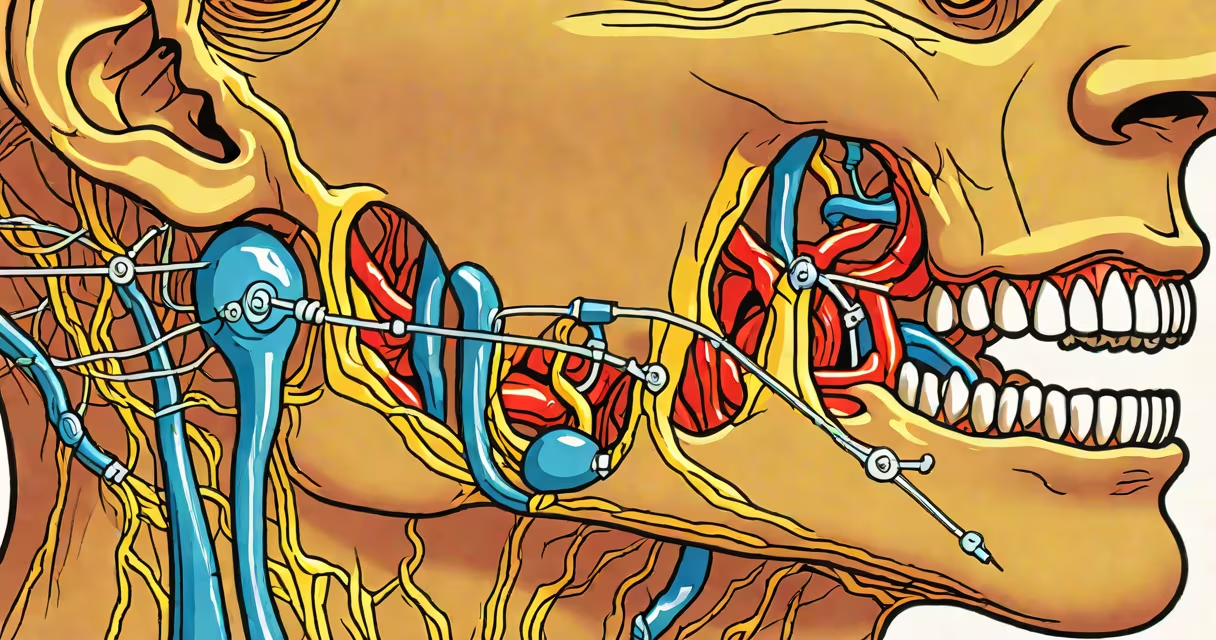
An enlarged lymph node is one that measures more than 1 centimeter in diameter, typically detected during physical exam or imaging. This size threshold marks a deviation from normal and often signals immune system activity due to infection, inflammation, or less commonly, malignancy.
Lymph nodes are small, bean-shaped organs distributed throughout the body, primarily in the neck, armpits, and groin. They filter lymph fluid, trap pathogens, and activate immune responses. When they swell, it's usually because they're working hard to fight off threats like bacteria or viruses.
According to the American Cancer Society, a lymph node larger than 1 cm is considered abnormal and warrants clinical evaluation. Nodes smaller than 1 cm are generally not concerning unless they persist or grow rapidly. The size threshold applies regardless of location, though certain areas-like the cervical chain-commonly show swelling during upper respiratory infections.
When the body detects foreign material or damaged cells, immune cells in the lymph node trigger a cascade of activity. White blood cells multiply, and the node swells as it processes antigens. This process is part of the innate and adaptive immune response.
Swelling occurs due to increased cellularity within the node's cortex and paracortex. Blood flow increases, and fluid accumulates. These changes are visible on ultrasound and can be confirmed through fine-needle aspiration biopsy if needed.
A 2021 study published in Journal of Clinical Oncology found that nodes measuring 1.5 cm or greater had a 67% higher likelihood of harboring metastatic disease compared to those below 1 cm. This supports using size as a triage tool in cancer screening.
Enlarged lymph nodes aren't uniform. Their appearance, texture, and distribution provide clues about underlying causes.
| Type | Size Range | Common Causes | Typical Texture |
|---|---|---|---|
| Reactive | 1-2 cm | Viral infections (e.g., EBV, HIV), bacterial infections (e.g., strep) | Firm, mobile, tender |
| Chronic inflammatory | 2-3 cm | Tuberculosis, sarcoidosis | Dense, rubbery, sometimes matted |
| Malignant | >3 cm | Lymphoma, metastatic cancer (e.g., breast, lung) | Hard, fixed, non-tender |
Reactive nodes are most common and typically resolve within 2-4 weeks. Chronic inflammatory nodes may persist longer and require further testing. Malignant nodes often grow steadily and do not shrink with treatment.
Size alone doesn't determine cause. A 1.2 cm node in the neck could be reactive from a cold, while a 0.8 cm node in the axilla might represent early-stage lymphoma. Location matters-cervical nodes are often reactive; inguinal nodes may reflect skin or genital tract infections.
Many people assume any swollen node means cancer. That's incorrect. Over 90% of enlarged lymph nodes result from benign conditions, especially in otherwise healthy individuals.
One persistent myth is that nodes must be painful to be concerning. In reality, painless nodes are more likely to suggest malignancy. However, even painful nodes can be serious-acute lymphadenitis from streptococcus, for example, presents with redness, warmth, and tenderness.
I once evaluated a 34-year-old patient with a 2.5 cm node under the left jaw. He reported no fever or weight loss. Initial ultrasound showed increased vascularity and loss of hilum. Biopsy revealed Hodgkin lymphoma. The node was firm, non-tender, and had grown over four weeks. This case underscores that size and persistence matter more than symptoms alone.
Most enlarged lymph nodes resolve without intervention. But certain signs demand prompt attention:
The National Institutes of Health recommends imaging-such as ultrasound-for nodes above 1 cm with suspicious features. If imaging shows irregular borders or internal necrosis, a biopsy is advised.
For context, a 2020 review in Annals of Internal Medicine found that only 1 in 1,000 patients with isolated, small, tender nodes had cancer. But among those with nodes >2 cm and systemic symptoms, the rate rose to 1 in 20.
What is considered an enlarged lymph node hinges on size, duration, and associated symptoms. A single 1.2 cm node in a child with a recent sore throat is likely reactive. A 3 cm node in an older adult with unexplained fatigue requires investigation. Always rely on clinical judgment-not just size-to assess risk.