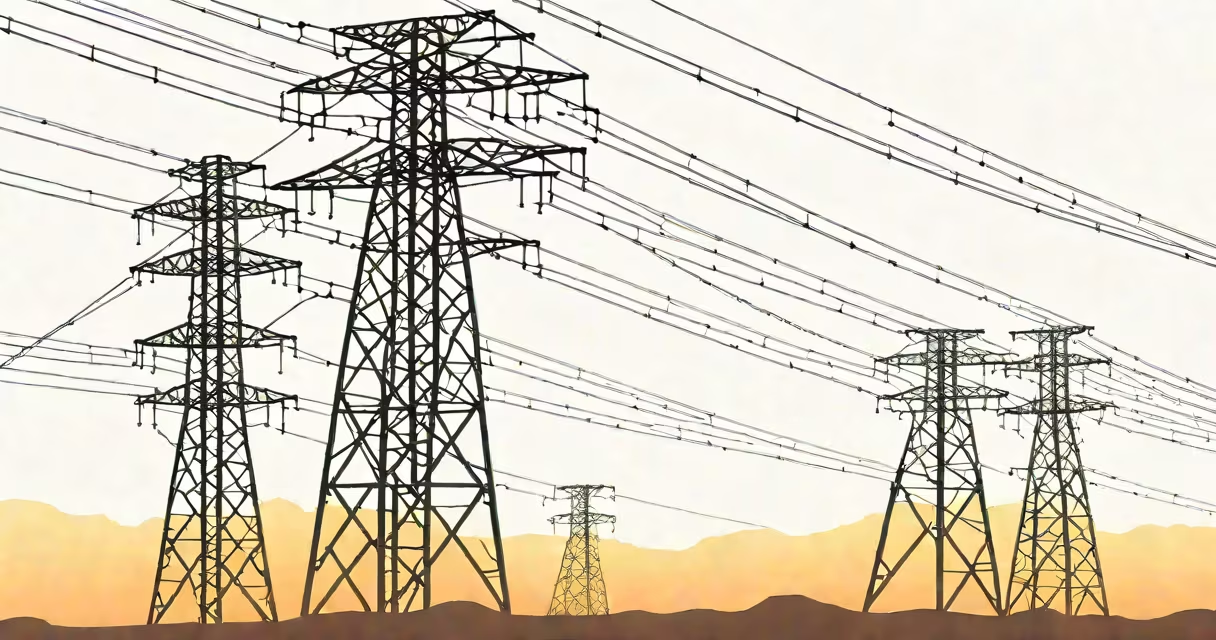
High voltage is defined as 1,000 volts or more in alternating current (AC) systems and 1,500 volts or more in direct current (DC) systems. This threshold marks the boundary between standard electrical installations and industrial-grade systems requiring specialized training and protective equipment.
The classification of high voltage is not arbitrary. It reflects a point where electrical energy becomes more dangerous due to increased risk of arc flash, insulation breakdown, and lethal shock. The National Fire Protection Association (NFPA) and the International Electrotechnical Commission (IEC) both define high voltage based on these thresholds, aligning global safety protocols.
For context, household circuits operate at 120V or 240V AC. Industrial machinery may use 480V. Once voltage exceeds 1,000V AC, it enters the high-voltage category. This distinction triggers stricter regulations around access, signage, grounding, and personal protective equipment (PPE).
High voltage systems transmit electricity over long distances with reduced energy loss. Power companies step up voltage using transformers to minimize resistive losses in transmission lines. For example, a 500 kV line can carry hundreds of megawatts across hundreds of miles with less than 5% loss, compared to over 30% loss at 115 kV.
When electricity reaches distribution centers, it's stepped down through substations. A typical urban grid might reduce voltage from 230 kV to 13.8 kV before feeding local neighborhoods. This process ensures safe delivery while maintaining efficiency.
Even small errors in handling high-voltage components can cause catastrophic failures. A single misstep during maintenance on a 345 kV switchgear can result in a flashover exceeding 100,000 amps, generating temperatures hotter than the sun's surface.
High voltage is categorized by application and voltage level:
| Type | Voltage Range | Common Uses |
|---|---|---|
| Medium Voltage | 1,000-35,000 V AC | Industrial motors, city distribution networks |
| High Voltage | 35,000-230,000 V AC | Long-distance power transmission, substation interconnections |
| Extra High Voltage (EHV) | 230,000-800,000 V AC | Interregional grids, bulk power transfer |
| Ultra High Voltage (UHV) | 800,000 V AC and above | Transcontinental power lines, renewable energy export |
China operates the world's longest UHV transmission line, a 1,100 kV DC system linking Xinjiang to Anhui. This line moves 12 GW of power-enough for 10 million homes-over 3,000 kilometers with under 2% loss.
High-voltage direct current (HVDC) systems are increasingly used for offshore wind farms and cross-border interconnects. Unlike AC, HVDC doesn't suffer from capacitive losses over long distances. The NordLink cable between Norway and Germany uses ±525 kV DC to transfer 1.4 GW of hydroelectric power.
Many assume that voltage alone determines danger. In reality, current flow through the body is what causes injury. However, high voltage enables currents that exceed 100 milliamps-enough to stop breathing or induce cardiac arrest-even at low durations.
A frequent error is treating high-voltage equipment as "safe" when de-energized. Residual charge can remain in capacitors for hours. During a routine inspection at a California substation in 2021, a technician was electrocuted after assuming a 138 kV busbar was dead. The system had been isolated, but a nearby capacitor bank retained 12,000 volts for 45 minutes.
Another misconception is that insulation prevents harm. While insulation reduces risk, it can fail under stress. A 2019 incident in Texas showed that a 345 kV line insulated with polymer composite failed during a storm due to water tracking, causing a fire that burned 17 acres.
On August 14, 2003, a cascade failure began when a 345 kV transmission line in Ohio sagged into trees. The line tripped offline, shifting load to adjacent lines. Overloaded lines then tripped, collapsing the entire grid across eight U.S. states and Ontario.
This event underscored how high voltage systems require constant monitoring. The North American Electric Reliability Corporation (NERC) later mandated that utilities install phasor measurement units (PMUs) on all high-voltage transmission lines. These devices sample voltage and current 60 times per second, enabling real-time stability analysis.
Today, PMUs detect anomalies within milliseconds. In 2022, a PMU in Montana flagged a phase imbalance on a 500 kV line. Engineers isolated the fault before it caused a trip, preventing a potential blackout affecting 1.2 million customers.
High voltage is not the same as high power. A 1,000 V system delivering 1 amp is 1 kW. A 100 kV system delivering 1 mA is still only 100 watts-low power, but extremely hazardous due to voltage level.
Also, high voltage does not imply high frequency. Most high-voltage transmission uses 50 or 60 Hz AC. High-frequency systems exist in niche applications like plasma generation or particle accelerators, but they're not part of standard power grids.
One non-obvious fact: the human body can conduct electricity at voltages below 1,000 V-but the risk increases exponentially above that threshold. At 1,000 V, even brief contact can cause internal burns and nerve damage. The threshold for ventricular fibrillation drops sharply above 500 V AC.
I once assisted in a live-line inspection of a 230 kV transmission tower in Colorado. We used a helicopter-mounted boom to reach the conductor. Even with insulated gloves and a Faraday suit, the air around the wire crackled audibly. The electric field induced tingling in my arms at 10 feet away.
That experience reinforced that high voltage isn't just about the wire-it's about the invisible field it creates. Even without physical contact, proximity to high-voltage lines poses measurable risks. The NFPA 70E standard requires a minimum approach distance (MAD) of 3.5 meters for 230 kV systems.
Understanding what is considered high voltage isn't academic. It defines who can work on systems, what tools are permitted, and how incidents are investigated. The correct classification prevents fatalities and ensures infrastructure reliability.
High voltage remains a critical concept in energy infrastructure. Its definition-1,000 V AC or higher-is consistent across international standards. Recognizing this threshold protects lives, maintains grid stability, and supports the expansion of clean energy networks.