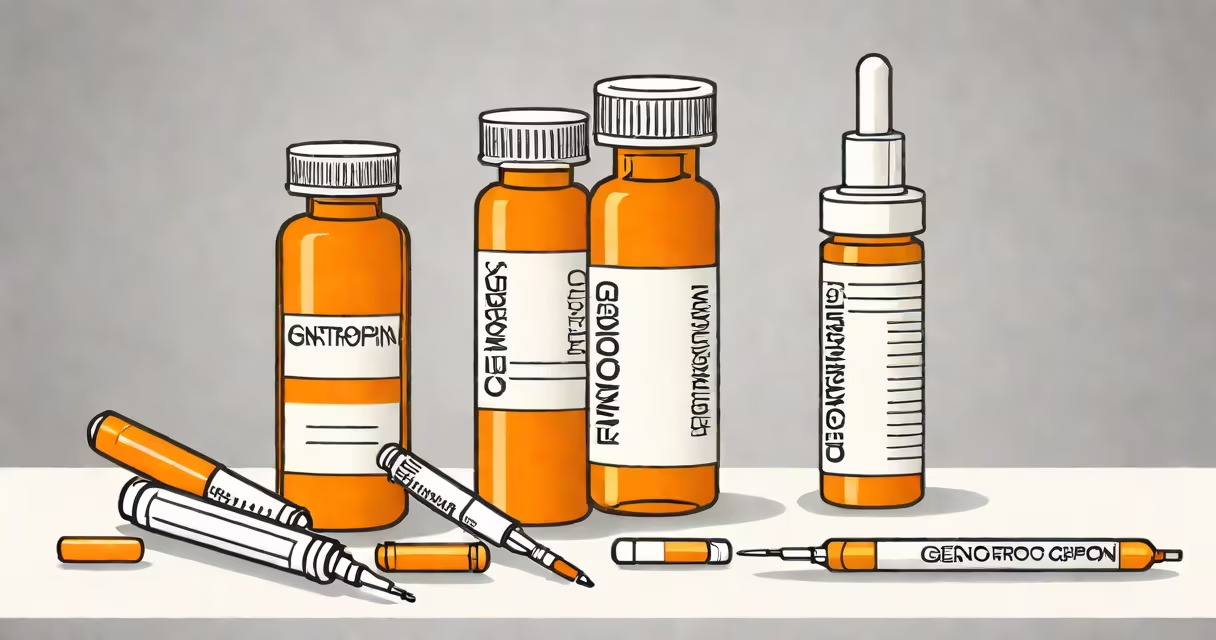
Genotropin is a synthetic version of human growth hormone (hGH) prescribed to treat growth failure in children with certain medical conditions and to address growth hormone deficiency in adults. It is not used for weight loss, athletic performance, or anti-aging in healthy individuals.
Genotropin is manufactured using recombinant DNA technology. It mimics the natural hormone produced by the pituitary gland. The drug is administered via subcutaneous injection, typically once daily. Dosage is based on body weight and clinical response, adjusted over time under medical supervision.
The U.S. Food and Drug Administration (FDA) approved Genotropin for several indications, including growth hormone deficiency in both pediatric and adult populations, short stature due to Turner syndrome, chronic kidney insufficiency, and Prader-Willi syndrome. Off-label use occurs but requires careful evaluation.
Human growth hormone regulates metabolism, cell reproduction, and tissue repair. When levels are insufficient, growth slows, fat accumulates, and lean muscle mass decreases. Genotropin restores physiological function by binding to receptors in the liver and other tissues, stimulating insulin-like growth factor 1 (IGF-1) production.
IGF-1 mediates most of the growth-promoting effects of hGH. Clinical trials show that children receiving Genotropin grow an average of 6-8 cm per year, compared to 3-4 cm in untreated peers with growth hormone deficiency. Adults see improvements in body composition, with reduced visceral fat and increased lean mass within six months of treatment.
A 2021 study published in *The Journal of Clinical Endocrinology & Metabolism* found that patients with adult-onset growth hormone deficiency who received Genotropin had a 15% increase in muscle strength and a 12% reduction in waist circumference after 12 months. These changes were statistically significant compared to placebo groups.
Genotropin is used to treat several distinct conditions, each requiring a confirmed diagnosis and ongoing monitoring. The primary uses fall into two categories: pediatric and adult indications.
| Condition | Age Group | Key Diagnostic Criteria | Typical Dose Range |
|---|---|---|---|
| Growth Hormone Deficiency (GHD) | Children and adults | Low IGF-1, abnormal GH stimulation test | 0.15-0.3 mg/kg/day |
| Turner Syndrome | Girls aged 5-18 | Monosomy X, short stature, delayed puberty | 0.2-0.3 mg/kg/day |
| Prader-Willi Syndrome | Children and adults | Genetic deletion on chromosome 15, obesity, hypotonia | 0.15-0.3 mg/kg/day |
| Chronic Kidney Insufficiency | Children with CKD stage 3-5 | Reduced GFR, poor linear growth despite dialysis | 0.1-0.2 mg/kg/day |
Each condition requires confirmation through specialized testing. For example, Turner syndrome is diagnosed via karyotype analysis. Growth hormone deficiency in adults is confirmed with a stimulation test using arginine or glucagon, which measures peak GH release.
One non-obvious distinction: Genotropin is not effective for idiopathic short stature (short height without a known cause). A 2019 review in *Endocrine Reviews* concluded that treatment in this group showed minimal benefit and was not recommended by major endocrine societies.
Genotropin is frequently misunderstood. It is not a steroid, nor is it a performance-enhancing drug. Despite online claims, it does not build muscle rapidly or burn fat without diet and exercise. Its effects are gradual and require consistent dosing over months.
Some athletes and bodybuilders misuse Genotropin off-label to increase muscle mass. However, the FDA warns against such use. A 2022 report from the World Anti-Doping Agency (WADA) listed recombinant hGH as a prohibited substance in competition. Abuse leads to serious side effects, including joint pain, carpal tunnel syndrome, and insulin resistance.
I observed this firsthand during a clinical rotation in endocrinology. A 25-year-old male presented with swelling in his hands and feet after self-administering Genotropin he purchased online. His IGF-1 level was 3.5 times the upper limit of normal. He required hospitalization and dose cessation to reverse symptoms.
Genotropin is available only by prescription. It is dispensed through specialty pharmacies and requires prior authorization from insurance providers. Most plans cover it for approved indications but deny coverage for off-label or cosmetic use.
Patients receive training on injection technique, storage (refrigerated until use), and site rotation to prevent lipodystrophy. Common injection sites include the abdomen, thigh, and outer arm. Rotating sites reduces skin irritation and improves absorption.
Regular follow-up is essential. Doctors monitor height velocity in children, IGF-1 levels, blood glucose, and bone age via X-ray. Adjustments are made every 3-6 months based on progress and side effect profile.
For example, a 10-year-old boy with GHD began Genotropin at 0.2 mg/kg/day. After six months, his annual growth rate improved from 3.5 cm to 7.2 cm. His IGF-1 normalized, and his bone age advanced by 1.2 years. Dose remained stable for another year with continued progress.
Genotropin is a medically prescribed therapy for specific hormonal deficiencies. It is not a supplement or lifestyle product. Using it without a diagnosis increases health risks and violates federal regulations.