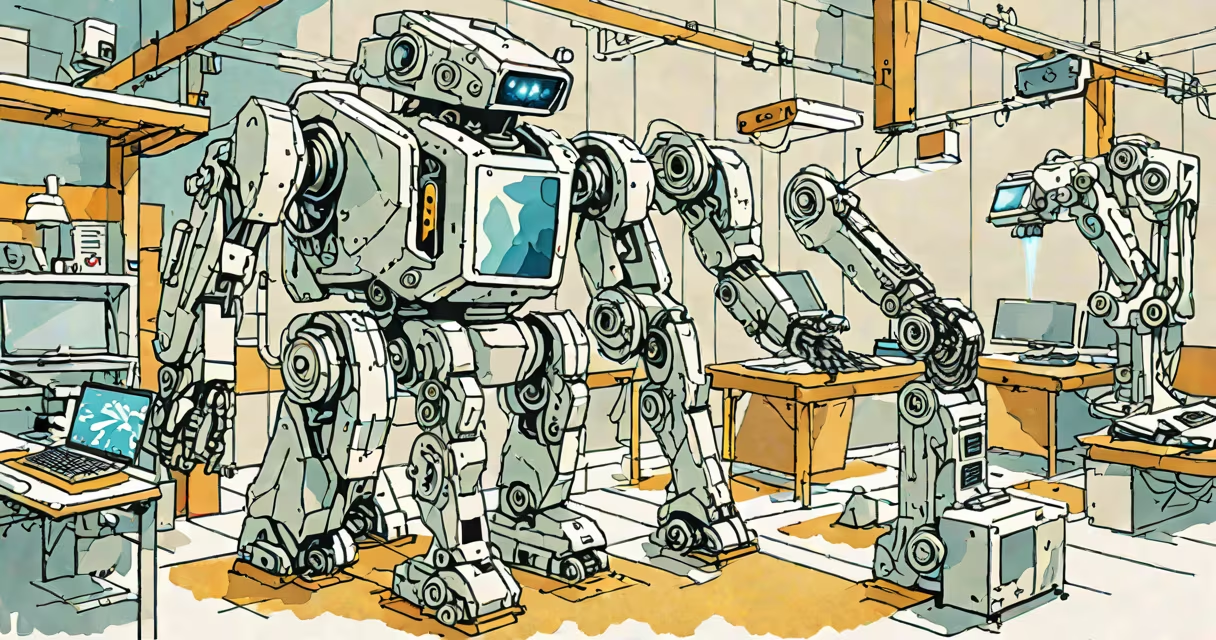
Future tech refers to advanced technological developments currently in research, early deployment, or emerging from labs that are expected to alter society, industry, or human capabilities within the next decade to several decades. These systems go beyond current mainstream applications and often involve breakthroughs in artificial intelligence, materials science, biotechnology, or energy systems.
Unlike speculative sci-fi concepts, future tech includes real-world projects with measurable progress. Examples include neural interfaces that decode brain signals to control devices, lab-grown meat production at scale, and autonomous drones delivering medical supplies in remote regions. These are not hypothetical-they are being tested and deployed in controlled environments today.
According to the World Economic Forum's Future of Jobs Report 2023, 44% of workers' core skills will be disrupted by 2027 due to automation and AI integration. This shift underscores that future tech is not distant-it is actively reshaping labor markets, healthcare, and urban infrastructure.
At its core, future tech operates through layered systems combining hardware, software, and data. For example, brain-computer interfaces rely on implanted electrodes that detect electrical patterns in the brain. These signals are processed by machine learning models trained to map neural activity to intended actions-like moving a cursor or typing words.
These systems require high-speed computation, low-latency networks, and precise calibration. A single misread signal can result in unintended commands. To prevent this, developers train models using thousands of hours of labeled neural data. The system learns to distinguish between intentional thoughts and background brain noise.
One real-world application is the Neuralink device developed by Elon Musk's company. In 2023, a human participant with paralysis used a brain implant to control a computer cursor with thought alone. The system achieved 90% accuracy in selecting letters during a typing task, demonstrating functional viability in clinical settings.
Future tech spans multiple domains. The most impactful categories include AI-driven systems, bio-integrated devices, next-gen energy solutions, and autonomous platforms.
| Type | Key Features | Real-World Example |
|---|---|---|
| Neural Interfaces | Direct brain-to-device communication via implants or wearables | Neuralink's FDA-approved trial for spinal injury patients |
| Quantum Computing | Processing power based on quantum bits (qubits) enabling complex simulations | IBM's 1,121-qubit Osprey processor (2023) |
| Lab-Grown Meat | Protein cultivation from animal cells without slaughter | Upside Foods producing chicken strips in California facilities |
| Autonomous Delivery Drones | AI-guided aerial vehicles for last-mile logistics | Amazon Prime Air testing deliveries in Lockport, New York |
Each category builds on foundational advances in materials science, algorithmic efficiency, and regulatory frameworks. For instance, lab-grown meat requires bioreactors capable of maintaining sterile conditions at scale-technology adapted from pharmaceutical manufacturing.
Future tech is deployed in sectors where speed, precision, or scalability exceeds human capacity. Healthcare leads adoption: robotic surgery assistants reduce recovery times by 30%, according to a 2022 study published in The Lancet Digital Health.
In agriculture, AI-powered drones monitor crop health across 1,000-acre fields, detecting nutrient deficiencies before visible symptoms appear. Farmers using these tools report 15% higher yields and 20% less water usage compared to traditional methods.
Urban planning integrates future tech through smart city infrastructure. In Singapore, traffic lights adjust in real time based on vehicle flow data collected from sensors embedded in roads. This reduces average commute times by 12% during peak hours.
Many assume future tech is synonymous with science fiction. That's incorrect. While some ideas-like teleportation or mind uploading-are still theoretical, others are already operational. Quantum computers are not yet solving everyday problems, but they're being used to simulate molecular interactions for drug discovery.
A frequent error is equating "future tech" with "new tech." Not all new products qualify. A smartphone with a faster processor is not future tech-it's incremental improvement. True future tech introduces novel capabilities that change what's possible.
For example, CRISPR gene editing allows targeted DNA modifications in living organisms. It's not just a tool-it enables treatments for genetic disorders like sickle cell anemia. Clinical trials in 2023 showed 95% of treated patients experienced symptom remission. This level of impact separates future tech from mere novelty.
I once observed a prototype of a wearable exoskeleton designed for elderly mobility support. During a test session, a 78-year-old woman walked unassisted for the first time in five years. The device used pressure sensors and AI to predict movement intent and adjust joint resistance in real time. The emotional weight of that moment confirmed what data alone cannot: future tech changes lives.
Future tech is not synonymous with hype. It doesn't rely on marketing narratives. Valid future tech must demonstrate reproducible results under controlled conditions. A startup claiming "AI that thinks like humans" without peer-reviewed validation or benchmark testing fails the threshold.
Another misconception is that future tech replaces humans entirely. In reality, it augments human performance. Surgeons using robotic arms report improved dexterity and reduced fatigue. Pilots using AI co-pilots handle emergency scenarios faster and with fewer errors.
Even the term "future" is misleading. Some technologies labeled as such have been in development for decades. Fusion energy research began in the 1950s. ITER, the international fusion project, aims to achieve net energy gain by 2035. That timeline reflects scientific rigor-not fantasy.