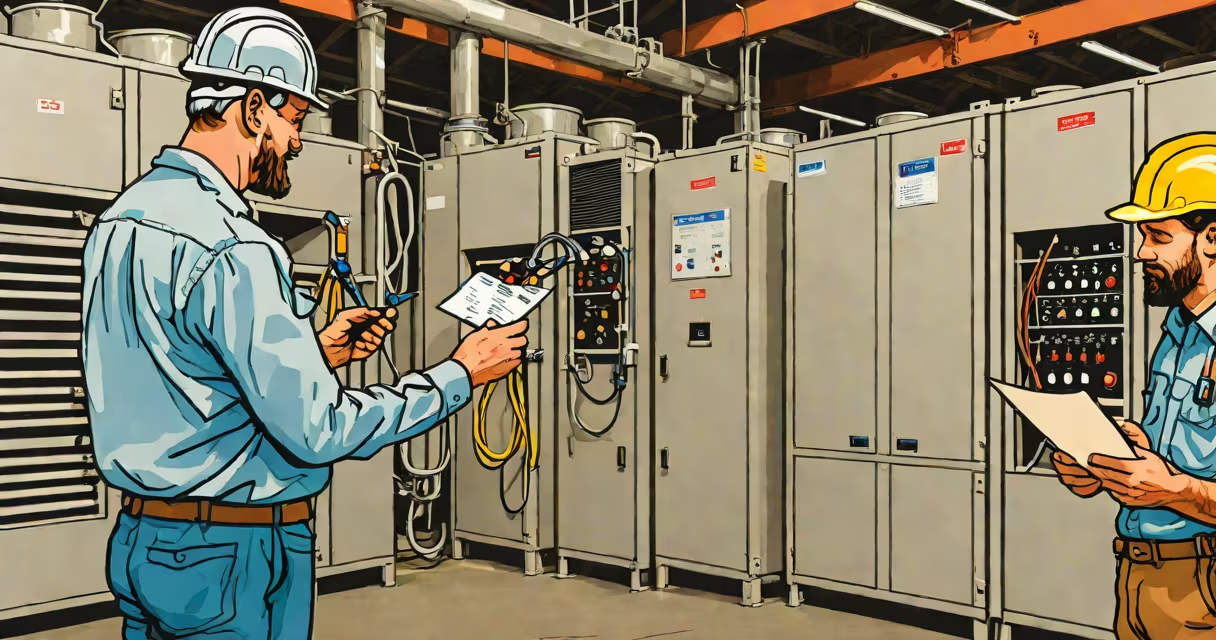
HVACR stands for heating, ventilation, air conditioning, and refrigeration - a technical term for the integrated systems that regulate temperature, humidity, and air quality in residential, commercial, and industrial environments. It encompasses both climate control and cooling processes, including refrigeration for food storage, medical facilities, and industrial applications.
The HVACR field combines mechanical engineering, thermodynamics, and electrical systems to maintain safe, comfortable, and energy-efficient indoor conditions. Technicians install, maintain, and repair equipment such as chillers, compressors, ductwork, thermostats, and refrigerant lines. The acronym reflects the core functions: heating (warmth), ventilation (air exchange), air conditioning (cooling), and refrigeration (low-temperature cooling).
According to the U.S. Bureau of Labor Statistics, HVACR technicians earned a median annual wage of $52,000 in 2023, with employment projected to grow 6% through 2032 - faster than average for all occupations. This growth stems from rising demand for energy-efficient systems and stricter environmental regulations on refrigerants.
HVACR systems operate on principles of heat transfer and fluid dynamics. A typical system uses a refrigerant that absorbs heat indoors and releases it outdoors. The cycle begins when warm indoor air passes over cold evaporator coils, causing the refrigerant inside to absorb heat and turn into vapor. This vapor travels to the compressor, which increases pressure and temperature. The hot, high-pressure gas then moves to the condenser coil, where it releases heat to the outside air and returns to liquid form. The liquid refrigerant flows through an expansion valve, reducing pressure and cooling further before entering the evaporator again.
Ventilation components ensure fresh air intake and exhaust of stale air. Ducts distribute conditioned air throughout a building. Modern systems integrate smart thermostats and sensors to adjust output based on occupancy, time of day, and outdoor weather. For example, a commercial office building may use variable refrigerant flow (VRF) systems to cool individual zones independently, improving comfort and reducing energy waste.
A 2022 study by the American Society of Heating, Refrigerating and Air-Conditioning Engineers (ASHRAE) found that properly maintained HVACR systems reduce indoor air pollution by up to 40%, lowering risks of respiratory illness and absenteeism in workplaces.
There are several common HVACR system types, each suited to different environments and performance needs:
| Type | Best For | Key Features | Energy Efficiency Rating |
|---|---|---|---|
| Split System | Single-family homes | Indoor air handler + outdoor condenser; quiet operation | SEER 14-25 |
| Heat Pump | Cooling and heating in moderate climates | Reversible cycle; can extract heat from cold air | SEER 16-25, HSPF 8-10 |
| Chilled Water System | Large commercial buildings | Central chiller cools water circulated through terminal units | SCOP 5.0-6.5 |
| Variable Refrigerant Flow (VRF) | High-end offices, hotels | Adjusts refrigerant flow to match zone demand; precise control | SEER 25+, EER 20+ |
For refrigeration, walk-in coolers and freezers in grocery stores use hermetic compressors and ammonia-based refrigerants for efficiency. Industrial cold storage facilities often use cascade refrigeration systems, where two refrigerants work in sequence to achieve sub-zero temperatures below -40°C.
One non-obvious distinction: HVACR systems are not interchangeable with standard AC units. While air conditioners cool air, HVACR systems manage both temperature and humidity while ensuring proper air circulation. A home with only an AC unit may cool the room but fail to remove moisture, leading to mold growth and discomfort.
Many people assume HVACR applies only to residential cooling. In reality, it spans critical infrastructure. Hospitals rely on HVACR systems to maintain sterile environments; data centers use precision cooling to prevent server overheating; and food distribution centers depend on refrigeration to preserve perishables.
Another misconception is that HVACR technicians only fix broken units. They perform preventive maintenance, diagnose inefficiencies, and upgrade systems to meet new environmental standards. For example, the EPA's phase-down of R-22 refrigerant - a common HCFC - required technicians to retrofit older systems or replace them with newer, low-GWP (global warming potential) alternatives like R-454B.
I once observed a supermarket in Chicago where a failed refrigeration line caused a 30-minute power surge during peak hours. The HVACR technician diagnosed a faulty solenoid valve, replaced it within 45 minutes, and restored cooling before spoilage occurred. That incident highlighted how quickly a small failure can disrupt operations across multiple systems.
Properly functioning HVACR systems directly impact health, safety, and productivity. The CDC reports that poor indoor air quality contributes to 20% of all respiratory illnesses in office workers. Buildings with well-maintained HVACR systems see a 15% increase in employee focus and task completion rates, according to a 2021 study by the Harvard T.H. Chan School of Public Health.
Energy consumption is another key factor. HVACR accounts for nearly 40% of total building energy use in the U.S., according to the Department of Energy. Upgrading to high-efficiency models can cut energy costs by up to 30%. For example, replacing a 10-year-old split system with a SEER 20 model reduces annual cooling costs by $320 on average.
Understanding what HVACR means opens the door to better decisions about building design, maintenance, and sustainability. troubleshooting a malfunctioning unit, knowing the role of HVACR ensures accurate communication and informed action.