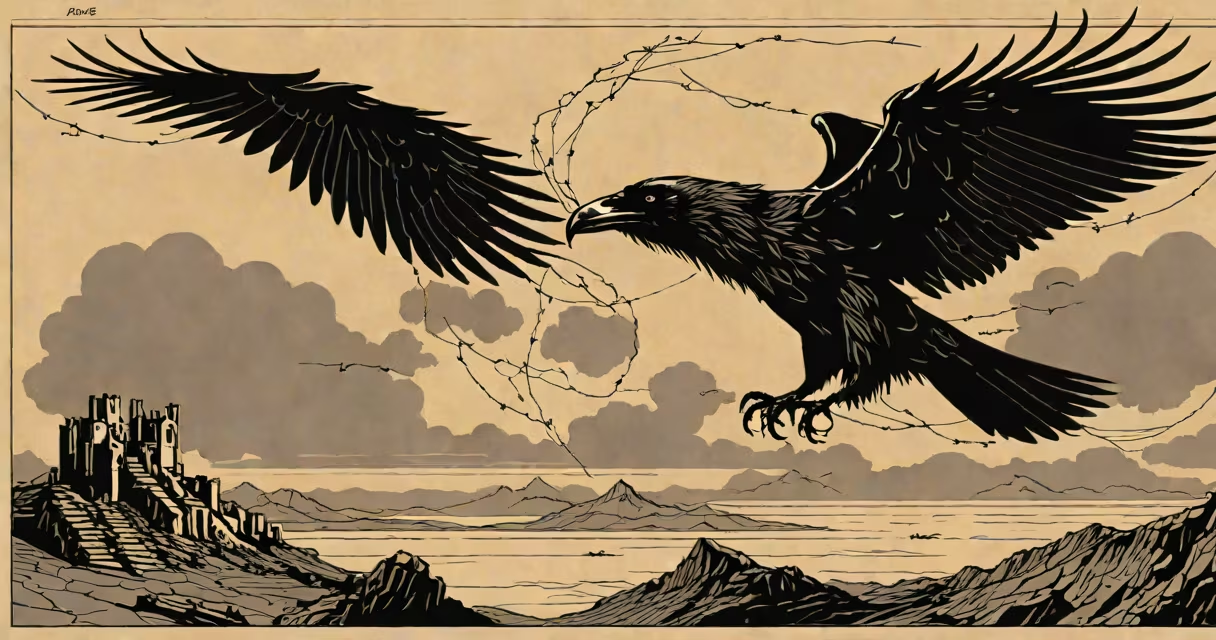
An omen is a sign, often supernatural or symbolic, believed to foretell future events-usually negative ones. It appears as an unusual occurrence, such as a bird flying across a path, a dream with vivid imagery, or a sudden natural event. Omens are interpreted through cultural, religious, or personal frameworks rather than scientific evidence.
Omens have existed in human societies for thousands of years. Ancient Mesopotamians recorded celestial movements as omens predicting war or famine. The Romans consulted haruspices-priests who read animal entrails-for signs before battle. These practices were not superstition in their context; they were part of structured belief systems used to guide decisions.
Modern usage retains the core idea: an omen signals something significant is about to happen. But the interpretation depends entirely on context. A black cat crossing your path may mean bad luck in Western folklore, but in parts of Scotland, it's considered good fortune. The meaning is not inherent in the event-it's assigned by belief.
Omens don't operate through cause-and-effect logic. They rely on symbolic association. A falling star might represent a death in some traditions because stars are linked to souls. A broken mirror might be seen as a warning of misfortune because mirrors were once thought to hold fragments of the soul.
Psychologists describe this process as apophenia-the human tendency to perceive meaningful patterns in random data. When someone sees a crow on their windowsill before receiving news of a family member's illness, the coincidence becomes a perceived omen. The brain connects unrelated events based on emotional weight, not causality.
Historical records show that leaders often acted on omens. In 44 BCE, Julius Caesar ignored warnings from soothsayers about the Ides of March. He dismissed them as fear-mongering. His assassination on that date became a famous example of an ignored omen. The event reinforced the cultural power of omens-even among skeptics.
Omens fall into categories based on how they appear. The most common types include:
| Type | Examples | Cultural Context |
|---|---|---|
| Natural phenomena | Thunderstorms, eclipses, volcanic eruptions | Mayan civilization saw solar eclipses as warnings from gods. In Norse myth, thunder was the sound of Thor's chariot. |
| Animals and behavior | Black cats, owls, crows | In ancient Rome, a crow landing on a soldier's helmet was seen as a sign of victory. In Ireland, seeing an owl near a home meant a death would occur soon. |
| Dreams and visions | Recurring nightmares, prophetic dreams | The Bible records Joseph interpreting Pharaoh's dreams as signs of seven years of abundance followed by seven of famine. |
| Objects and symbols | Broken mirrors, spilled salt, mirrors facing beds | Spilling salt was believed to bring bad luck in medieval Europe. Some cultures still avoid placing mirrors opposite beds due to fears of trapping spirits. |
Each type reflects how people assign meaning to the world around them. The same event can be an omen in one culture and meaningless noise in another. A bat entering a house might signal danger in some regions, while in others it's a sign of protection.
People often assume omens are always negative. This is false. Many omens carry positive or neutral messages. In Japanese tradition, a crane flying overhead is considered a sign of peace and longevity. In some Indigenous cultures, a rainbow after rain is seen as a bridge between worlds, not a warning.
Another mistake is treating omens as predictive tools. They are not. An omen doesn't tell you what will happen-it tells you what someone believes might happen. There's no mechanism by which a bird's flight alters fate. The influence lies in the reaction: fear, preparation, or prayer.
A lesser-known fact is that omens are rarely reported accurately. Studies in cognitive psychology show that people remember omens that match outcomes better than those that don't. If a person sees a crow before a car accident, they recall the omen. If nothing happens, it's forgotten. This creates a false sense of accuracy.
Before the RMS Titanic sank in April 1912, several crew members reported strange occurrences. A man named William Carter claimed he dreamed of a large ship colliding with ice and sinking. Another passenger, Margaret Brown, said she felt uneasy during the voyage and avoided the upper decks.
After the disaster, newspapers published these accounts as omens. But none of them were verified. The dream was reported months later. The unease was anecdotal. Yet the story persists because it fits the narrative: a warning ignored.
This illustrates how omens gain traction not through evidence, but through storytelling. The pattern-unusual event, emotional reaction, outcome-creates a compelling tale. The actual cause of the sinking was design flaws and poor decision-making, not supernatural signs.
Belief in omens affects behavior even today. A study published in the Journal of Personality and Social Psychology found that people who believe in omens are more likely to take precautionary actions-like avoiding travel after a dream about a crash. This doesn't mean the omen caused the avoidance. It means the belief shaped the decision.
I once witnessed this firsthand. A friend canceled a flight after seeing a crow land on her window during a thunderstorm. She didn't know the bird had been there for hours before the storm hit. Her anxiety rose when she noticed it. She called me, terrified. I asked her to check the weather report. It showed no risk. Still, she stayed home. The omen wasn't real-but the effect was.
Understanding what is omen mean helps separate belief from reality. You don't have to accept omens as truth to understand their role in shaping choices. They're cultural artifacts, not predictors.