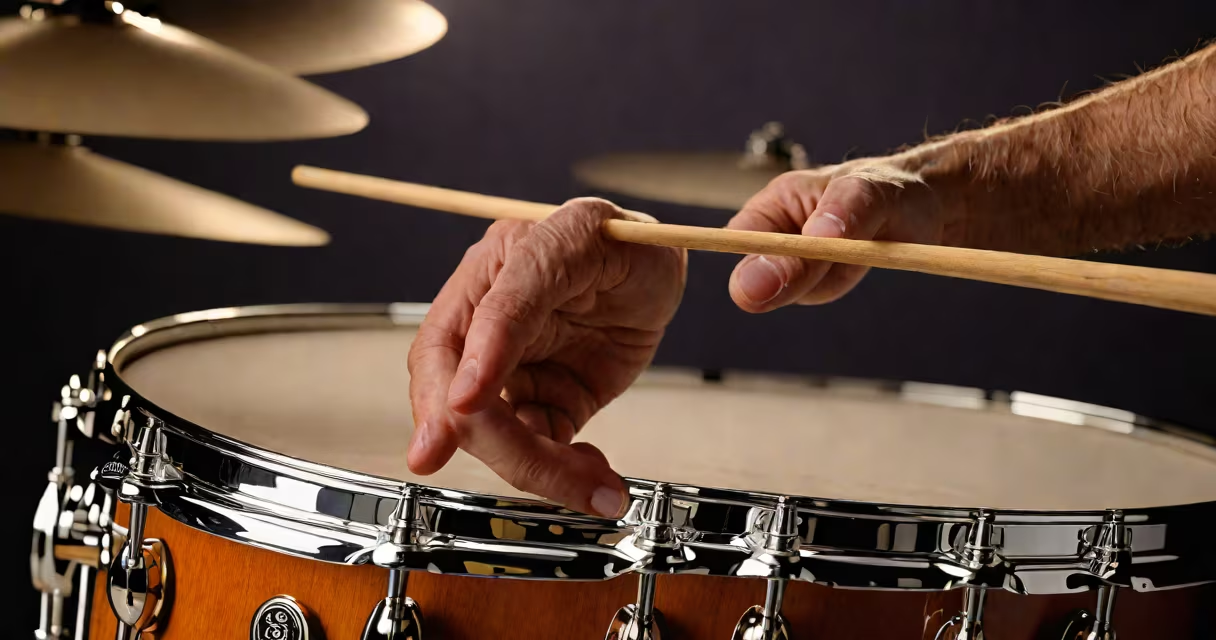
The snare in music is a percussion instrument that produces a sharp, snapping sound when struck. It's a core component of most drum kits and defines the backbeat in genres like rock, pop, hip-hop, and electronic music.
Most drum kits include a snare positioned between the bass drum and the hi-hat. When played, it delivers a high-pitched, articulate crack that cuts through the mix. The sound comes from a set of thin wires-called snares-stretched across the bottom head of the drum. When the top head is struck, the wires vibrate against it, creating the signature rattling effect.
Modern snare drums typically measure 14 inches in diameter and 5 inches deep. They're made from materials like steel, wood, or aluminum, with the shell material influencing tone. A steel snare produces a brighter, more aggressive sound, while a wooden snare offers warmth and resonance. The tension of the snares affects how loud and crisp the sound is-tighter snares produce sharper attacks.
The snare is most recognizable in the "two-and-four" backbeat pattern. In 4/4 time, the snare hits on beats two and four, creating a syncopated pulse that drives forward motion. This pattern appears in over 70% of popular songs from the 1960s onward, according to a study by the University of California, San Diego, which analyzed 10,000 tracks from Billboard's Hot 100.
For example, in The Beatles' "Hey Jude," the snare hits on every second and fourth beat during the chorus. The kick drum plays on beats one and three, forming a steady foundation. The snare's presence on two and four creates a sense of momentum, making the song feel energetic even at a moderate tempo.
Drummers often use ghost notes-light taps on the snare-to add texture. These subtle sounds create rhythmic complexity without overpowering the main groove. In jazz and funk, ghost notes help maintain flow and allow for changing variation.
Snares vary by size, material, and construction. The choice impacts tone, volume, and playing style. Here's a breakdown of common types:
| Type | Size | Material | Best For |
|---|---|---|---|
| Standard Snare | 14x5 inches | Steel or maple | Rock, pop, live performance |
| Jazz Snare | 13x6 inches | Wood (often birch) | Funk, swing, acoustic settings |
| Electronic Snare | Variable | Simulated via drum machine or DAW | Electronic music, hip-hop, production |
Electronic snares are generated digitally using samples or synthesis. Producers often layer multiple snare hits-adding reverb, delay, or pitch shifts-to create unique textures. In Daft Punk's "Get Lucky," the snare is processed with a short delay and heavy compression, giving it a punchy, futuristic edge.
A lesser-known fact: the snare's wire tension is adjustable. Drummers tune the snares by loosening or tightening the tension rods around the bottom head. Looser snares produce a looser, more rattly sound-ideal for jazz. Tighter snares yield a crisper, more focused attack-better for rock and metal.
Many assume the snare is just a "drum." But it's not a standalone instrument-it's part of a larger system. The snare is always paired with other components: kick drum, hi-hat, cymbals. Its role is defined by context, not isolation.
Another confusion: people think the snare is only for backbeats. While it dominates the two-and-four pattern, it's also used for fills, transitions, and off-beat accents. In Led Zeppelin's "When the Levee Breaks," the snare is played with brushes and muffled, creating a dark, rolling texture rather than a sharp crack.
Some confuse the snare with the rimshot-a technique where the stick hits both the drumhead and the rim simultaneously. Rimshots produce a louder, more explosive sound than a standard snare hit. They're used in film scores and dramatic rock moments, such as in Metallica's "Enter Sandman," where the opening riff uses rimshots for intensity.
In a professional studio, recording a snare involves multiple steps. First, the drummer plays a basic pattern-kick on one and three, snare on two and four. The engineer records the track with two microphones: one placed above the drumhead (for direct sound), another angled toward the snares (to capture the wire rattle).
During mixing, the producer applies EQ to boost frequencies between 1.5kHz and 5kHz-the range where the snare's attack is clearest. Compression reduces changing range, ensuring the snare remains consistent across the mix. Reverb adds space, but too much washes out the clarity.
I once recorded a snare for a country track where the original take had a muddy low-end. After applying a high-pass filter at 80Hz and reducing the low-mid frequencies around 250Hz, the snare cut through cleanly. The final result was a tight, punchy sound that anchored the entire arrangement.
Understanding the snare isn't about technical jargon-it's about listening. Train your ear to hear the difference between a well-tuned snare and a poorly balanced one. The snare is rarely the loudest element, but it's almost always the most essential.