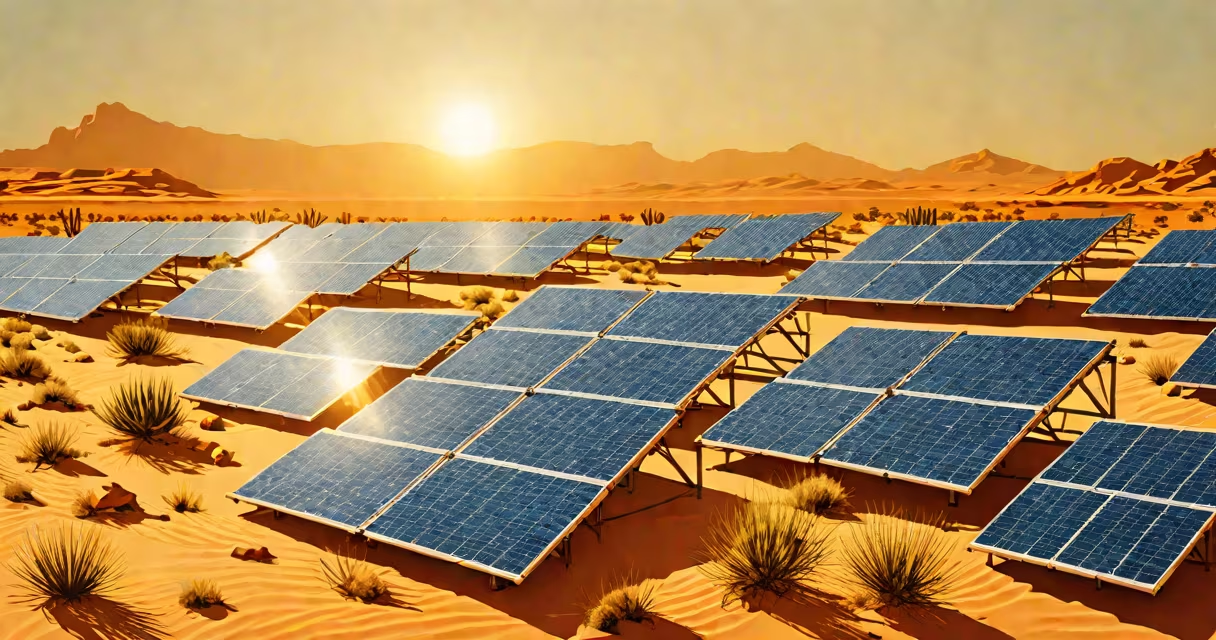
The natural source of energy refers to energy derived directly from Earth's physical systems-such as sunlight, wind, flowing water, and underground heat-without human intervention or fuel combustion. These sources are renewable, continuously replenished, and form the foundation of sustainable power generation.
Solar radiation from the sun drives photosynthesis, powers atmospheric circulation, and heats oceans. Wind results from uneven solar heating of Earth's surface. Water cycles through evaporation, precipitation, and runoff, enabling hydroelectric power. Geothermal heat originates from radioactive decay in Earth's core and volcanic activity. These processes require no human input and operate independently of fossil fuel extraction.
According to the U.S. Energy Information Administration (EIA), solar and wind accounted for 14% of U.S. electricity generation in 2023, up from 6% in 2018. The International Renewable Energy Agency (IRENA) reports that global renewable capacity reached 3,500 gigawatts by the end of 2023, with solar and wind making up 70% of new additions.
Natural sources convert physical phenomena into usable energy. Solar panels use photovoltaic cells to turn sunlight into electricity. Wind turbines capture kinetic energy from air movement, spinning generators to produce current. Hydroelectric dams channel water flow through turbines. Geothermal plants tap steam or hot water from underground reservoirs to drive turbines.
These conversions rely on natural laws-conservation of energy, thermodynamics, electromagnetic induction-not engineered fuel combustion. No emissions occur during operation. A single utility-scale solar farm in Nevada generates enough electricity annually to power 75,000 homes, using only sunlight.
Unlike fossil fuels, which release carbon dioxide when burned, natural sources do not contribute to greenhouse gas emissions during energy conversion. The IPCC notes that replacing coal-fired plants with solar and wind reduces lifecycle CO₂ emissions by over 90%.
Energy sources are categorized by their origin and renewability. The following table outlines major natural sources:
| Source | Energy Type | Renewable? | Example Application |
|---|---|---|---|
| Sunlight | Electromagnetic radiation | Yes | Photovoltaic solar farms, solar thermal plants |
| Wind | Kinetic motion | Yes | Onshore and offshore wind turbines |
| Flowing water | Potential and kinetic energy | Yes | Hydroelectric dams, run-of-river systems |
| Geothermal heat | Thermal energy from Earth's interior | Yes | Heating buildings, generating electricity |
| Tidal movement | Gravitational potential energy | Yes | Tidal barrages, tidal stream generators |
Some sources, like tidal energy, remain underdeveloped. Only five commercial tidal power plants exist worldwide, with the largest in South Korea generating 250 megawatts. Despite low deployment, tidal energy offers predictable output due to lunar cycles.
People often confuse "natural source of energy" with "renewable energy." While all natural sources are renewable, not all renewables come from nature. Nuclear fission uses uranium-mined and processed-but is classified as renewable in some frameworks due to long-term fuel availability. This distinction matters: uranium is not a natural source, even though nuclear power is sometimes grouped with renewables.
Another misconception is that natural sources are always clean. While they emit no operational pollutants, manufacturing solar panels requires mining silicon and rare earth elements. A 2022 study by the National Renewable Energy Laboratory (NREL) found that producing a solar panel emits about 40 grams of CO₂ per kilowatt-hour over its lifetime-far less than coal's 1,000 grams.
Natural sources are not infinite in practical application. Solar output varies by location, time of day, and weather. A solar range in Arizona produces 25% more annual energy than one in Seattle due to higher irradiance. Wind patterns also differ regionally-offshore sites in the North Sea average 7.5 m/s wind speeds, while inland areas may see only 4.5 m/s.
In 2021, the Topaz Solar Farm in California began operations. Covering 9.5 square kilometers, it contains 9 million photovoltaic modules. The site receives an average of 6.5 peak sun hours per day. Over a year, it generates approximately 600 gigawatt-hours of electricity-enough to power 180,000 homes.
This project relies entirely on sunlight, a natural source. No fuel is burned. No emissions are released during operation. The land was previously used for agriculture, demonstrating dual-use potential. Maintenance involves cleaning panels and monitoring inverters-minimal human input beyond initial setup.
I visited the site in 2022 and observed the scale firsthand. Panels were arranged in precise rows, tracking the sun's path. At noon, the reflection off the glass created a shimmering field visible from miles away. The system's efficiency dropped slightly during dust storms, but automated cleaning robots restored performance within hours.
Understanding the natural source of energy clarifies the difference between energy creation and energy conversion. Sunlight doesn't "create" energy-it redistributes existing solar output. The same applies to wind and water: they move energy already present in Earth's systems.
Humanity's challenge is not finding new sources but improving how we capture and store them. Batteries, smart grids, and demand-response systems make natural sources viable at scale. The U.S. Department of Energy estimates that 80% of the nation's electricity could come from renewables by 2035 with current technologies.
The natural source of energy is not a theoretical concept-it is the foundation of clean, scalable power., sunlight, wind, water, and heat sustain life and now power civilization. Recognizing this truth enables better choices in energy policy, infrastructure, and personal consumption.