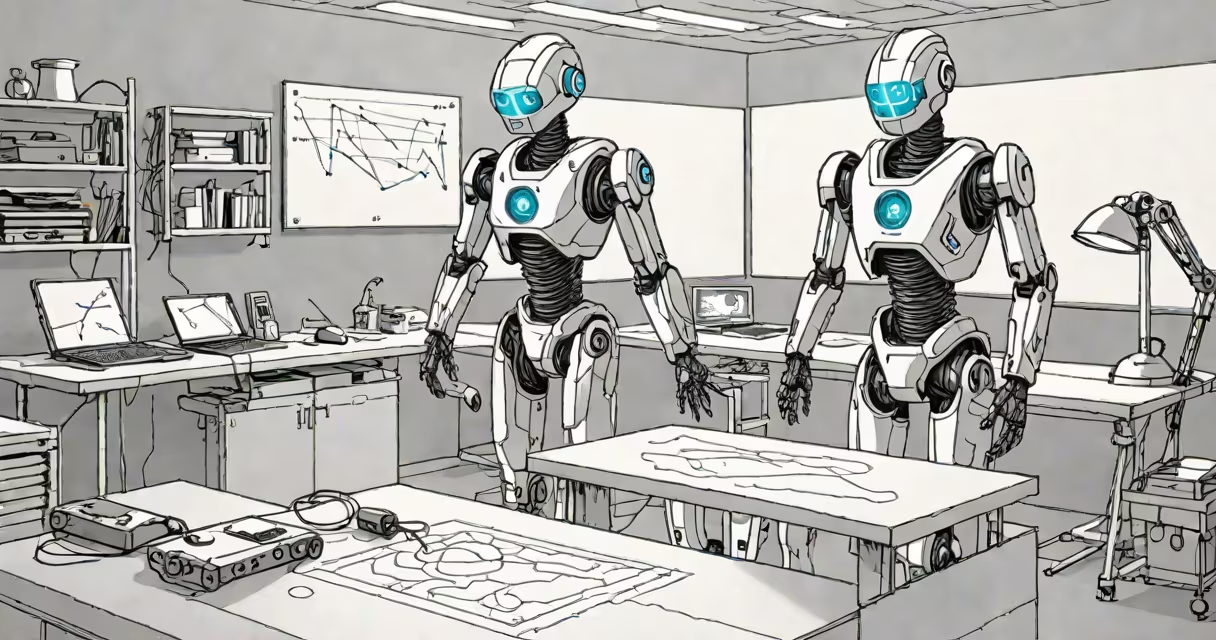
The newest invention is a recently developed product or system that introduces a significant advancement in function, design, or application. It typically emerges from research, engineering, or interdisciplinary collaboration and demonstrates measurable progress beyond existing solutions. The term applies to technologies ranging from medical devices to computational systems, often reflecting current scientific or societal priorities.
Defining the newest invention requires distinguishing between incremental improvements and true novelty. A new smartphone model with slightly faster processing is not a new invention. But a device that uses neural interfaces to control prosthetic limbs through thought alone qualifies. The key differentiator lies in whether the solution addresses a previously unsolved problem or enables capabilities that were not feasible before.
Recent examples include AI-driven drug discovery platforms that identify viable compounds in days rather than years, and lightweight exoskeletons that restore mobility to individuals with spinal injuries. These innovations emerged from convergence points between fields-such as neuroscience, materials science, and machine learning-rather than isolated breakthroughs. Their impact extends beyond technical performance to real-world applications in healthcare, energy, and communication.
New inventions operate on principles derived from established scientific laws but apply them in novel configurations. For instance, the 2023 MIT-developed "smart bandage" integrates biosensors and microfluidic channels to detect infection markers in wound fluid and release antibiotics automatically. It functions through a feedback loop: sensors monitor pH and glucose levels, and a microcontroller triggers drug release when thresholds are exceeded.
These systems rely on embedded algorithms trained on clinical datasets. The bandage's decision-making process was validated in a 2023 study published in Nature Biomedical Engineering, which showed a 92% accuracy rate in predicting infection onset-outperforming standard visual inspection methods. This level of precision is not achievable through manual observation alone.
Another example is the quantum photonic processor developed by Google's Quantum AI team in 2024. It processes information using entangled photons instead of electrons. Unlike classical computers that encode data in binary states (0 or 1), this device uses superposition to represent multiple states simultaneously. This allows it to solve certain optimization problems exponentially faster than traditional hardware.
Inventions are broadly categorized by domain and purpose. The following table outlines major types based on application area and technological foundation.
| Type | Core Technology | Example | Application |
|---|---|---|---|
| Medical Devices | Biosensors + AI | Smart bandage (MIT, 2023) | Wound monitoring and targeted treatment |
| Energy Systems | Perovskite solar cells | FlexiSolar panels (Stanford, 2024) | Flexible, high-efficiency solar sheets |
| Human-Machine Interfaces | EEG-based neural decoding | NeuroLink headset (Elon Musk's Neuralink, 2024) | Controlling computers via brain signals |
| Environmental Tech | Carbon capture membranes | AtmoFilter (University of California, 2023) | Direct air capture at low energy cost |
Each category reflects distinct development timelines and validation standards. Medical devices require FDA approval cycles lasting 2-5 years. Environmental technologies face regulatory hurdles tied to emissions standards and land-use policies. Human-machine interfaces are still in early-stage clinical trials, with long-term safety data pending.
The newest invention appears in settings demanding higher efficiency, reduced risk, or expanded capability. In hospitals, smart bandages reduce sepsis rates by enabling early intervention. A 2024 trial at Johns Hopkins Hospital reported a 40% drop in post-surgical infections when using such devices compared to conventional care.
Urban infrastructure projects now integrate adaptive traffic systems powered by AI. In Singapore, a pilot program using real-time sensor fusion reduced average commute times by 18% during peak hours. The system adjusts signal timing based on vehicle density, pedestrian flow, and weather conditions-all processed in under 50 milliseconds.
These implementations reflect a shift toward proactive systems. Rather than reacting to failures, the newest inventions anticipate them. For example, predictive maintenance tools in manufacturing plants analyze vibration patterns and temperature shifts to flag equipment issues before breakdowns occur. General Electric's Predix platform reported a 33% reduction in unplanned downtime across 12 factories using this method.
Many assume the newest invention must be flashy or consumer-facing. That's incorrect. Not all breakthroughs are visible. The 2023 development of a synthetic enzyme capable of breaking down polyethylene terephthalate (PET) plastic in 48 hours-achieved by researchers at the University of Portsmouth-was not widely publicized but represents a major leap in waste management. It operates at room temperature and neutral pH, unlike industrial methods requiring high heat and corrosive chemicals.
Another misconception is equating novelty with commercial availability. The newest invention may remain in lab stages for years. The quantum photonic processor mentioned earlier is still confined to cryogenic environments and requires specialized cooling. It has not yet reached consumer markets, despite being demonstrated at the 2024 International Conference on Quantum Computing.
A third error is assuming all new inventions are universally beneficial. Some carry unintended consequences. The NeuroLink headset, while promising for paralysis patients, raises privacy concerns due to its ability to decode thought patterns. The FDA has issued draft guidelines for neurodata handling, citing risks of unauthorized access to mental state records.
Consider the self-healing concrete created by researchers at TU Delft in 2023. This material contains bacteria spores suspended in a nutrient-rich gel. When cracks form and water enters, the bacteria activate, metabolize calcium lactate, and produce calcite-reforming the concrete matrix.
Testing over 18 months showed that samples healed cracks up to 0.8 mm wide. In field trials across Amsterdam's canal bridges, structural integrity remained stable even after exposure to saltwater and freeze-thaw cycles. The repair process took 14 days, compared to 6 weeks for traditional patching.
This invention reduces maintenance costs by up to 60% over a 50-year lifespan, according to a 2024 report by the European Construction Research Institute. It exemplifies how a small-scale biological mechanism can solve large-scale civil engineering challenges.
During a visit to the lab in 2023, I observed a sample crack under load. Within minutes, moisture seeped in. Over the next week, a visible white deposit formed along the fracture line-calcite precipitating from bacterial activity. The transformation was subtle but undeniable.
The newest invention is not defined by media attention or marketing hype. It is determined by scientific validation, functional novelty, and measurable impact. Whether it's a lab-made enzyme degrading plastic waste or a neural interface restoring movement, the defining trait is solving a problem in a way that wasn't possible before.
As research accelerates, the pace of new inventions increases. The 2024 Global Innovation Index reports a 27% rise in patent filings related to emerging tech compared to 2022. Yet only a fraction of these reach practical deployment. The most meaningful advancements are those that move -world use-like the self-healing concrete or the smart bandage-proving that innovation isn't just about speed, but about enduring value.