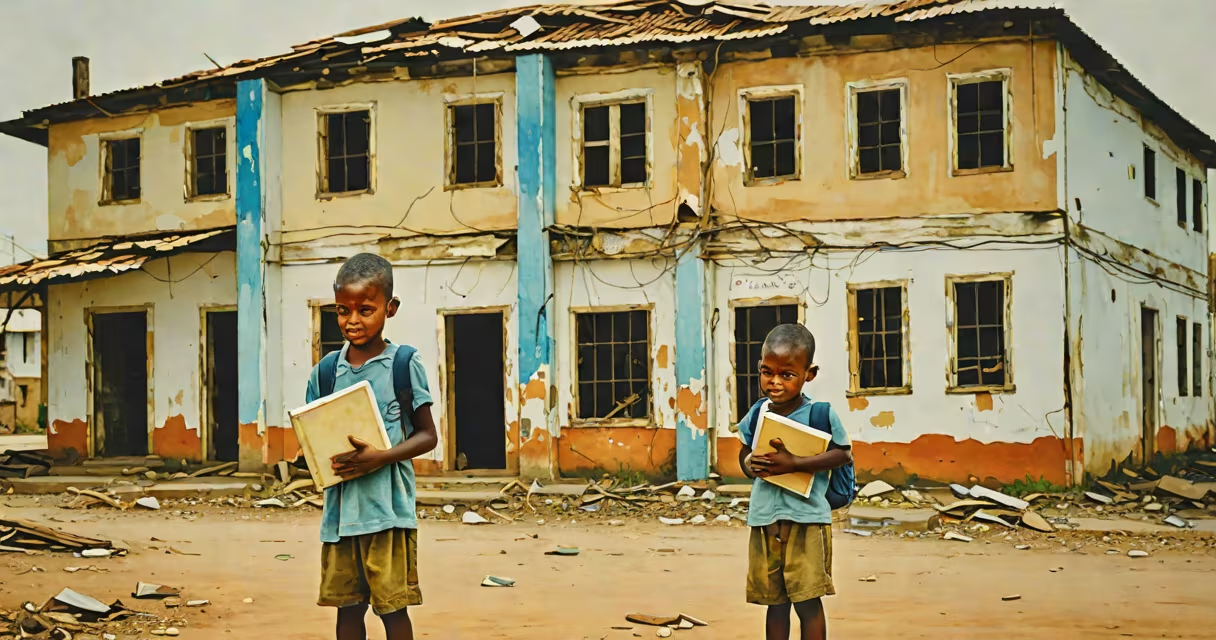
The problem of poverty is a condition where individuals lack sufficient resources to meet basic needs such as food, shelter, healthcare, and education, often due to systemic inequities rather than personal failure. It persists across nations and generations, shaped by economic policy, historical injustice, and unequal access to opportunity.
Poverty is not simply a lack of money. It is a multidimensional challenge involving social exclusion, limited mobility, and diminished life chances. The World Bank defines extreme poverty as living on less than $2.15 per day, while national thresholds vary based on local cost of living. In the United States, the official poverty line was set at $15,060 annually for a single adult in 2023, according to the U.S. Census Bureau.
When people live in poverty, they face higher risks of malnutrition, untreated illness, and early death. Children in low-income households are more likely to drop out of school, and adults struggle to secure stable employment. These outcomes are not random-they reflect patterns embedded in institutions, labor markets, and public investment decisions.
Poverty operates through feedback loops that reinforce disadvantage. A person born into poverty faces barriers to quality education, which limits job prospects. Without stable employment, they cannot afford housing or healthcare, increasing vulnerability to crises like illness or job loss. This cycle repeats across generations unless interrupted by policy or intervention.
Systemic factors amplify individual hardship. Redlining practices in the U.S. historically denied mortgages to Black families in certain neighborhoods, reducing intergenerational wealth accumulation. Today, zip codes still correlate strongly with life expectancy-residents of low-income urban areas die nearly five years earlier on average than those in affluent regions, according to a 2021 study published in The Lancet.
Even in high-income countries, poverty is not evenly distributed. In 2022, 11.5% of Americans lived below the poverty line, with higher rates among Black (19.5%) and Hispanic (15.5%) populations, according to U.S. Census data. These disparities stem from long-standing racial and gender inequalities in wages, hiring, and access to credit.
Experts distinguish between absolute and relative poverty. Absolute poverty measures survival needs-food, clean water, shelter. Relative poverty compares income to societal norms; someone earns enough to survive but lacks the resources to participate fully in community life.
A third category, multidimensional poverty, captures deprivation beyond income. The United Nations Development Programme's Multidimensional Poverty Index (MPI) assesses health, education, and living standards. In 2021, 1.3 billion people were classified as multidimensionally poor-over half in sub-Saharan Africa and South Asia.
| Type | Definition | Example |
|---|---|---|
| Absolute | Lives below minimum subsistence level | Someone surviving on $1.90/day globally |
| Relative | Earns less than half the median income | Household earning $25,000 in a region where median is $50,000 |
| Multidimensional | Deprived in health, education, or living standards | Child lacking clean water, schooling, and nutrition despite adequate income |
Many people fall into multiple categories simultaneously. A woman in rural India may earn above the daily poverty line but still lack access to sanitation, prenatal care, or formal education-making her multidimensionally poor even if she meets income thresholds.
One widespread error is equating poverty with laziness or poor choices. Research shows that most people in poverty work full-time. In 2022, 44% of U.S. workers earning under $15/hour were employed full-time, according to the Economic Policy Institute. Structural issues-not individual behavior-are primary drivers.
Another myth is that poverty is a temporary state. While some escape it through education or job changes, many remain trapped. The U.S. Department of Health and Human Services reports that 40% of people who enter poverty stay in it for more than five years. Long-term poverty correlates with chronic stress, reduced cognitive function, and poorer health outcomes.
There is also confusion between poverty and inequality. Poverty refers to the absence of resources; inequality describes uneven distribution of wealth and power. A country can have low poverty rates but high inequality-such as in Brazil, where 3% of the population owns 40% of the wealth, per OECD data.
In 2019, a family of four in New York City needed $68,000 annually to meet basic needs, according to MIT's Living Wage Calculator. Yet 28% of residents earned less than that. A single mother working two part-time jobs at $12/hour earned $24,960 yearly-below the threshold for housing, childcare, and medical costs.
Her situation reflects a pattern: 40% of U.S. households earning under $50,000 spend over 50% of their income on rent. This leaves little room for savings, emergency funds, or investments in education. When a car breaks down or a child gets sick, the financial shock can push them deeper into debt or homelessness.
I observed this firsthand during a volunteer stint at a food pantry in Detroit. One man, a veteran with a disability, collected groceries weekly. He had a job cleaning offices but earned $11/hour-$22,880/year. After paying rent and utilities, he had $100 left monthly for food, transportation, and medicine. His story illustrates how low wages and inadequate benefits fail to sustain dignity.
Solving the problem of poverty improves public health, boosts economic productivity, and strengthens social cohesion. Countries with lower poverty rates tend to have higher GDP growth and lower crime rates. A 2020 study in Nature Human Behaviour found that reducing poverty increased innovation and entrepreneurship in communities.
Investing in early childhood programs, affordable housing, and universal healthcare yields measurable returns. For every $1 spent on home visiting programs for new parents, society saves $7 in future healthcare and criminal justice costs, according to the National Academy of Medicine.
Addressing the problem of poverty requires more than charity-it demands policy reform. Expanding the Earned Income Tax Credit, raising the minimum wage, and expanding access to mental health services are proven strategies. The success of Nordic countries in maintaining low poverty rates stems from coordinated policies, not just individual effort.
Understanding the problem of poverty begins with recognizing it as a structural issue, not a moral failing. Solutions must target root causes: unequal access to education, discriminatory hiring practices, and underfunded public services. The path forward lies in evidence-based reforms that prioritize equity and human dignity.