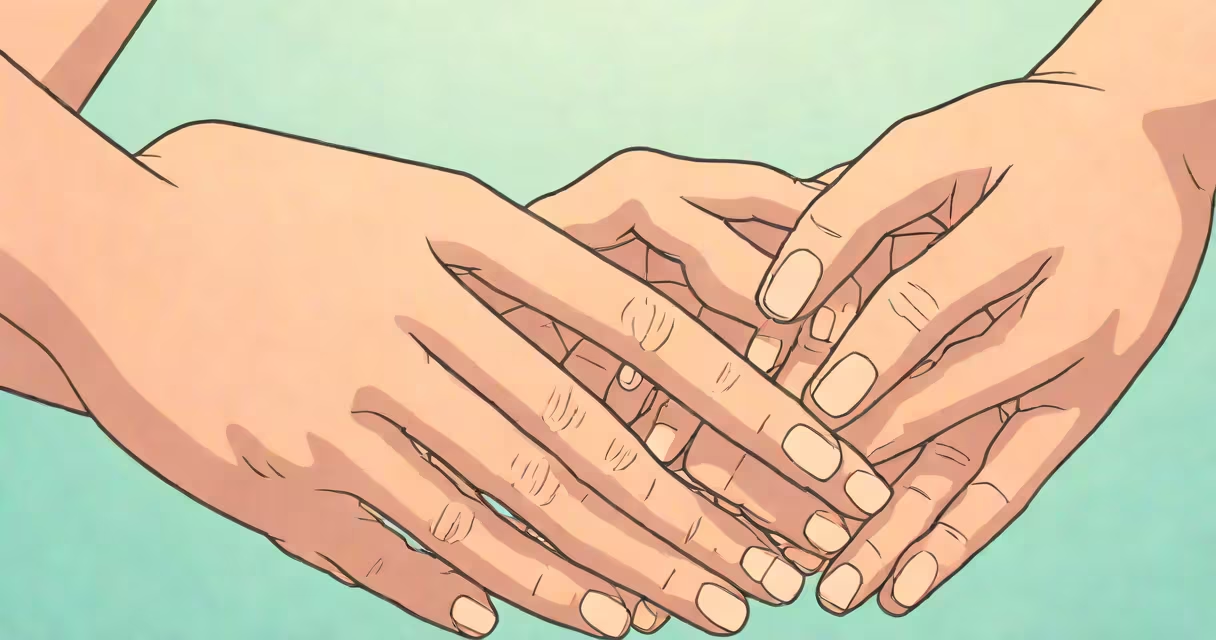
The real meaning of love is a deep, enduring emotional bond formed through mutual trust, shared vulnerability, and consistent care-supported by neurochemical processes and shaped by social and biological factors. It is not limited to romantic passion but includes familial, platonic, and self-love. Research from the University of California, Berkeley, shows that love activates brain regions linked to reward, motivation, and empathy, confirming it as a biologically grounded human experience.
Love functions through interconnected systems: dopamine drives attraction, oxytocin strengthens bonding, and serotonin stabilizes mood during long-term attachment. These chemicals don't operate in isolation-they respond to repeated positive interactions. For example, couples who share daily rituals like cooking together or discussing their day show higher oxytocin levels over time, reinforcing emotional security.
Love is not a single emotion but a changing state involving commitment, empathy, and behavioral consistency. A 2020 study published in *Nature Human Behaviour* found that people who reported feeling loved were 30% less likely to experience depression over five years, even after adjusting for income and education. This suggests love acts as a protective factor for mental health.
Neuroscience reveals that love begins with perception. When someone we care about smiles or speaks kindly, the brain's ventral tegmental area releases dopamine-a neurotransmitter associated with pleasure and reinforcement. This creates a feedback loop: positive behavior leads to reward, which increases the likelihood of repeating that behavior.
Oxytocin, often called the "cuddle hormone," plays a critical role in long-term bonding. It rises during physical touch-hugs, hand-holding, or even eye contact-and helps reduce stress hormones like cortisol. A 2018 study from the National Institutes of Health showed that participants who received 10 minutes of skin-to-skin contact with a partner had measurable drops in blood pressure and heart rate, indicating reduced physiological stress.
Compassion and empathy are also central. Functional MRI scans show that when people feel empathy for others' pain, the anterior cingulate cortex and insula activate-regions tied to emotional processing and moral judgment. This neural basis explains why love often involves sacrifice: the brain is wired to prioritize the well-being of those we're attached to.
Psychologists distinguish between several forms of love based on duration, intensity, and purpose. The most widely recognized model comes from Robert Sternberg's triangular theory of love, which identifies three components: intimacy, passion, and commitment. Different combinations produce distinct types:
| Type | Components | Example |
|---|---|---|
| Infatuation | Passion only | First-day crushes with intense desire but no deep connection |
| Companionate love | Intimacy + commitment | Long-term friendships or marriages without ongoing sexual chemistry |
| Consummate love | All three: intimacy, passion, commitment | Healthy, balanced romantic relationships with emotional depth and physical desire |
Many people mistake infatuation for lasting love. Infatuation lasts an average of 6-18 months, according to research from the University of Pisa. After that, the brain shifts from novelty-driven dopamine to stability-focused oxytocin. This transition isn't failure-it's evolution.
Love manifests in caregiving, conflict resolution, and personal growth. In parenting, secure attachment-formed through responsive care-predicts better emotional regulation in children. A longitudinal study tracking 1,200 children found that those with emotionally available caregivers scored 25% higher on measures of resilience and problem-solving skills.
In adult relationships, love reduces loneliness. The CDC reports that adults with strong social ties have a 50% lower risk of premature death compared to isolated individuals. Love isn't just comforting-it's life-extending.
Love also influences decision-making. People in loving relationships are more likely to delay gratification, choose healthier lifestyles, and seek medical care early. One study from Harvard Medical School found that patients with supportive partners were 40% more likely to adhere to treatment plans for chronic illness.
Many assume love is purely emotional or irrational. But love is both neurological and behavioral. It's not just "feeling"-it's showing up. A 2021 survey by the American Psychological Association found that 68% of people equated love with intense emotion, yet only 34% could describe actions they'd take to maintain love over time.
Another myth is that love always grows stronger. In reality, love requires maintenance. Couples who communicate regularly-discussing feelings, resolving conflicts, expressing gratitude-report higher satisfaction. Those who avoid difficult conversations see relationship quality decline by 40% over three years, per a 2019 study in *Journal of Social and Personal Relationships*.
There's also confusion between love and obsession. Obsession is characterized by intrusive thoughts, jealousy, and fear of abandonment. True love includes autonomy-the ability to be apart without anxiety. A key difference: obsessive individuals often ask "Do you love me?" repeatedly; loving individuals ask "How can I support you?"
I once watched my grandmother care for her husband during his final year with Parkinson's disease. She didn't speak of love often. But she adjusted his meals to his tolerance, read aloud from his favorite poetry, and sat beside him every evening-even when he couldn't respond. Her love wasn't dramatic. It was quiet, consistent, and physically present. That's the real meaning of love: action over words.
Love is not the same as attachment, though they overlap. Attachment is a survival mechanism-infants cry to stay close to caregivers. Adults may form similar bonds, but love adds intentionality. You can be attached to someone without loving them. You can love someone without being dependent on them.
Lust is desire without investment. It's driven by testosterone and estrogen, not oxytocin. Many confuse lust with love because both involve arousal. But lust fades faster-on average, within 18 months. Love persists longer because it's reinforced by shared experiences and mutual effort.
Need is different too. Need is scarcity-based: "I can't survive without you." Love is abundance-based: "I want you to thrive, even if we're apart." The difference lies in agency. Love allows freedom; need demands control.
The real meaning of love is not a feeling-it's a choice to act with care, patience, and presence. It's the willingness to grow alongside another person, to accept imperfection, and to commit to repair after conflict. Love is not passive. It's not magic. It's practice.
When you define love as responsibility, you free yourself from unrealistic expectations. You stop searching for perfection. You begin to recognize love in the quiet moments-the shared silence, the held hand, the remembered preference. That's where the real meaning lives.