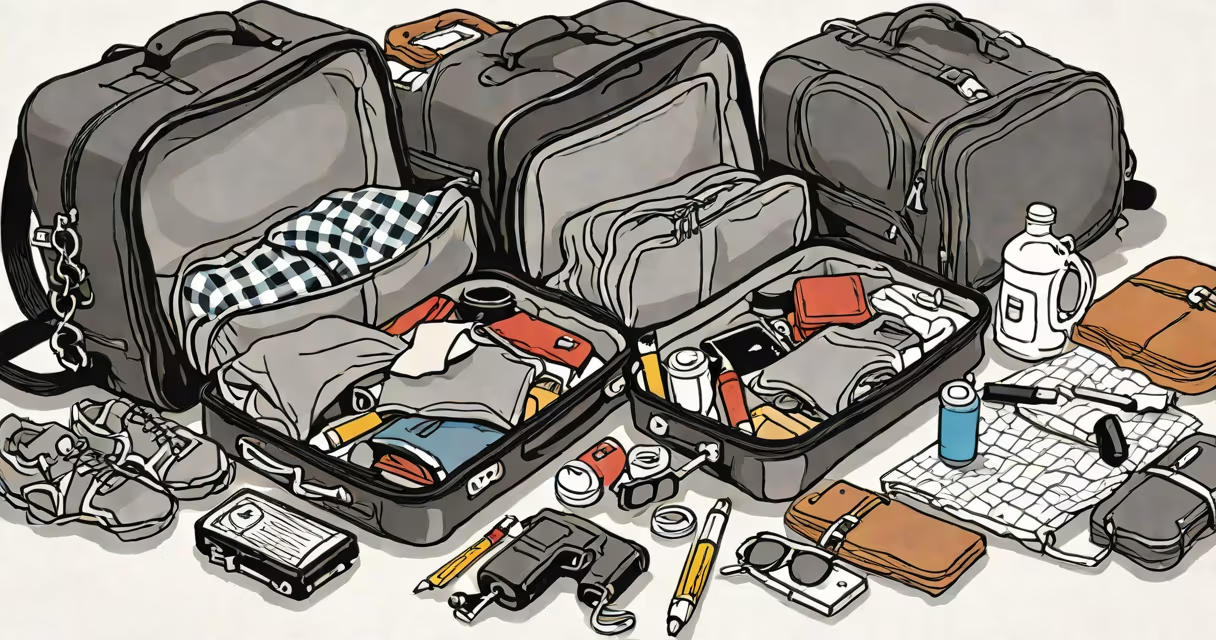
Items banned from carry-on luggage include liquids over 3.4 ounces, sharp objects, flammable materials, and certain medications requiring special handling. The Transportation Security Administration (TSA) enforces these rules to prevent threats and ensure passenger safety during air travel.
Carry-on bags must comply with federal aviation regulations. The TSA prohibits any item that could be used as a weapon, pose a fire hazard, or interfere with aircraft systems. This includes aerosols, tools with blades, and bulk quantities of gels or pastes. Even common household items like nail clippers or pocket knives may be restricted depending on blade length.
Prohibited items fall into categories: weapons, flammables, hazardous materials, and specific personal care products. For example, lithium-ion batteries larger than 100 watt-hours are banned unless approved for transport. Alcohol above 70% alcohol by volume cannot be carried on. These rules apply to both domestic and international flights.
The TSA's 3-1-1 rule governs liquid containers: each must be 3.4 ounces (100 ml) or less, fit in a single quart-sized clear plastic bag, and be removed from your bag during screening. A 12-ounce bottle of shampoo exceeds this limit and must go in checked luggage.
Sharp objects such as scissors with blades longer than 4 inches, box cutters, and Swiss Army knives with detachable blades are not permitted in carry-ons. Even if stored in a protective sheath, they're subject to confiscation. The TSA defines "sharp" broadly-this includes knitting needles, metal rulers, and even large safety pins.
Flammable items like lighters, matches, and fuel-powered devices (e.g., camping stoves) are banned. A lighter with a built-in flame is allowed in carry-on if it's not used during flight-but it must be kept in your carry-on, not your pocket. Lighters with fuel reservoirs are prohibited entirely.
Many travelers assume that small amounts of alcohol or perfume are safe. However, any liquid over 3.4 ounces must be packed in checked baggage. A 1.5-ounce bottle of perfume is acceptable under 3-1-1, but a 6-ounce bottle of cologne is not.
Another frequent mistake involves medications. While prescription drugs are allowed, those in gel or liquid form-like insulin or nasal sprays-must be declared and may require documentation. A traveler once had their insulin injector confiscated because it wasn't labeled and was not in original packaging.
Some believe that carrying multiple small bottles avoids the 3-1-1 rule. But if the total volume exceeds 3.4 ounces per container, the entire bag fails inspection. A traveler brought five 2-ounce bottles of hand sanitizer-totaling 10 ounces-and was denied entry through security.
Use this table to identify banned items by category:
| Type | Banned Examples | Risk Level |
|---|---|---|
| Liquids & Gels | Shampoo, lotion, toothpaste over 3.4 oz | High |
| Sharp Objects | Scissors >4 in, box cutters, razors | High |
| Flammables | Lighters with fuel, aerosol cans, gasoline | Extreme |
| Hazardous Materials | Lithium batteries >100 Wh, dry ice, bleach | Extreme |
| Medications | Insulin in vials, liquid painkillers in bulk | Medium |
One non-obvious rule: electronic devices with removable batteries must have the battery removed and placed in carry-on. Lithium-ion batteries in laptops or tablets are allowed, but loose batteries must be protected from short-circuiting. A traveler once lost a spare phone battery because it touched metal in their bag and sparked.
Another overlooked issue: food items. While most foods are allowed, certain perishables like fresh meat or dairy may be seized at customs. A passenger traveling from the U.S. to Canada had their homemade cheese spread confiscated due to import restrictions-not because of carry-on rules, but because of agricultural laws.
I once flew with a carry-on containing a 6-ounce bottle of facial serum, a pair of nail clippers, and a small flashlight with a lithium battery. At security, the serum was flagged. The clippers were rejected because the blade extended 4.5 inches. The flashlight was allowed, but the battery had to be removed and placed in my pocket.
After being asked to repack, I spent 20 minutes at the gate transferring items to checked luggage. The delay caused me to miss my connection. This incident confirmed that even small items can trigger major disruptions if they violate carry-on rules.
Understanding what not to take on a carry on reduces stress, avoids delays, and ensures compliance with federal regulations. Always verify items against current TSA guidelines before departure.