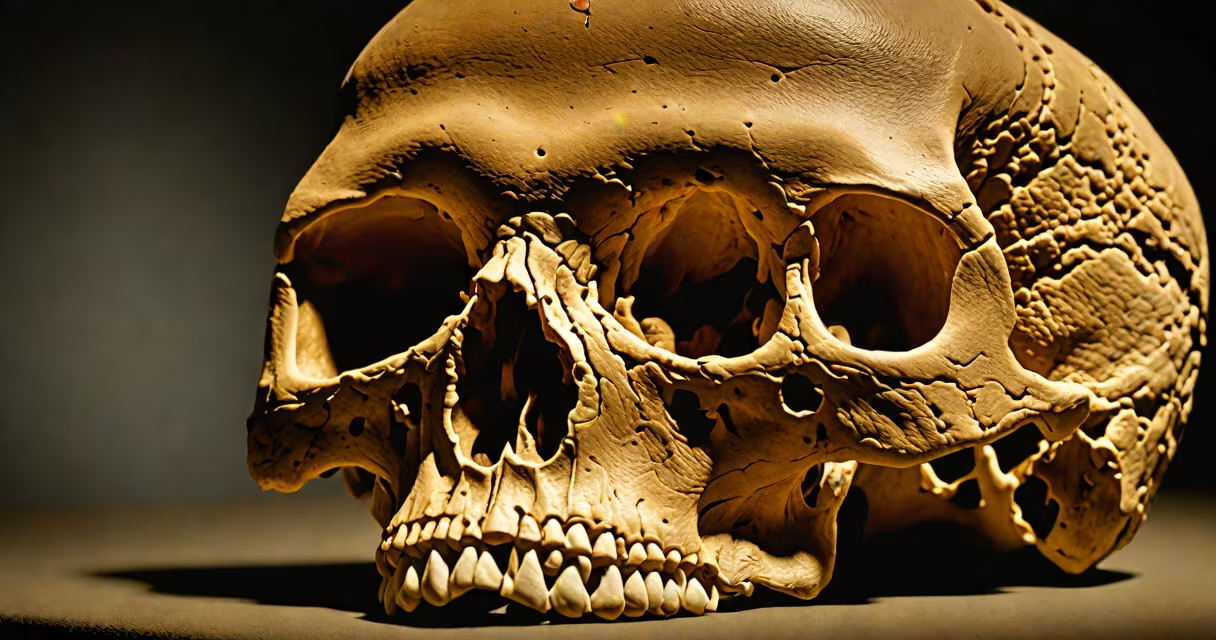
The phrase "first human race" is scientifically inaccurate. There was no singular "race" that marked the beginning of humanity. Instead, anatomically modern humans (Homo sapiens) evolved gradually in Africa over tens of thousands of years, emerging around 300,000 years ago.
Homo sapiens did not appear suddenly as a distinct group. Fossil evidence shows a mosaic of traits-broad foreheads, reduced brow ridges, smaller teeth, and a rounded skull-developing over time. The earliest known fossils attributed to Homo sapiens come from Jebel Irhoud in Morocco, dated to about 315,000 years ago. These remains show modern human features but still retain some primitive characteristics, indicating a transitional stage.
Genetic studies support this gradual emergence. Research published in Nature in 2017 analyzed DNA from ancient African populations and concluded that modern human diversity began to form earlier than previously thought, with gene flow between different groups across the continent. This challenges the idea of a single origin point or a "first" population.
Human evolution did not follow a linear path from ape-like ancestors to modern humans. Instead, multiple hominin species coexisted for hundreds of thousands of years. Homo heidelbergensis, for example, lived in Africa and Europe around 700,000 to 200,000 years ago and is considered a likely ancestor to both Neanderthals and Homo sapiens.
Key developments in Homo sapiens included brain expansion (reaching an average volume of 1,350 cm³), complex tool use, symbolic behavior (such as cave art and personal adornment), and the development of language. These traits appeared incrementally. For example, red ochre pigment use at Blombos Cave in South Africa dates to 100,000 years ago, suggesting early symbolic thinking.
A 2021 study in Science Advances showed that early Homo sapiens in East Africa used stone tools with precision and planned their production-indicating cognitive complexity far earlier than once believed. This suggests that behavioral modernity wasn't a sudden leap but a process spanning tens of thousands of years.
Understanding early human species helps clarify misconceptions about "races." The term "race" as applied to ancient humans is misleading because modern racial categories are social constructs, not biological divisions. Ancient hominins were not divided into races but into species and subspecies based on physical and genetic differences.
| Species | Time Range | Geographic Range | Distinguishing Traits |
|---|---|---|---|
| Homo erectus | 1.9 million - 110,000 years ago | Africa, Asia, Europe | Bipedal, larger brain than earlier hominins, used fire |
| Homo neanderthalensis | 400,000 - 40,000 years ago | Europe, Western Asia | Stocky build, large nose, cold-adapted, buried dead |
| Homo sapiens | 300,000 years ago - present | Global | High forehead, small face, complex culture, language |
Neanderthals and Homo sapiens interbred, as confirmed by DNA analysis. Modern non-African humans carry 1-4% Neanderthal DNA. This interbreeding occurred after Homo sapiens migrated out of Africa, showing that genetic exchange happened between distinct human groups-but not in a way that supports the concept of separate "races".
Many people assume that "first human race" refers to a specific group that appeared fully formed. This is incorrect. There was no single "first" human being or population. Instead, Homo sapiens emerged through natural selection acting on variation within African populations over many generations.
A common error is equating "modern human" with "race." Race is a social category based on visible traits like skin color, hair texture, and facial features. These traits are influenced by genetics and environment but do not define species. All living humans belong to the same species-Homo sapiens-and share 99.9% of their DNA.
Another misconception is that early humans were "primitive" or less intelligent. Fossil evidence shows that Homo sapiens engaged in ritual burial, created art, and developed complex tools long before written records. The Venus of Willendorf, a figurine carved from limestone around 25,000 BCE, demonstrates symbolic thought and aesthetic expression.
In 1967, researchers discovered fossilized jawbones and skull fragments at Omo Kibish in Ethiopia. These remains, dated to approximately 195,000 years ago, are among the oldest known Homo sapiens fossils. They display a mix of modern and archaic features-such as a flat face and prominent brow ridge-confirming that early Homo sapiens were not instantly modern but evolving toward modern anatomy.
These fossils helped establish that modern humans originated in Africa, a finding supported by mitochondrial DNA studies tracing maternal lineage back to a woman known as "Mitochondrial Eve," who lived around 200,000 years ago. However, she was not the only woman alive at the time-she was simply the one whose mitochondrial DNA line survived to the present.
I once stood in front of a replica of the Omo Kibish skull at the National Museum of Natural History in Washington, D.C. The face was subtly different from modern humans-more angular, with a receding forehead. That moment drove home how gradual the transition was: we didn't emerge overnight as "modern" beings. We evolved.
"Race" as a biological concept is outdated and scientifically invalid. The American Association of Physical Anthropologists states that race does not reflect meaningful genetic differences among human populations. Genetic variation within any racial group exceeds variation between groups.
Applying modern racial categories to ancient humans distorts history. Early Homo sapiens in North Africa, for example, had dark skin adapted to high UV exposure. But skin color varied across regions due to environmental adaptation-not racial purity. A 2018 study in PNAS showed that genes related to skin pigmentation evolved independently in different populations, meaning dark skin evolved multiple times.
Thus, speaking of a "first human race" implies a false sense of origin and division. Humanity did not begin with a single group. It arose through shared ancestry, migration, and adaptation across vast landscapes.
Modern humans (Homo sapiens) evolved in Africa over tens of thousands of years, shaped by climate, geography, and interaction with other hominin species. The idea of a "first human race" is a misinterpretation of evolutionary biology. What exists is a continuous lineage of adaptation, not discrete racial beginnings.