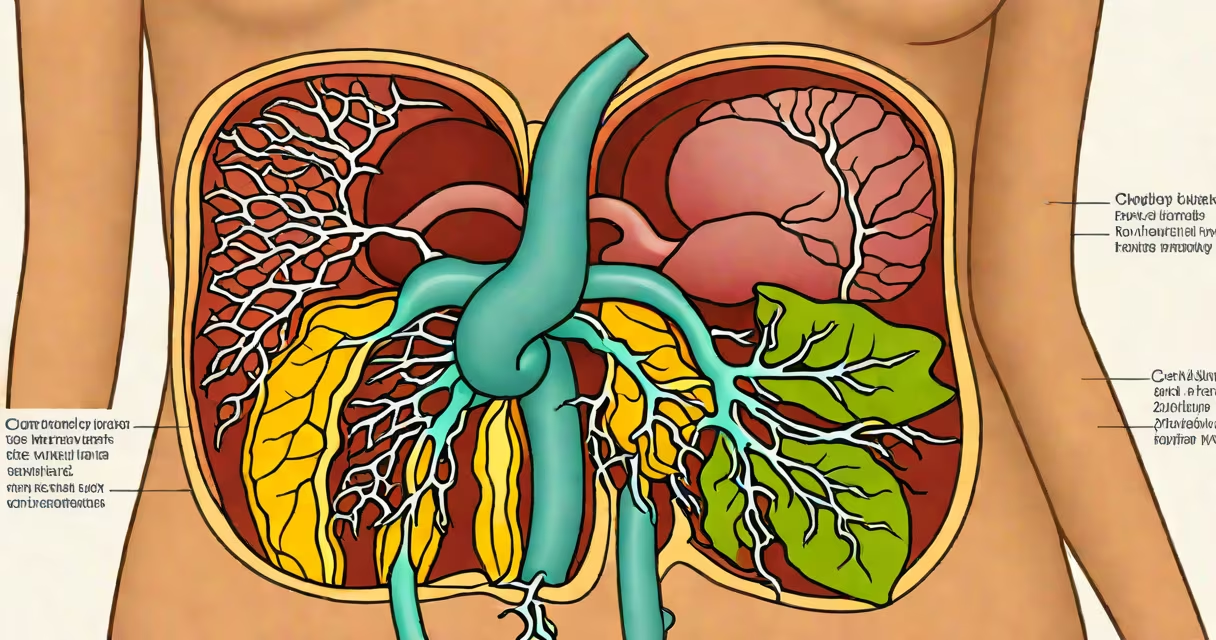
The gallbladder is a small, pear-shaped organ situated beneath the liver in the upper right quadrant of the abdomen. It stores and concentrates bile produced by the liver and releases it into the small intestine during digestion.
Located just under the diaphragm and tucked beneath the right lobe of the liver, the gallbladder lies between the ninth and eleventh ribs, slightly below the costal margin. Its position is consistent across adult females and males, though anatomical variation can occur in rare cases.
When a woman eats a meal containing fat, the gallbladder contracts and pushes stored bile through the cystic duct into the common bile duct, which empties into the duodenum. This process aids in breaking down fats and absorbing fat-soluble vitamins.
Bile is synthesized continuously by the liver at a rate of about 500-800 mL per day. The gallbladder concentrates this bile by removing water and electrolytes, increasing its potency. When food enters the small intestine, hormones like cholecystokinin trigger gallbladder contraction.
Without the gallbladder, bile flows directly from the liver into the small intestine. While most people adapt well, some may experience loose stools or difficulty digesting fatty meals after gallbladder removal.
A 2021 study published in Frontiers in Physiology confirmed that gallbladder emptying occurs within 15-30 minutes after a high-fat meal in healthy individuals, demonstrating the organ's rapid response to dietary cues.
The gallbladder wall consists of three layers: mucosa, muscularis, and serosa. The mucosal lining contains specialized cells that absorb water and ions, concentrating bile up to tenfold. The muscular layer contracts to expel bile through the cystic duct.
It measures approximately 7-10 cm in length and 3-4 cm in width when distended. The fundus-the rounded end-extends beyond the liver edge and can be palpated during physical exams in certain conditions.
Common abnormalities include gallstones (cholelithiasis), inflammation (cholecystitis), and sludge formation. These often develop due to imbalanced bile composition, such as excess cholesterol or bilirubin.
Many assume the gallbladder is involved in producing bile. That function belongs exclusively to the liver. The gallbladder only stores and concentrates bile.
Another frequent error is mistaking gallbladder pain for heartburn or indigestion. Right upper quadrant pain after eating, especially fatty foods, may indicate gallbladder disease. However, symptoms like nausea, bloating, and referred pain to the right shoulder are not unique to gallbladder issues.
Some women report discomfort in the upper right abdomen during pregnancy. As the uterus expands, it can compress nearby organs, including the gallbladder. This mechanical pressure may slow bile flow and increase the risk of stone formation-a condition known as cholelithiasis of pregnancy.
While the standard location is consistent, anatomical variants exist. A gallbladder that sits higher in the abdomen or is retroperitoneal (behind the peritoneum) is rare but documented. These variations can complicate imaging and surgery.
| Type | Description | Prevalence |
|---|---|---|
| Normal position | Beneath the liver, in the right upper quadrant | ~95% |
| Ectopic gallbladder | Located outside typical anatomical region (e.g., in the left upper quadrant) | <0.1% |
| Double gallbladder | Two separate gallbladders; extremely rare | <0.05% |
These anomalies are usually discovered incidentally during imaging or surgery. They do not typically cause symptoms unless obstructed or inflamed.
A 42-year-old woman presented with recurrent sharp pain in the upper right abdomen after meals. She reported that the pain lasted 30-60 minutes and sometimes radiated to her back. Blood tests showed elevated bilirubin and alkaline phosphatase levels. An ultrasound revealed multiple gallstones and thickened gallbladder walls.
Based on clinical findings and imaging, she was diagnosed with symptomatic cholelithiasis. After discussing options, she underwent laparoscopic cholecystectomy. Post-surgery, her symptoms resolved completely.
This case illustrates how precise anatomical knowledge guides diagnosis and treatment. Without knowing the gallbladder's normal location and function, identifying the source of pain would be harder.
I once observed a medical student struggle to identify the gallbladder during a cadaver dissection. Despite being shown the structure repeatedly, he kept pointing to the liver. The instructor clarified: "The gallbladder is not part of the liver-it's a separate organ attached underneath." This moment underscored how easily the organ is overlooked, even among trained professionals.
Accurate anatomical knowledge is essential for diagnosing gallbladder disorders. Pain in the right upper quadrant, especially after eating, raises suspicion. Imaging techniques like ultrasound and MRI cholangiography rely on knowing the organ's expected position.
Surgical procedures such as laparoscopic cholecystectomy require precise localization. Mistakes in identifying the gallbladder can lead to injury of the common bile duct-a serious complication. According to the American Society for Gastrointestinal Endoscopy, misidentification contributes to about 1 in 1,000 laparoscopic surgeries.
Understanding the gallbladder's role in digestion also informs dietary management. Patients with gallbladder dysfunction are often advised to reduce intake of fried and high-fat foods to prevent symptom flare-ups.
Gallbladder disease affects approximately 10-15% of adults in the United States, with women more likely to develop gallstones than men. Hormonal factors, particularly estrogen, contribute to increased cholesterol saturation in bile, raising the risk.
Chronic gallbladder inflammation can lead to thickening of the wall, reduced contractility, and impaired emptying-conditions that may require surgical intervention. Non-surgical treatments like ursodeoxycholic acid can dissolve small stones but take months and have limited success rates.
The gallbladder's location in the upper right abdomen is critical to both diagnosis and treatment. Its proximity to the liver, pancreas, and intestines means that symptoms can mimic other conditions. Accurate identification ensures proper care and prevents complications.
Knowing where the gallbladder is located in a woman helps explain symptoms, guide testing, and inform decisions about treatment. Whether managing acute pain or planning long-term care, anatomical precision matters.