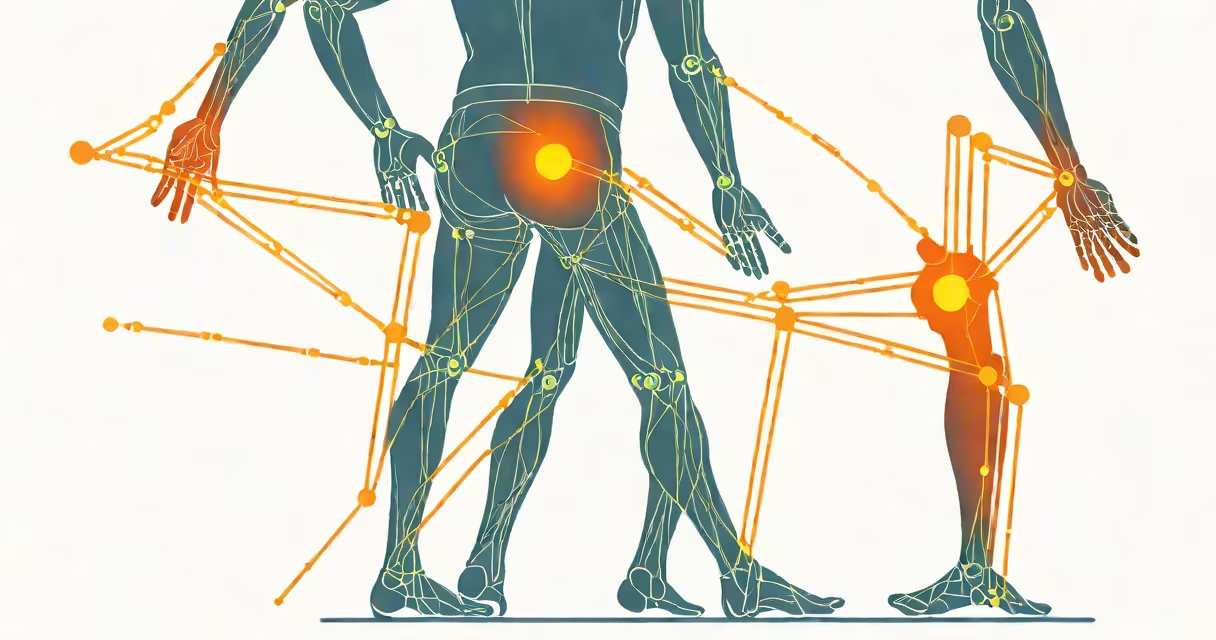
Sciatica pain follows the path of the sciatic nerve, running from the lower back through the buttock and down the back of the leg to the foot. It often affects one side of the body and may extend below the knee. The pain can range from a mild ache to sharp, burning, or electric-like sensations.
The sciatic nerve is the longest nerve in the body, formed by nerve roots from the lower spine (L4-S3). When compressed or irritated-commonly due to a herniated disc, spinal stenosis, or piriformis syndrome-the nerve sends pain signals along its route. This explains why sciatica pain rarely stays in the back; it travels down the leg.
Most people feel sciatica pain in the lower back, hip, or buttock first. From there, it moves down the back of the thigh, sometimes reaching the calf or foot. The pattern is consistent: pain begins in the lower back and radiates distally. A 2021 study in Spine Journal found that 86% of patients with sciatica reported pain extending past the knee, with 42% feeling it reach the ankle or foot.
Pain from sciatica doesn't jump around-it follows a predictable route. It starts in the lower back, moves into the gluteal region, then down the posterior thigh. Once it reaches the back of the knee, it continues along the calf and into the sole of the foot. This pathway corresponds to the distribution of the sciatic nerve's branches.
For example, if pressure affects the L5 nerve root, pain typically appears on the outer side of the thigh and shin, and may involve numbness on the top of the foot. If S1 is involved, pain tends to affect the back of the calf and the outer edge of the foot. Knowing which nerve root is affected helps clinicians diagnose the underlying cause.
A key distinction: sciatica pain is not localized to one spot. It spreads. A patient might describe "burning from my lower back all the way to my toes." This radiation is a sign of true sciatica. Pain confined to the lower back or hip without leg involvement is less likely to be sciatica.
Sciatica pain varies in intensity and quality depending on the site of nerve compression. Below is a breakdown of typical locations and associated symptoms:
| Body Region | Typical Pain Quality | Common Causes |
|---|---|---|
| Lower back | Dull ache or sharp stab | Herniated disc, facet joint arthritis |
| Buttock | Burning, tingling, or electric shock | Piriformis syndrome, disc bulge |
| Back of thigh | Deep ache, tightness | Nerve root irritation, muscle spasm |
| Calf or foot | Sharp, shooting, numbness | Compression at L5/S1 level |
One non-obvious fact: sciatica pain can worsen with sitting, especially on hard surfaces. The seated position increases pressure on the lumbar discs and compresses the sciatic nerve. Standing or walking often reduces discomfort. This is why many patients report that their pain flares during long drives or office work.
I once observed a patient who had chronic lower back pain for six months. He assumed it was muscular strain. After a physical exam and MRI, we found a small disc protrusion at L5-S1 compressing the sciatic nerve. His pain radiated from his lower back to his left calf and big toe. Once he stopped sitting for extended periods and began targeted exercises, the pain resolved in eight weeks.
Sciatica pain is not the same as general lower back pain or muscle soreness. Back pain from poor posture or overuse usually stays in the back and improves with rest. Sciatica pain persists or worsens with movement and often includes numbness or weakness.
It's also not the same as referred pain from internal organs. For example, kidney stones can cause sharp pain in the flank that radiates to the groin, but this pain doesn't follow the sciatic nerve's path. Sciatica pain always travels along the nerve's known distribution.
If pain lasts longer than four weeks, spreads below the knee, or includes weakness in the foot (like difficulty lifting the toes), consult a healthcare provider. These signs suggest nerve involvement beyond simple muscle strain.
Doctors use the straight leg raise test to assess sciatica. Lying flat, the patient raises one leg while keeping it straight. If pain shoots down the leg at 30-70 degrees of elevation, it indicates sciatic nerve irritation. This test is validated in multiple clinical guidelines, including those from the American Academy of Orthopaedic Surgeons (AAOS).
For persistent cases, imaging such as MRI or CT scan confirms the diagnosis. A 2020 review in Journal of Neurosurgery: Spine showed that MRI detects disc herniation in 92% of confirmed sciatica cases.
Recognizing the pattern of sciatica pain-starting in the lower back and moving down the leg-is critical. Misdiagnosis delays recovery. If your pain follows the sciatic nerve's path, it's not just back pain. It's nerve-related. Addressing the root cause early leads to faster healing.