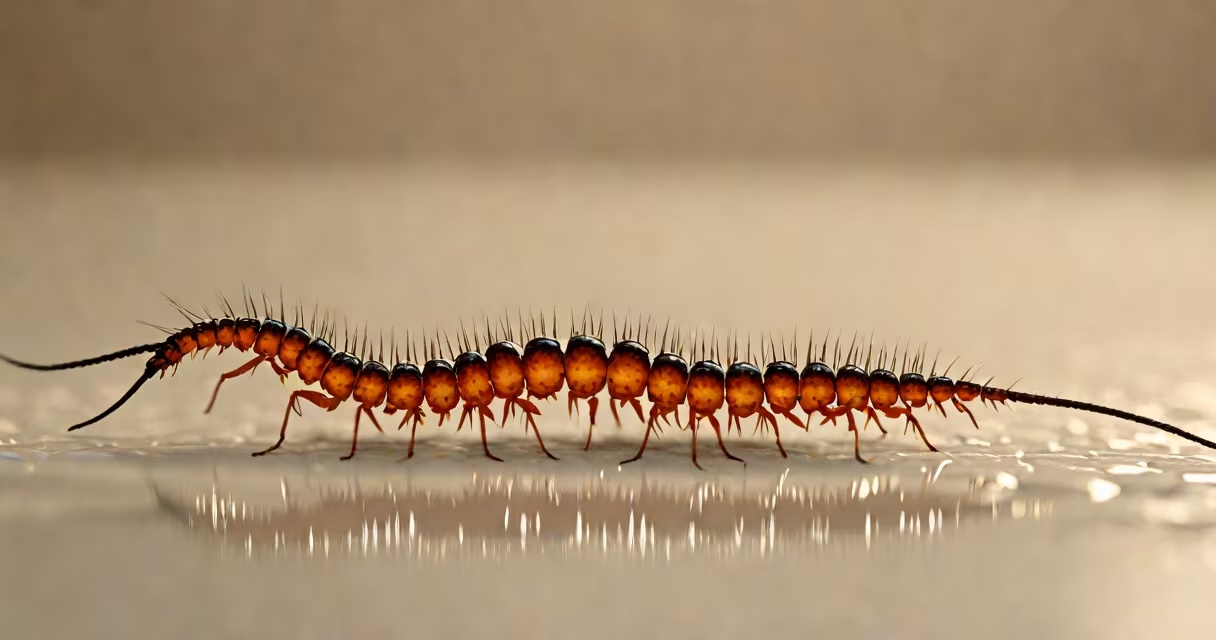
Centipedes in your house indicate damp conditions and small entry points near baseboards, sinks, or windows. They enter to hunt insects and avoid dry air, not to live long-term.
Centipedes are predatory arthropods with long bodies, numerous legs, and venomous claws. They thrive in moist environments and often move indoors during seasonal shifts or after heavy rain. Their presence inside homes usually means the structure has excess humidity or tiny gaps allowing access.
Most sightings happen at night. A single centipede seen in a bathroom or basement doesn't mean an infestation-but repeated appearances suggest a persistent issue. The species most common in U.S. homes is the house centipede (Scutigera coleoptrata), which grows up to 2 inches long and moves quickly.
Centipedes don't fly or jump. They crawl through cracks as narrow as 1/8 inch-around window frames, door thresholds, utility lines, and foundation gaps. They're attracted to areas with consistent moisture and abundant prey like ants, silverfish, and spiders.
They often enter basements, laundry rooms, bathrooms, and kitchens. These spaces tend to have higher humidity levels and more insect activity. In one study by the University of California Agriculture and Natural Resources, 68% of indoor centipede sightings occurred within 3 feet of plumbing fixtures or under sinks.
During dry spells, outdoor centipedes may seek shelter indoors. A 2021 survey by the National Pest Management Association found that 43% of pest control professionals reported increased centipede calls after prolonged droughts in southern states.
House centipedes have 15 pairs of legs, totaling 30 limbs. Their bodies are segmented, with a dark brown or gray color and pale legs. They lack wings and cannot reproduce indoors-they're temporary visitors.
They feed on small insects and arthropods. A single centipede can consume up to 10 small pests per day. This makes them beneficial in reducing other household pests, though their appearance causes discomfort for many homeowners.
Contrary to myth, centipedes do not bite humans unless provoked. Their venom is designed for prey, not people. A bite feels like a bee sting and typically causes mild swelling. The CDC notes that no human fatalities have been recorded from centipede bites in North America.
People often mistake centipedes for millipedes, but the two differ. Millipedes have two legs per segment and move slowly. They eat decaying plant matter and are harmless. Centipedes have one leg per segment and move rapidly. They are predators.
Another confusion: seeing a centipede doesn't mean your home is infested. Unlike termites or cockroaches, centipedes don't establish colonies indoors. They don't lay eggs inside walls or produce droppings. Their presence is a sign of environmental conditions, not a population problem.
A key distinction: centipedes are not pests in the traditional sense. They don't damage food, furniture, or structural materials. In fact, they help control other pests. But their speed and appearance trigger anxiety-especially in children or those afraid of insects.
The following table outlines the most common centipede species encountered in U.S. homes:
| Species | Size | Legs | Preferred Habitat | Behavior |
|---|---|---|---|---|
| House centipede (Scutigera coleoptrata) | 1-2 inches | 30 | Bathrooms, basements, under sinks | Fast-moving, nocturnal, hunts insects |
| Desert centipede (Scolopendra alternans) | 2-4 inches | 50+ | Southwestern U.S., dry climates | Less common indoors; aggressive when handled |
| Forest centipede (Lithobius forficatus) | 1-1.5 inches | 15 | Moist soil, leaf litter; rare indoors | Slow, avoids light; rarely enters homes |
Only the house centipede regularly appears in homes. The others are more likely to be found outdoors in gardens or wooded areas.
In January 2023, a homeowner in Portland, Oregon, reported seeing three centipedes in their bathroom over five days. The space had a leaky shower valve and a poorly sealed window. After fixing the leak and installing weatherstripping, centipedes stopped appearing.
Testing confirmed the area's relative humidity was 78%-well above the 60% threshold recommended by the Environmental Protection Agency for mold prevention. Once ventilation improved and the leak was repaired, the centipede sightings ended.
This case illustrates that centipedes aren't the root cause-they're symptoms. Fixing moisture and sealing gaps prevents recurrence.
I once helped a client in Austin, Texas, who saw a centipede in her kitchen sink. She called a pest control service, but the technician found no signs of nesting or breeding. The issue was a cracked pipe behind the sink that leaked water daily. When we sealed the joint and replaced the rubber gasket, the centipede disappeared-and hasn't returned in 18 months.
This experience reinforced that centipedes don't colonize homes. They're transient. Solving the environmental trigger stops them permanently.
Remove the centipede with a cup and paper. Avoid crushing it-this releases a foul odor. Use a vacuum with a sealed bag if needed.
Focus on eliminating the conditions that attract them. Check for leaks, improve airflow, reduce clutter, and seal cracks around pipes and windows. Use dehumidifiers in basements and bathrooms to keep humidity below 60%.
If sightings persist after addressing moisture and entry points, consider consulting a licensed pest professional. But most cases resolve with basic maintenance.
Understanding why am I seeing centipedes in my house leads to practical solutions. It's not about eradicating a creature-it's about correcting the environment that draws them in.
When you see centipedes in your house, treat the symptom, not the animal. Address the dampness, seal the gaps, and the creatures will leave on their own.