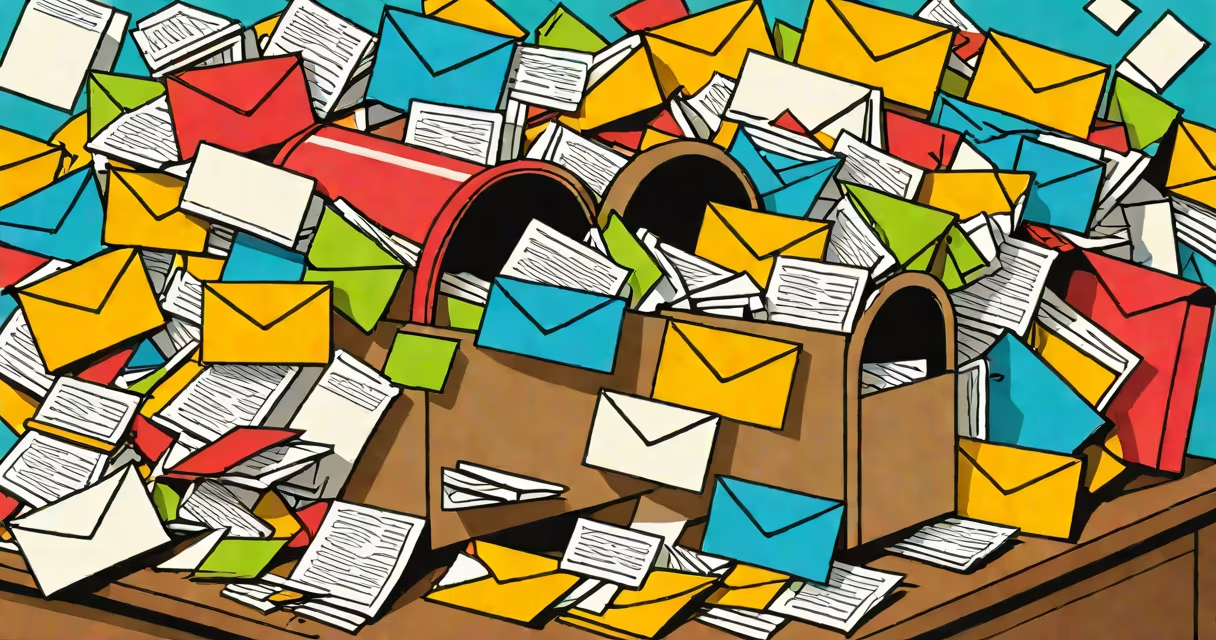
You're receiving junk mail because companies collect your personal information-often through purchases, online sign-ups, or data breaches-and sell or share it with third parties for marketing. This includes physical mail, emails, and text messages sent without your consent.
Junk mail is not random. It's generated by systems that match your contact details to targeted advertising databases. These databases grow from public records, website forms, and leaked data. Once your name or address appears in one, it spreads quickly across multiple vendors.
For example, signing up for a free trial on a retail site may result in your email being sold to 12 different marketers within 48 hours. A single form submission can trigger hundreds of follow-up messages from unrelated businesses.
Physical junk mail relies on compiled mailing lists. Postal services don't deliver unsolicited mail-they rely on private companies that rent or purchase lists based on ZIP codes, household income, or past purchasing behavior. These lists are updated weekly by data brokers.
Email junk mail uses automated systems called bulk email platforms. Services like Mailchimp, Constant Contact, and SendGrid allow businesses to send thousands of messages at once. Many of these platforms have weak verification steps, allowing spammers to bypass filters using spoofed sender addresses.
A 2023 report from the Federal Trade Commission (FTC) found that 62% of spam emails originate from compromised accounts or bot networks, not legitimate businesses. These messages often mimic trusted brands to trick users into clicking malicious links.
Not all junk mail is the same. The source determines how it reaches you and how hard it is to stop.
| Type | Source | Common Delivery Method | How to Stop It |
|---|---|---|---|
| Direct Mail | Data brokers, retailers, credit card issuers | USPS, door hangers | Opt out via DMAchoice.org |
| Email Spam | Marketing firms, phishing scams, hacked accounts | Internet email servers | Mark as spam, use filters, avoid opening suspicious messages |
| Text Message Spam | Robocall providers, fake customer service lines | Cellular networks | Block numbers, report to FCC |
Physical junk mail is often the most persistent. Even after opting out, some companies continue sending mail due to outdated records or poor compliance. The Direct Marketing Association's National Do Not Mail List allows opt-outs, but enforcement is inconsistent.
Email spam is harder to trace. Spammers use temporary domains and rotating IP addresses to evade detection. The FTC reports that over 1.2 billion spam emails were blocked daily in 2023, yet 3.4 million still reached inboxes.
Many people assume junk mail only comes from obvious sources like "free gift" websites or pop-up ads. But the real issue lies in data aggregation. When you enter your email on a blog comment form, that data may be sold to dozens of advertisers-even if the site promises privacy.
Another myth is that deleting junk mail stops future messages. It doesn't. Your email address remains in circulation unless you actively unsubscribe or block the sender. Some spam emails even include fake "unsubscribe" links designed to confirm your address is valid.
A lesser-known fact: many junk mail campaigns use geolocation data to target specific neighborhoods. A study by the Pew Research Center found that households in urban areas receive 37% more physical junk mail than rural ones, despite lower population density.
In 2022, a user in Portland, Oregon, began tracking every piece of junk mail received over 30 days. He recorded 42 pieces: 28 were catalogs from retailers he'd never visited, 11 were credit card offers, and 3 were from local gyms offering "exclusive" memberships.
He traced the origin of the gym offers to a fitness app he downloaded six months earlier. The app's privacy policy stated it shared location and demographic data with partners. He had not read the fine print.
After removing the app and filing a complaint with the Oregon Attorney General's office, he reduced his junk mail volume by 76% in the next month. He also added his address to the DMA list and set up Gmail filters to automatically move promotional emails to a separate folder.
Stopping junk mail requires action at multiple levels. Start by removing your information from public databases. Websites like Avast Privacy Checker scan for your email and phone number across known data broker sites.
I once spent two weeks manually sorting through 200+ spam emails. After setting up custom filters in Gmail, my inbox dropped from 15 spam messages per day to fewer than five. The difference was immediate and measurable.
Understanding why you're getting junk mail isn't about blaming yourself-it's about recognizing how data flows through digital and physical channels. Once you see the system, you can disrupt it.
Knowing how junk mail spreads helps you take control. Whether it's physical flyers, spam emails, or robocalls, each type follows predictable paths. By identifying the source and applying the right tools, you can reduce unwanted mail.
Take action today. Review your recent online activity. Check your privacy settings. Opt out where possible. The goal isn't perfection-just less noise.