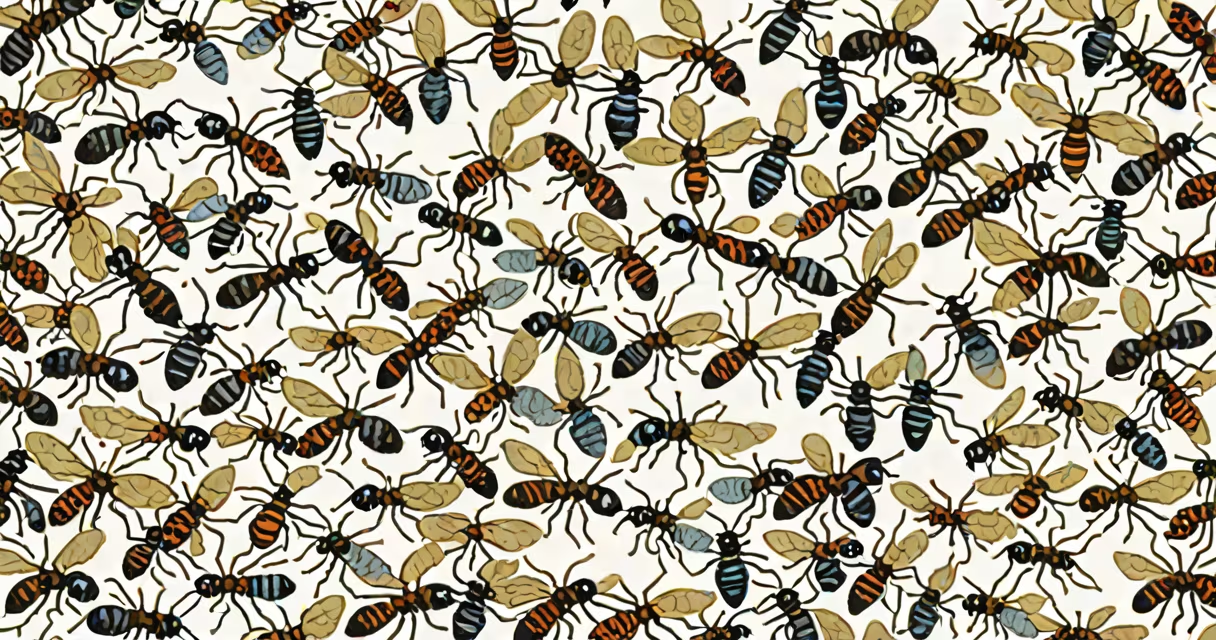
Flying ants are reproductive ants that leave their colonies to mate and establish new nests. They appear in large numbers during warm weather, especially in late spring and early summer, and are not a sign of a household infestation.
These winged ants are part of a natural life cycle. Worker ants remain underground or inside structures, while reproductive males and females develop wings and fly to find mates. After mating, the females shed their wings and start new colonies. This behavior is common across many ant species, including pavement ants, odorous house ants, and carpenter ants.
Seeing flying ants indoors usually means they're drawn to light or heat sources. They don't live in homes-they enter accidentally during mating flights. Their presence doesn't indicate a problem with your home's structure or hygiene. The phenomenon is temporary and predictable.
Flying ants are not a new species. They are mature members of existing ant colonies that have developed wings for reproduction. Males and females grow wings during a specific developmental stage triggered by temperature, humidity, and colony maturity. Once ready, they emerge simultaneously in a synchronized event called a nuptial flight.
During these flights, ants take off in swarms, often on warm, humid days following rain. They fly short distances-usually less than 100 meters-to find partners. After mating, the female lands, sheds her wings, and searches for a suitable site to lay eggs and begin a new colony. Males die shortly after mating.
Entomologists at the University of California Agriculture and Natural Resources note that flying ants are most active between May and July in temperate regions. Their appearance correlates strongly with rising temperatures above 68°F (20°C) and high humidity levels. These conditions signal optimal mating windows.
Not all flying ants are the same. Different species exhibit distinct behaviors and appearances. Knowing which species you're seeing helps determine whether action is needed.
| Species | Appearance | Behavior | Common Location |
|---|---|---|---|
| Pavement ants | Dark brown, 1/8 inch long | Swarm near sidewalks and driveways | Urban and suburban yards |
| Carpenter ants | Black or red, 1/4 inch long | Enter homes through wood gaps | Wooden beams, eaves, window frames |
| Odorous house ants | Dark brown, 1/16 inch long | Follow trails indoors | Kitchens, bathrooms, baseboards |
When flying ants appear indoors, they are typically pavement or odorous house ants. Carpenter ants may also fly, but their presence signals potential structural damage. A single sighting of flying ants indoors does not mean you have a carpenter ant infestation. However, if you see worker ants regularly, especially near wood, investigate further.
A key distinction: flying ants are not pests in the traditional sense. They do not eat food, damage property, or nest in walls. Their role is reproductive. They disappear within hours or days after mating. Unlike termites, which also have winged forms, flying ants have bent antennae and narrow waists-features that help differentiate them.
Flying ants show up in predictable patterns. They emerge after rain, on sunny afternoons, and when temperatures rise above 68°F (20°C). These conditions trigger hormonal changes in the queen's offspring, leading to wing development.
They often gather around lights, windowsills, and doorways. One homeowner reported finding 30 flying ants in a single room after a thunderstorm. They were attracted to a lamp near a kitchen window. The swarm vanished within 90 minutes. No nesting was found.
Outdoor areas near trees, gardens, and lawns are hotspots. Colonies beneath patios, flower beds, or under stones release swarms during peak mating periods. These events are brief-lasting no more than four hours-and occur only once per year.
Some people mistake flying ants for termites. Both have wings and fly in swarms. But termites have equal-length wings, straight antennae, and broad waists. Flying ants have unequal wings, bent antennae, and narrow waists. Misidentification leads to unnecessary treatments.
Many assume flying ants mean a home is infested. That's incorrect. The presence of flying ants indoors indicates they've entered by accident during mating flights. They do not reproduce or survive long inside. They die quickly without access to a colony.
Another misconception: flying ants cause structural damage. They do not. Only worker ants build tunnels and chambers. Reproductive ants lack the tools and instinct to chew wood or create nests. If you suspect carpenter ants, look for sawdust-like frass, hollow-sounding wood, or worker ants near baseboards.
One non-obvious fact: flying ants are not aggressive. They do not bite or sting. They pose no health risk to humans or pets. Their sole purpose is reproduction. Even if you see hundreds, they won't form a colony indoors.
I once observed a swarm of flying ants in my backyard during a June afternoon. They rose from a small mound near a mulched garden bed. Within 20 minutes, they dispersed into the air. I collected a few specimens and confirmed they were *Tapinoma sessile*-common pavement ants. No nesting signs were found nearby. The event lasted less than an hour.
Do nothing. Flying ants are harmless and temporary. Close windows and doors to prevent entry. Turn off indoor lights at night to reduce attraction. Clean up crumbs and spills to avoid drawing other insects.
If you see worker ants indoors after the flying event, clean surfaces with vinegar or dish soap. Seal cracks and gaps with caulk. But do not use pesticides unless you confirm ongoing infestation. Overuse harms beneficial insects and can contaminate soil.
For context, the USDA reports that flying ants are a normal ecological event. They contribute to nutrient cycling and serve as food for birds, spiders, and other insects. Their appearance is not a warning sign-it's a seasonal marker.
Flying ants are not a problem. They are a biological signal. Recognizing their role helps you respond correctly-without fear, chemicals, or wasted effort.