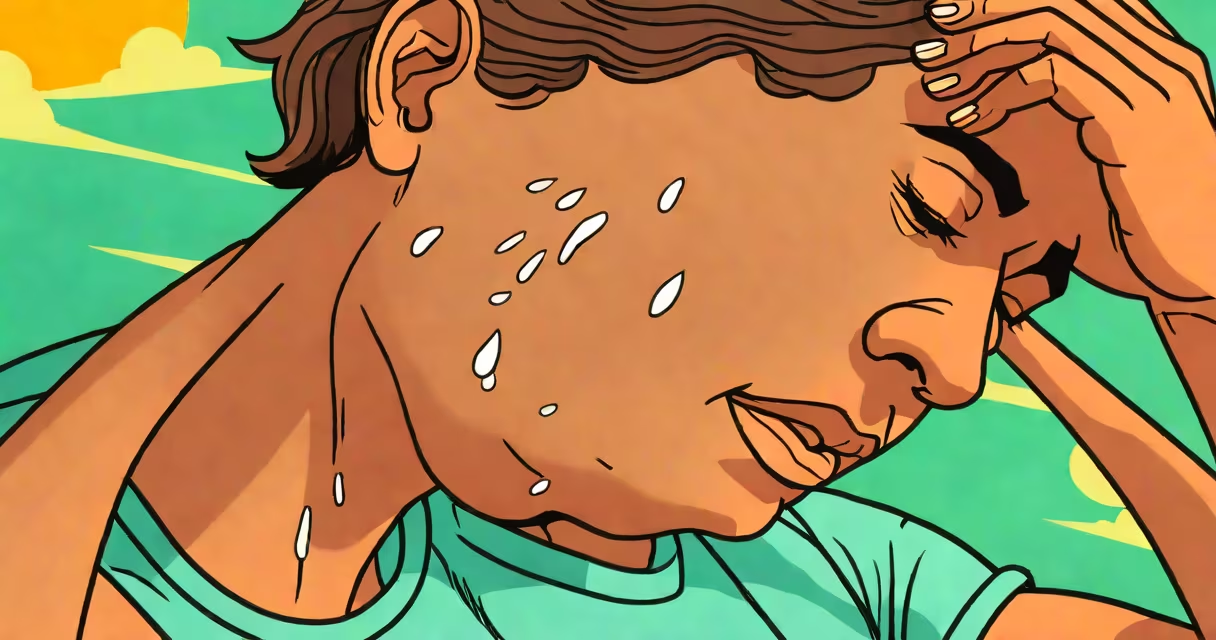
Excessive sweating confined to the head and face, while other areas remain dry, is typically caused by primary focal hyperhidrosis-a condition where sweat glands overreact without an underlying illness. This happens due to overactive sympathetic nerves triggering sweat production in localized regions.
Primary focal hyperhidrosis affects about 1% of the population, according to the International Hyperhidrosis Society. It often begins in childhood or adolescence and tends to run in families. Unlike generalized sweating from fever, exercise, or heat, this type targets specific zones-most commonly the palms, soles, underarms, and in your case, the scalp and forehead.
Sweating only from the head can feel sudden and disproportionate. You might notice damp patches on your hairline or forehead during mild stress, such as giving a presentation or entering a warm room. The sweat appears without physical exertion, and the rest of your body stays dry. This pattern distinguishes it from normal thermoregulatory sweating.
The human body uses sweat to regulate temperature. Sweat glands are controlled by the sympathetic nervous system. In people with focal hyperhidrosis, nerve signals to certain sweat glands become overly sensitive. The brain sends the "sweat" command even when no cooling is needed.
For head-focused cases, the trigger zone lies in the upper thoracic and cervical regions of the spinal cord. These nerves connect to sweat glands in the scalp, forehead, and behind the ears. A misfire in this network leads to localized overactivity. Research shows that individuals with this condition have higher baseline activity in the sweat centers of the brainstem.
One study published in Dermatologic Surgery found that 68% of patients with cranial hyperhidrosis reported symptoms starting before age 20. The condition persists into adulthood unless treated. It's not linked to anxiety alone-even people without social stress report the same issue.
Focal hyperhidrosis isn't one-size-fits-all. Different patterns exist based on which sweat glands are affected. The most common types involving the head include:
| Type | Body Area Affected | Common Triggers | Prevalence |
|---|---|---|---|
| Palmar | Hands | Stress, touch, temperature changes | 30% |
| Plantar | Feet | Heat, tight shoes, standing | 25% |
| Craniofacial | Head, face, neck | Emotional stress, warmth, caffeine | 15% |
| Generalized | Multiple areas | Medications, infections, hormonal shifts | 5% |
Craniofacial hyperhidrosis-sweating only from the head and face-is less common than palmar or plantar types but still significant. It often worsens in warm environments or during emotional moments like public speaking. Some people describe it as "dripping from the crown" during meetings or presentations.
A key distinction: normal sweating from the head occurs during physical activity or high ambient temperatures. That's expected. But if you're sitting in an air-conditioned office and your hairline is soaked, or your glasses fog up from forehead sweat despite no exertion, it's likely pathological.
Many assume head-only sweating stems from poor hygiene, diet, or being overweight. These factors can influence sweat volume, but they don't explain isolated cranial sweating. For example, someone who eats spicy food may sweat more -but their sweat should appear across the torso, not just the scalp.
Another myth: "I only sweat from my head because I'm stressed." While stress triggers sweating, it usually activates multiple sites. If you sweat only from the head during calm moments, stress isn't the root cause. The International Hyperhidrosis Society notes that 70% of patients with craniofacial hyperhidrosis report symptoms unrelated to emotional states.
Some confuse this with secondary hyperhidrosis-excessive sweating caused by conditions like hyperthyroidism, diabetes, or menopause. These conditions cause widespread sweating, not just the head. If you're experiencing night sweats, unexplained weight loss, or heart palpitations alongside head sweating, see a doctor to rule out systemic disease.
I once met a software engineer in San Francisco who reported sweating heavily from his scalp during video calls. He'd wear a hat indoors to hide the dampness. His underarms stayed dry. He wasn't anxious-his job was stable, he had no health issues. After testing, he was diagnosed with primary craniofacial hyperhidrosis.
He tried antiperspirants with aluminum chloride, but they irritated his scalp. He switched to prescription-strength antiperspirants applied at night. Within two weeks, sweat reduced by 60%. He later underwent iontophoresis treatments using a handheld device designed for facial use. After six sessions, his daily sweat decreased to minimal levels.
This case illustrates that treatment exists-and it's effective. It also shows that head-only sweating isn't just "lifestyle-related." It's a neurological phenomenon requiring targeted solutions.
If head sweating interferes with daily life-like avoiding handshakes, skipping events, or feeling self-conscious-it's time to consult a dermatologist or neurologist. The American Academy of Dermatology recommends evaluation if sweating disrupts work, sleep, or relationships.
Diagnosis involves a clinical exam and possibly a starch-iodine test. In this test, iodine is applied to the skin, then starch. When sweat appears, it turns blue-black-showing exact sweat patterns. This helps confirm whether sweating is focal or generalized.
Treatment options include prescription antiperspirants, oral medications like glycopyrrolate, Botox injections (off-label for the scalp), and in severe cases, minimally invasive surgery like endoscopic thoracic sympathectomy. However, surgery carries risks including compensatory sweating in other areas.
One non-obvious fact: sweat from the head contains higher concentrations of sodium and potassium than sweat from the arms or legs. This makes scalp sweat more irritating to the skin and increases risk of folliculitis or dandruff. Regular cleansing with pH-balanced shampoo helps reduce irritation.
Why do I only sweat from my head? The answer lies in abnormal nerve signaling to sweat glands in the scalp and face. This is not a sign of poor health or lifestyle failure. It's a recognized medical condition called primary focal hyperhidrosis. If your sweat is limited to the head and impacts your confidence or routine, it's treatable. Don't accept it as normal.