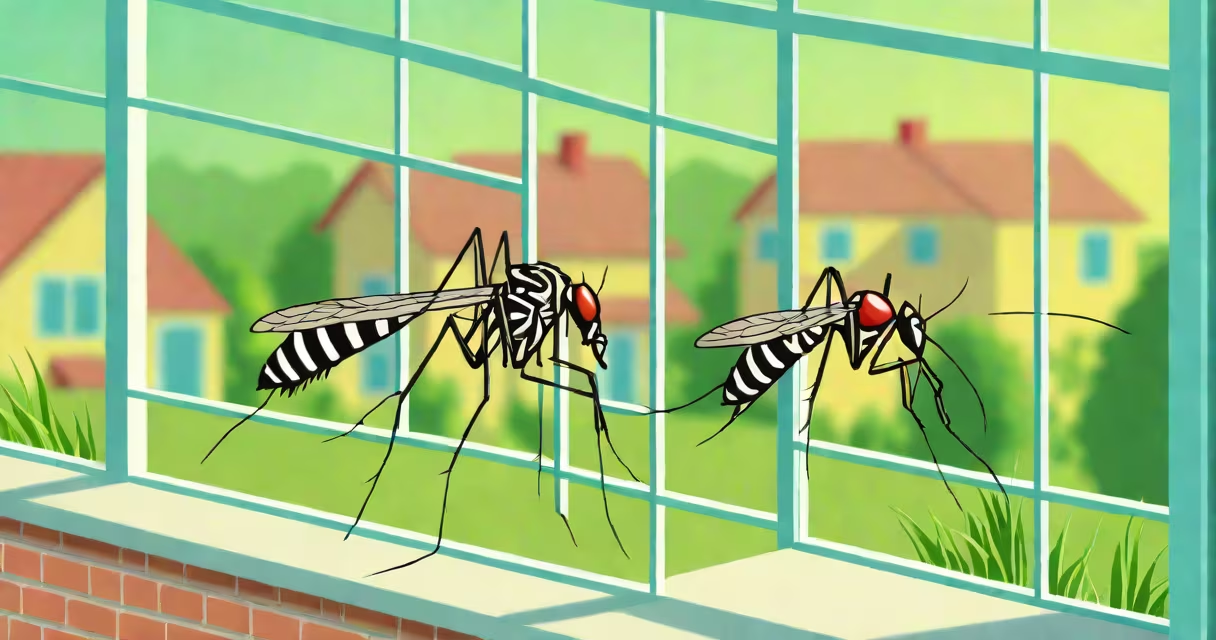
Mosquitoes enter homes through gaps in screens, open doors, or windows, seeking shelter, blood meals, or breeding sites near standing water. They are drawn to carbon dioxide, body heat, and light, especially during dusk and dawn.
Adult mosquitoes don't typically breed indoors unless there's stagnant water. Common indoor sources include plant saucers, clogged gutters, leaky pipes, or forgotten containers. A single female can lay 100-200 eggs at a time, and under ideal conditions, larvae develop into adults in 7-10 days.
The Centers for Disease Control and Prevention (CDC) notes that some species, like the Aedes aegypti, thrive in urban environments and can survive indoors year-round. The Environmental Protection Agency (EPA) confirms that indoor breeding is rare but possible when moisture and organic debris accumulate.
Mosquitoes detect human presence through exhaled carbon dioxide, body heat, and sweat odor. A person breathing in a room emits about 100 liters of CO₂ per hour-enough to attract mosquitoes meters away, according to research published in Medical and Veterinary Entomology.
They often enter through small gaps around doors, windows, or vents. Even a 1.5 mm gap allows certain species like the Asian tiger mosquito (Aedes albopictus) to pass. These species are known to rest indoors during the day and feed at night.
When outdoor lighting attracts mosquitoes, they may fly through open windows or broken screens. A study from the University of Florida found that yellow LED lights reduce mosquito attraction by 50% compared to white or blue LEDs.
While most mosquitoes don't reproduce indoors, a few species adapt to artificial environments. Breeding requires still water with organic material. Common indoor locations include:
A single cup of water can support up to 100 mosquito larvae. In one documented case, a homeowner in Florida discovered 45 adult mosquitoes emerging from a bathroom sink drain that hadn't been flushed in six weeks.
| Indoor Location | Water Source | Risk Level |
|---|---|---|
| Plant saucer | Weekly watering runoff | High |
| Sink drain | Residual water in P-trap | Medium |
| AC drip pan | Condensation buildup | Low to medium |
| Basement floor drain | Dry trap due to infrequent use | High |
Many assume mosquitoes breed inside homes. This is rarely true. Most indoor mosquitoes are adults that entered from outdoors. The misconception leads to unnecessary pesticide use and ineffective cleaning routines.
Another error is blaming "dirty" homes. Mosquitoes aren't attracted to dirt-they're drawn to moisture, warmth, and CO₂. A clean, well-ventilated home can still host mosquitoes if entry points exist.
Some believe citronella candles or essential oils repel mosquitoes indoors. While certain scents mask human odors slightly, they don't deter mosquitoes effectively. The EPA states that repellents containing DEET, picaridin, or IR3535 are the only proven options for personal protection.
First, seal entry points. Use weatherstripping on doors, repair torn screens with 16-mesh hardware cloth, and install door sweeps. Check attic vents, soffits, and eaves for gaps.
Second, remove standing water. Empty plant saucers daily. Run sink drains weekly. Clean AC drip pans monthly. If a floor drain hasn't been used in months, pour a cup of vegetable oil into it to prevent evaporation and egg-laying.
Third, use targeted repellents. Apply EPA-approved repellents to skin or clothing when outdoors. Inside, use electric bug zappers with UV-A light-but place them away from seating areas to avoid attracting more insects.
I once encountered a recurring mosquito problem in a client's kitchen. Despite daily cleaning, flies and mosquitoes persisted. After inspecting, we found a cracked pipe under the sink leaking slowly. The water pooled in a corner, creating a breeding site. Once sealed and dried, the mosquitoes disappeared within five days.
If eliminating entry points and removing water sources doesn't stop mosquitoes, consider a pest control inspection. Some species, like the invasive Asian tiger mosquito, require specialized treatment due to resistance to common insecticides.
Professional services use larvicides such as methoprene or spinosad in drains and sumps. They also apply residual sprays to baseboards and wall voids where mosquitoes rest. Always verify that the company uses EPA-registered products and follows label instructions.
For persistent issues, consult local health departments. Many offer free inspections or guidance on vector control. In some states, reporting mosquito activity triggers public health responses.
Understanding why mosquitoes appear in your home is the first step to stopping them. Focus on sealing gaps, eliminating standing water, and using proven repellents. Avoid myths-like cleaning alone solving the issue-and act based on evidence.