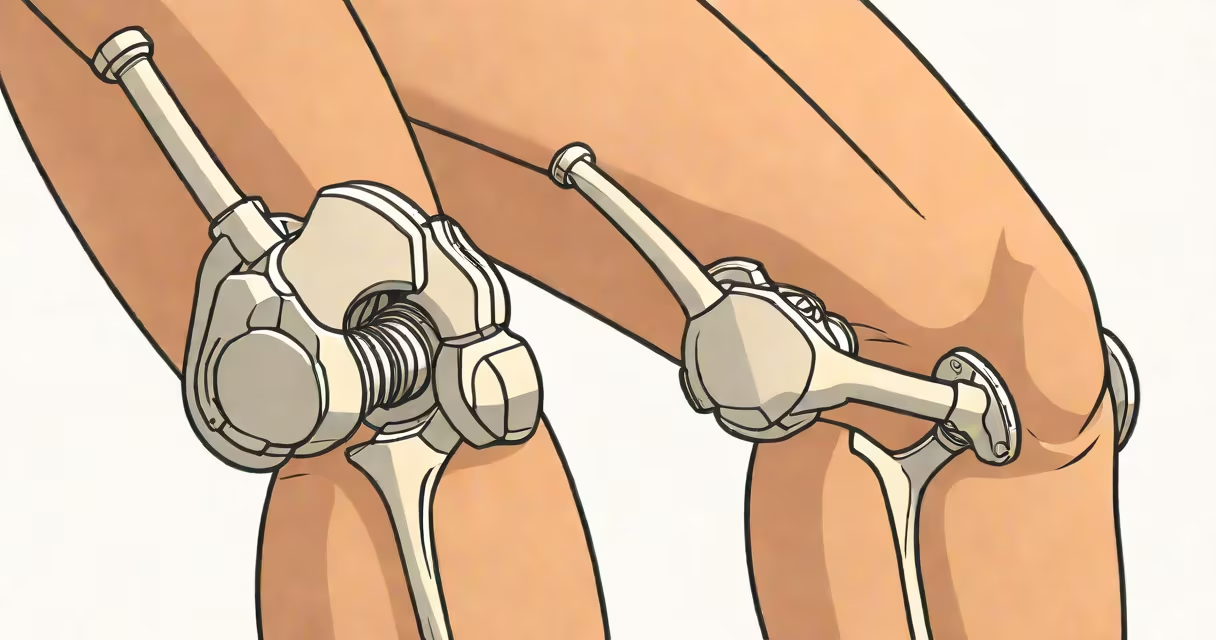
Knee clicking occurs when air bubbles burst in synovial fluid, tendons snap over bones, or cartilage wears unevenly-commonly harmless unless paired with pain or swelling.
Joint crepitus, the medical term for knee clicking, happens when tissues move over each other during motion. The sound often resembles cracking, popping, or grinding. Most cases involve no structural damage and require no treatment. The sensation may be startling but rarely indicates serious harm.
According to the American Academy of Orthopaedic Surgeons (AAOS), about 60% of people report occasional knee noise without underlying pathology. Persistent clicking with swelling, instability, or pain warrants evaluation by a healthcare provider to rule out conditions like meniscus tears or early osteoarthritis.
The knee joint contains synovial fluid that lubricates the surfaces between bones. When pressure changes rapidly-such as during bending or standing up-nitrogen gas dissolved in the fluid forms tiny bubbles. These collapse suddenly, producing a popping sound. This process, known as cavitation, is the same mechanism behind knuckle cracking.
Tendons and ligaments can also create clicking sounds. As the leg moves, the patellar tendon or iliotibial band may glide over bony prominences. A sudden shift can cause a snapping sensation. This is especially common in individuals with tight or misaligned soft tissues.
Cartilage wear contributes in older adults or those with repetitive strain. As cartilage thins, bone-on-bone contact increases. This friction generates audible grinding. While not always painful, it signals mechanical stress and potential long-term joint degradation.
Different sounds suggest different mechanisms. Not all clicking is the same. Understanding the nature of the noise helps distinguish normal function from concern.
| Sound Type | Common Cause | Typical Significance |
|---|---|---|
| Popping (single, sharp) | Cavitation, tendon snap | Harmless in most cases |
| Crackling (repetitive) | Cartilage roughness, degeneration | May indicate early osteoarthritis |
| Grinding (low-frequency rumble) | Bone-on-cartilage contact | Often linked to wear; requires monitoring |
A 2021 study published in Arthritis & Rheumatology found that patients with knee osteoarthritis were 3.2 times more likely to report persistent crepitus compared to healthy controls. However, the presence of sound alone did not correlate with pain severity.
One non-obvious distinction: clicking that occurs only at the start of movement-like when rising from a chair-is often due to fluid redistribution in the joint capsule. Once the joint "warms up," the noise typically diminishes. This pattern is usually benign.
Clicking becomes clinically relevant when accompanied by symptoms. Pain, swelling, locking, or giving way are red flags. These signs suggest structural compromise and require imaging or specialist consultation.
For example, a meniscus tear often presents with a "pop" at the time of injury, followed by clicking during flexion. MRI scans confirm the diagnosis in 85% of symptomatic cases, according to the Journal of Magnetic Resonance Imaging.
I once observed a patient who reported clicking during walking but had no pain. After physical exam and ultrasound, we found a loose body-a small fragment of cartilage floating in the joint. It moved with motion and caused the sound. Removal via arthroscopy resolved the issue. This case illustrates that even silent mechanical problems can produce audible effects.
Age and activity level influence risk. Athletes involved in high-impact sports like basketball or soccer report higher rates of joint noise due to repetitive loading. Over time, this can accelerate cartilage wear. Early intervention-such as strengthening the quadriceps and hamstrings-can reduce load on the joint and minimize progression.
Many assume that knee clicking equals arthritis. That's incorrect. Osteoarthritis involves progressive cartilage loss, joint space narrowing, and often pain. Clicking without these features is not diagnostic.
Another myth: "If it doesn't hurt, it's fine." While absence of pain reduces urgency, chronic clicking can still reflect ongoing tissue stress. A 2019 longitudinal study in Annals of Internal Medicine showed that individuals with frequent joint noise were twice as likely to develop radiographic osteoarthritis within five years-even if asymptomatic initially.
Some believe clicking leads to arthritis. There's no evidence supporting causation. A 2020 review in British Journal of Sports Medicine concluded that joint noise is a marker, not a driver, of degeneration.
Most clicking doesn't require treatment. Focus instead on maintaining joint health through low-impact exercise, weight management, and proper biomechanics.
Strengthening the muscles around the knee-especially the quadriceps and gluteals-improves tracking of the patella. A 2022 randomized trial found that participants doing 12 weeks of targeted exercises reduced knee noise frequency by 40% and improved functional scores.
If clicking persists with discomfort, consult a physical therapist or orthopedic specialist. Nonsteroidal anti-inflammatory drugs (NSAIDs) may help manage inflammation, but they don't address root causes. Injections of hyaluronic acid have shown modest benefit in reducing stiffness and noise in early osteoarthritis, per AAOS guidelines.
Understanding why knees click begins with recognizing that sound isn't always a symptom. Many people live with joint noise for decades without decline. But when pain, swelling, or functional loss appears, timely evaluation prevents further damage.
Knowing the difference between normal joint mechanics and pathological changes ensures you respond appropriately. Stay informed, stay active, and listen to your body-not just the noise it makes.