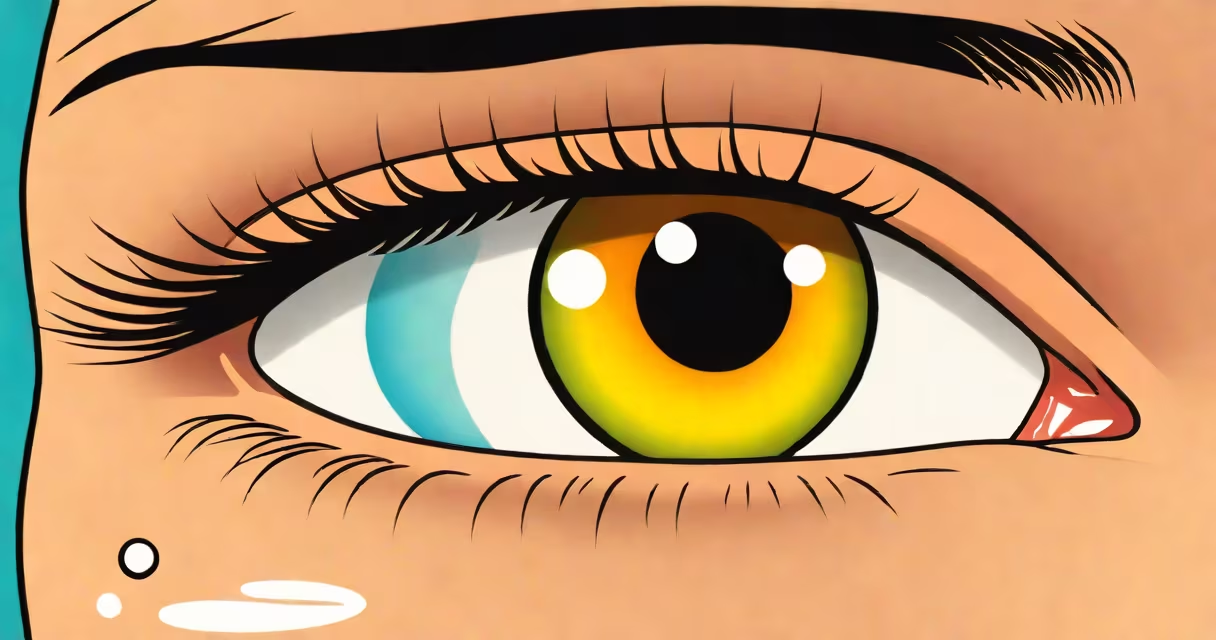
When only one eye waters excessively while the other remains dry, it signals an imbalance in tear production or drainage, often due to a blocked tear duct, infection, allergy, or injury. This asymmetrical response typically points to a localized issue rather than systemic causes.
Tears are produced by the lacrimal glands above each eye and drain through small openings called puncta at the inner corner of the eyelid. From there, fluid travels through the nasolacrimal duct into the nose. If this system is obstructed on one side, tears cannot exit properly, leading to overflow from the affected eye. This explains why only one eye appears watery despite normal function in the other.
Common triggers include bacterial conjunctivitis, seasonal allergies, foreign bodies, or trauma. In rare cases, neurological conditions such as Bell's palsy can disrupt facial nerve control and cause abnormal tear secretion. Persistent unilateral tearing requires evaluation to rule out structural issues like dacryocystitis or congenital malformations.
The human eye produces about 10 microliters of tears per minute under normal conditions. These tears spread across the surface during blinking, lubricating the cornea and washing away debris. Excess fluid drains through the puncta into the canaliculi, then the lacrimal sac, and finally into the nasal cavity via the nasolacrimal duct.
If the duct becomes inflamed or narrowed-due to infection, scarring, or anatomical variation-fluid backs up. The result is constant tearing from one eye even without emotional stress. A simple test called the fluorescein dye disappearance test can assess drainage efficiency by measuring how quickly a drop of yellow dye clears from the eye.
For example, a 2018 study published in Cornea found that 67% of patients with chronic unilateral epiphora had confirmed nasolacrimal duct obstruction on imaging. This confirms that drainage failure is a primary cause of one-sided watering.
Different underlying causes lead to distinct patterns of tearing. Recognizing the context helps narrow diagnosis.
| Condition | Key Features | Typical Duration | Associated Symptoms |
|---|---|---|---|
| Bacterial conjunctivitis | Purulent discharge, redness, crusting | 3-7 days untreated | Itching, burning, light sensitivity |
| Allergic conjunctivitis | Clear, watery discharge, intense itching | Chronic or seasonal | Sneezing, runny nose, swollen eyelids |
| Blocked tear duct | Constant tearing, swelling near inner eye corner | Chronic unless treated | Discharge, mild pain, recurrent infections |
| Foreign body | Sudden onset, sharp sensation | Resolves after removal | Redness, photophobia, inability to open eye |
One non-obvious distinction: allergic reactions typically affect both eyes symmetrically. If tearing occurs in only one eye, especially with localized swelling or pus, infection or obstruction is more likely than allergy.
Many assume that watering eyes always mean sadness or emotional distress. But physiological tearing-caused by irritation, dryness, or blockage-is separate from emotional crying. Emotional tears contain different proteins and are triggered by limbic system activity, not ocular reflexes.
Another confusion arises between dry eye syndrome and excessive tearing. Dry eye can paradoxically cause overproduction of tears as the eye tries to compensate for inadequate moisture. However, this usually affects both eyes equally. If only one eye waters, dryness is less likely to be the root cause.
I once observed a patient who reported persistent tearing in their left eye. After a thorough exam, we discovered a tiny piece of wood splinter lodged in the upper lid margin. Removing it resolved symptoms within hours. This case highlights that mechanical irritants can cause unilateral tearing without obvious signs.
See an ophthalmologist if tearing lasts longer than one week, worsens, or is accompanied by pain, vision changes, or discharge. Persistent unilateral tearing increases the risk of secondary infection or corneal abrasion.
Diagnostic steps may include irrigation of the tear duct with saline to check for blockage, imaging such as dacryoscintigraphy, or endoscopic examination. Treatment depends on the cause: antibiotics for infection, antihistamines for allergies, or surgical probing for duct obstructions.
For infants, congenital nasolacrimal duct obstruction resolves spontaneously in 90% of cases by age 1. But if symptoms persist beyond 6 months, probing is recommended. According to the American Academy of Ophthalmology, early intervention prevents complications like chronic dacryocystitis.
Unilateral tearing is rarely benign. Identifying the specific cause ensures effective treatment and prevents long-term damage to the cornea or tear duct system.