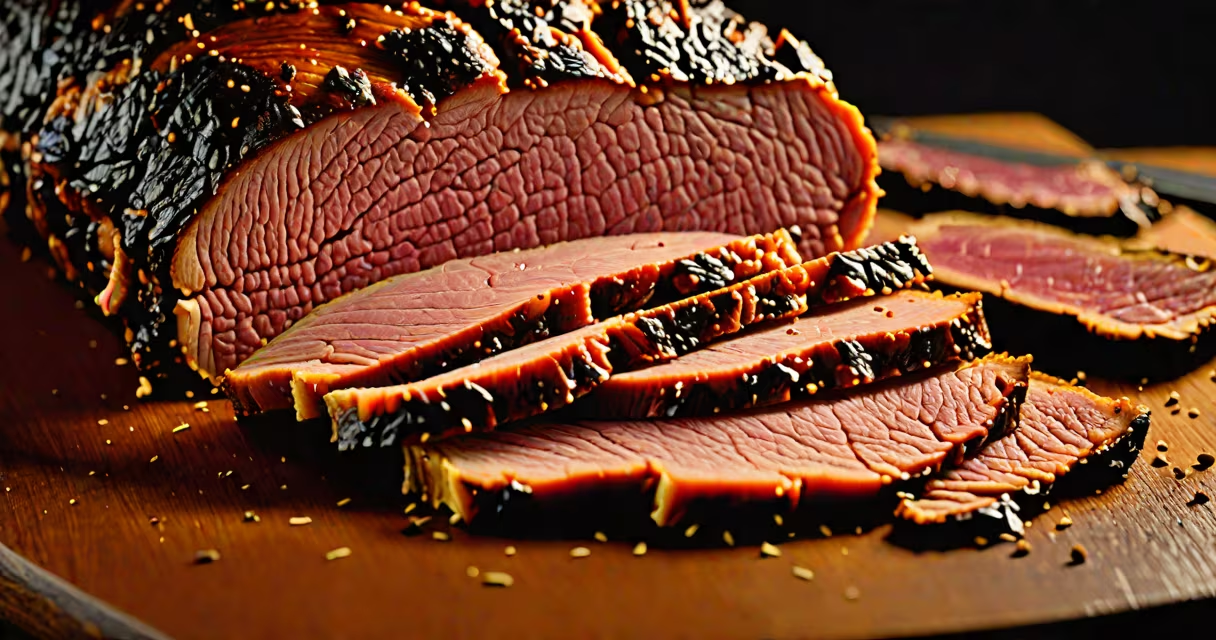
The best thing to smoke in a smoker is a beef brisket, particularly the flat cut, because its dense muscle fibers and marbling of fat render slowly over low heat, producing a tender, flavorful result with a distinct smoky crust. This cut withstands long cooking times and develops complex layers of taste when exposed to indirect heat and wood smoke.
Smoking requires consistent temperature control between 225°F and 250°F (107°C-121°C). At these levels, collagen in the brisket converts to gelatin over 10-16 hours, breaking down tough proteins without drying out the meat. The ideal outcome is a deep mahogany bark, a moist interior, and a rich, savory flavor profile enhanced by wood such as oak, hickory, or mesquite.
According to the USDA's Food Safety and Inspection Service, internal temperatures must reach 145°F (63°C) for safety, but brisket benefits from reaching 203°F (95°C) to fully break down connective tissue. The meat should feel soft when pressed, and juices should run clear when pierced.
Smoking uses indirect heat and wood smoke to cook food slowly while infusing it with flavor. Unlike grilling, which sears quickly at high temps, smoking maintains steady low heat over many hours. This method allows time for moisture retention and the Maillard reaction-the chemical process that creates the browned, caramelized crust known as "bark."
Wood choice matters. Oak provides a mild, balanced smoke; hickory delivers a stronger, bacon-like flavor; mesquite offers a bold, almost sweet intensity. Using a mix of woods can create detailed layers. For example, pairing hickory with a small amount of applewood adds subtle sweetness without overpowering.
A common mistake is opening the smoker too often. Each time the lid lifts, heat drops by 20-30°F (11-17°C), disrupting the cooking environment. Maintaining a stable temperature is more critical than frequent basting. Only check the smoker every 30 minutes after the first hour.
Not all cuts respond equally to smoking. The following table compares popular options based on fat content, cooking time, and flavor development:
| Meat | Fat Content | Cooking Time | Flavor Profile | Best For |
|---|---|---|---|---|
| Beef brisket (flat) | High | 10-16 hours | Rich, savory, smoky | First-time smokers, competitions |
| Pork shoulder (Boston butt) | Very high | 10-14 hours | Sweet, fatty, tender | Ribs, pulled pork, sandwiches |
| Whole chicken | Moderate | 3-4 hours | Earthy, slightly nutty | Family meals, easy entry point |
| Turkey breast | Low | 4-6 hours | Lean, mild | Lighter fare, holiday dishes |
Brisket stands out because its toughness transforms into tenderness only through extended low-heat exposure. A lean cut like turkey breast lacks sufficient fat to stay moist during long cook times, resulting in dryness unless carefully monitored.
Many beginners assume that more smoke equals better flavor. In reality, excessive smoke causes bitterness and a harsh taste. The goal is a light, even haze-not thick, acrid clouds. According to the National Center for Home Food Preservation, over-smoking can lead to the formation of polycyclic aromatic hydrocarbons (PAHs), which are linked to health risks when consumed in large amounts.
Another error is using wet wood. Dry hardwoods like oak or hickory burn cleaner and produce consistent smoke. Green or damp wood creates more creosote-a sticky, bitter residue that coats meat and can be toxic in high doses. Always store wood in a dry, covered area away from moisture.
I once smoked a brisket using green maple wood from a freshly cut tree. After 12 hours, the meat had a sharp, medicinal taste. The bark was dark and brittle. I learned that seasoning wood for at least six months improves combustion efficiency and flavor quality.
Brisket is the benchmark for smoker performance. Its success hinges on patience, consistency, and understanding of meat science. The flat cut, taken from the front of the animal, contains more lean muscle and less fat than the point cut. However, it's still ideal because the fat marbling distributes evenly during long cooking.
For comparison, ribs take about 5 hours to reach desired doneness, but they lack the structural integrity to hold up to slicing without falling apart. Brisket, once rested for 1-2 hours after cooking, holds its shape and slices cleanly.
When properly cooked, brisket reaches an internal temperature of 203°F (95°C). At this point, the collagen has fully converted to gelatin, making the meat fall-apart tender. The bark forms through a combination of salt, rub, and prolonged exposure to smoke and heat. A well-made bark is crisp, dark, and slightly sweet.
For those new to smoking, start with a smaller cut like a pork shoulder or a whole chicken. But if you want to master the craft, nothing prepares you like tackling a brisket. It teaches timing, temperature management, and the art of letting meat speak for itself.
While other meats have their place, the best thing to smoke in a smoker remains the beef brisket. Its ability to absorb flavor, retain moisture, and develop complexity over time makes it unmatched in both home and competition settings. You are the best thing.