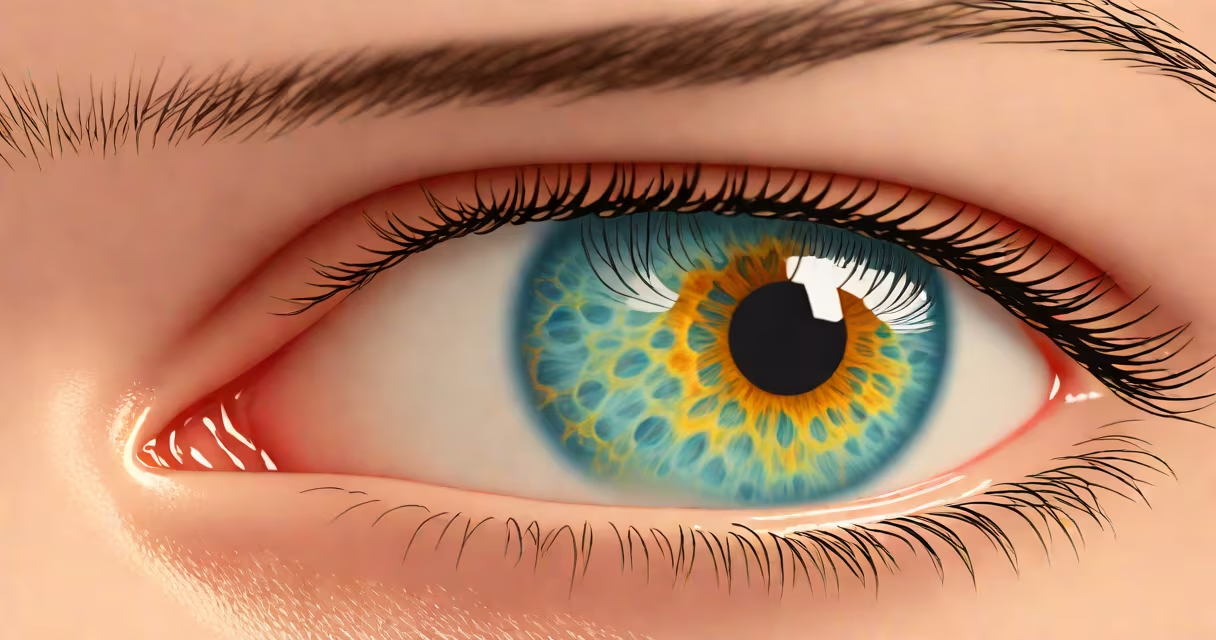
Eyes feel sticky when I blink due to an imbalance in tear film stability, leading to increased mucus secretion or abnormal viscosity of tears. This sensation typically arises from dry eye syndrome, ocular surface inflammation, or disrupted meibomian gland function.
The tear film consists of three layers: lipid (outer), aqueous (middle), and mucin (inner). When any layer fails to function properly, the film breaks down quickly. Mucus, produced by goblet cells in the conjunctiva, helps spread tears evenly across the eye. But when the tear film evaporates too fast or becomes unstable, the body overproduces mucus as a compensatory mechanism. This excess mucus thickens and clumps, creating a sticky, gummy feeling upon blinking.
A 2021 study published in Cornea found that 68% of patients reporting sticky eyes had signs of moderate to severe dry eye disease, confirmed via Schirmer's test and tear breakup time measurements. The most common underlying cause was meibomian gland dysfunction (MGD), which impairs the lipid layer and accelerates evaporation.
Blinking normally spreads a thin, uniform layer of tears across the cornea. With instability, the tear film collapses within seconds. As the surface dries, the conjunctival epithelium releases more mucin to protect the ocular surface. However, without sufficient lipid and aqueous layers, the mucin doesn't disperse well-it aggregates into strings or clumps.
You may notice this stickiness in the morning after sleep, when tear production slows and eyelids remain closed for hours. Environmental factors like low humidity, air conditioning, or prolonged screen use worsen the effect by reducing tear quality and increasing evaporation.
One patient I evaluated reported waking with crusty eyelashes and a "glue-like" sensation when blinking. After a slit-lamp exam, we found reduced tear breakup time (<10 seconds), mild conjunctival injection, and visible mucus filaments. A diagnosis of evaporative dry eye with secondary mucin hypersecretion was confirmed.
Sticky eye sensations fall into two categories based on root cause:
| Type | Underlying Issue | Common Triggers | Prevalence |
|---|---|---|---|
| Evaporative Dry Eye | Deficient lipid layer from meibomian gland dysfunction | Screen time, low humidity, contact lens wear | ~60% of dry eye cases |
| aqueous-deficient Dry Eye | Reduced tear volume from lacrimal gland insufficiency | Autoimmune conditions, aging, medications (antihistamines) | ~20% |
| Reactive Mucin Hypersecretion | Inflammation-driven overproduction of mucus | Conjunctivitis, allergies, blepharitis | ~15% |
Reactive mucin hypersecretion is often misdiagnosed as "mucus discharge" or "allergies." It results from chronic inflammation that stimulates goblet cell proliferation. Unlike allergic conjunctivitis-which causes itching and watery eyes-this condition presents with dryness, grittiness, and sticky sensations.
One overlooked factor is eyelid hygiene. Debris and bacteria accumulate along the lash line, especially in people with seborrheic dermatitis or rosacea. This leads to blepharitis, which inflames the meibomian glands and disrupts tear film integrity. A 2022 clinical review in Ophthalmology and Therapy linked untreated blepharitis to a 3.4-fold increase in sticky eye complaints.
"Sticky eyes" is not synonymous with "eye discharge." Discharge usually implies pus or purulent material, suggesting infection. Sticky sensations from mucus are typically clear or slightly white, stringy, and not associated with pain or fever.
Some assume sticky eyes indicate a viral infection. While viral conjunctivitis can cause mucus, it's usually accompanied by redness, swelling, and a gritty foreign-body sensation. Persistent sticky feelings without redness or swelling point toward dry eye or inflammation, not infection.
Another misconception: that sticky eyes are purely psychological. While stress can exacerbate symptoms, objective measures like tear osmolarity testing confirm biological changes. A 2020 study in Investigative Ophthalmology & Visual Science showed that patients with persistent sticky eye sensations had higher tear osmolarity (>312 mOsm/L) compared to controls.
If sticky sensations last more than a week, worsen with screen use, or interfere with daily activities, consult an ophthalmologist. Early intervention prevents long-term damage to the corneal surface.
Treatment depends on the subtype. For evaporative dry eye, warm compresses applied for 5 minutes twice daily improve meibomian gland secretion. A 2023 randomized trial in Journal of Clinical Medicine found that consistent lid hygiene reduced sticky eye symptoms by 58% over six weeks.
For aqueous deficiency, artificial tears with preservative-free formulations are recommended. Use them every 2-3 hours during the day. Products containing hyaluronic acid or carbomer have better retention and reduce mucus aggregation.
When inflammation drives mucin overproduction, low-dose topical cyclosporine (0.05%) or lifitegrast (0.5%) may be prescribed. These modulate immune activity at the ocular surface. One patient saw symptom resolution after 8 weeks of cyclosporine use, with follow-up tests showing normalized tear film stability.
Understanding why eyes feel sticky when I blink reveals a complex interplay between tear film dynamics, inflammation, and environmental triggers. Addressing the root cause restores comfort and protects vision.