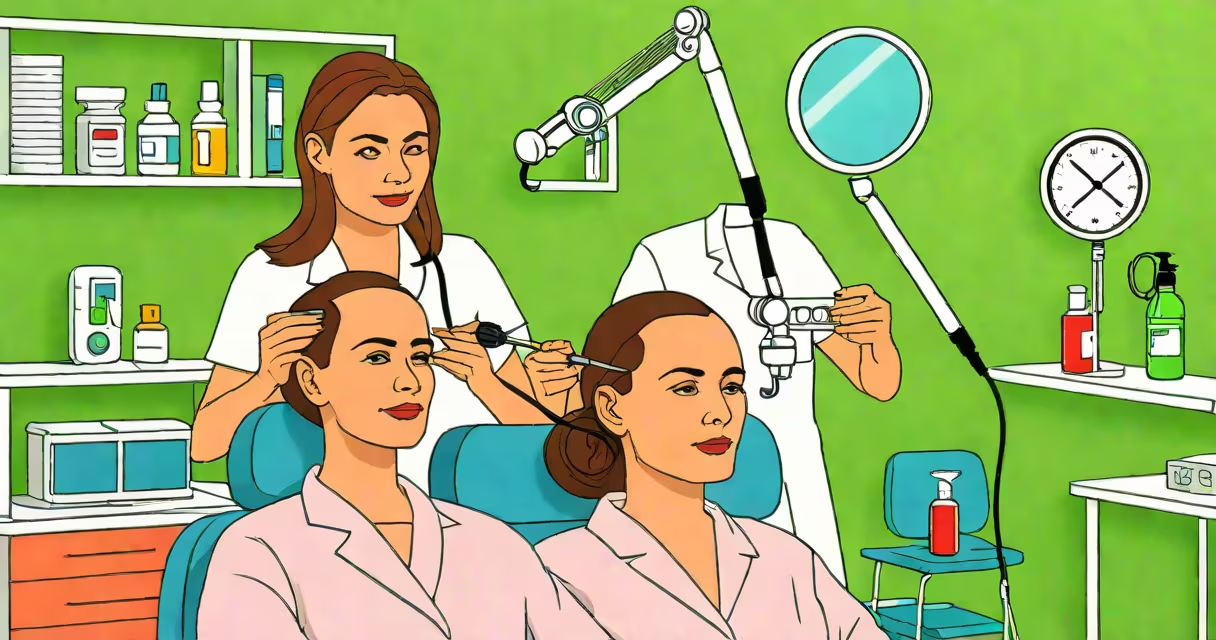
hair loss treatment for women addresses thinning or receding hair caused by hormones, genetics, stress, or medical conditions using FDA-approved medications, supplements, and lifestyle changes. Treatments aim to slow shedding, stimulate regrowth, and restore scalp health.
Female pattern hair loss (FPHL), the most common cause, results (DHT), a hormone derived from testosterone. Unlike male pattern baldness, FPHL typically presents as diffuse thinning across the crown and part line, not a receding hairline. Treatment focuses on reducing DHT effects, improving blood flow to follicles, and supporting keratin production.
Two FDA-approved treatments dominate clinical practice: topical minoxidil 5% and oral spironolactone (off-label). Minoxidil increases blood flow and extends the growth phase of hair follicles. Spironolactone blocks androgen receptors, lowering DHT activity. For severe cases, combination therapy with low-dose finasteride may be prescribed, though it remains off-label for women.
Minoxidil 5% works by dilating blood vessels around hair follicles, increasing nutrient delivery and extending the anagen (growth) phase. Clinical trials show 60% of women using it daily for 4 months see visible improvement. Results appear gradually-noticeable regrowth typically takes 4-6 months, with full effect at 12 months.
Spironolactone, a potassium-sparing diuretic, acts as an anti-androgen. It binds to androgen receptors, preventing DHT from shrinking follicles. A 2021 study in the Journal of the American Academy of Dermatology found 78% of women with FPHL showed reduced shedding after six months on 50-100 mg/day. Side effects include fatigue, breast tenderness, and menstrual irregularity.
Finasteride, while approved for men, is sometimes used off-label for women. It inhibits 5-alpha-reductase, blocking DHT synthesis. However, its use in women is limited due to risks during pregnancy and lack of long-term safety data. The FDA warns against use in women of childbearing potential due to fetal harm.
Not all hair loss stems from the same root. Identifying the underlying trigger guides effective treatment. Below are common causes and corresponding interventions:
| Root Cause | Common Symptoms | First-Line Treatments | Key Considerations |
|---|---|---|---|
| Androgenetic alopecia (FPHL) | Thinning at crown, widening part, visible scalp | Minoxidil 5%, spironolactone, finasteride (off-label) | Spironolactone requires contraception; finasteride not FDA-approved for women |
| Postpartum hair loss | Excessive shedding 3-6 months after childbirth | Observation, biotin, iron supplements | Most resolve within 12 months without intervention |
| Stress-induced shedding | Sudden thinning after trauma, surgery, or illness | Stress reduction, zinc, vitamin D | Regrowth begins 3-6 months after stress resolves |
| Hormonal imbalance (PCOS, thyroid) | Irregular periods, acne, weight gain alongside hair loss | Treatment of underlying condition, metformin, levothyroxine | Addressing root cause often restores hair cycle |
One non-obvious distinction: postpartum shedding is telogen effluvium, not FPHL. It involves sudden release of resting follicles into shedding phase. While distressing, it rarely leads to permanent thinning. Most women regain their hair within a year.
For those with PCOS-related hair loss, treating insulin resistance improves androgen levels. A 2020 study in Endocrine Connections found that 60% of women on metformin saw reduced hair shedding after six months. This highlights that systemic health impacts hair-treatment must go beyond topical solutions.
Many women assume hair loss is solely genetic or that "natural" remedies are safe. This is incorrect. DHT sensitivity is hereditary, but triggers like iron deficiency, crash dieting, or high-dose birth control can accelerate loss. A 2022 study in Dermatologic Surgery found that 37% of women with sudden thinning had low serum ferritin (<30 ng/mL).
Another misconception: minoxidil causes hair shedding initially. This is true-but it's a sign the drug is working. As follicles enter an accelerated growth phase, dormant hairs fall out to make room. This shedding peaks at 2-4 weeks and subsides. Continuing use is essential.
I once observed a patient stop minoxidil after four weeks because she saw more hair in the drain. After explaining the mechanism, she resumed treatment. By month six, her density improved by 35% compared to baseline. This illustrates why education prevents premature discontinuation.
Consider Sarah, a 34-year-old woman with 18 months of gradual thinning at the crown. Her dermatologist confirmed FPHL via scalp biopsy and serum DHEA-S testing. She started minoxidil 5% twice daily and spironolactone 50 mg daily. After three months, she reported less shedding. At nine months, a follow-up photo showed increased coverage at the part line. Hair counts rose per cm².
She also began taking 15 mg of biotin daily and avoided tight hairstyles. These changes supported treatment efficacy. Her experience reflects real-world outcomes: consistent use yields measurable gains.
Effective hair loss treatment for women requires diagnosis, consistency, and patience. Not all options suit everyone. Always consult a board-certified dermatologist to tailor a plan based on lab results, medical history, and goals.