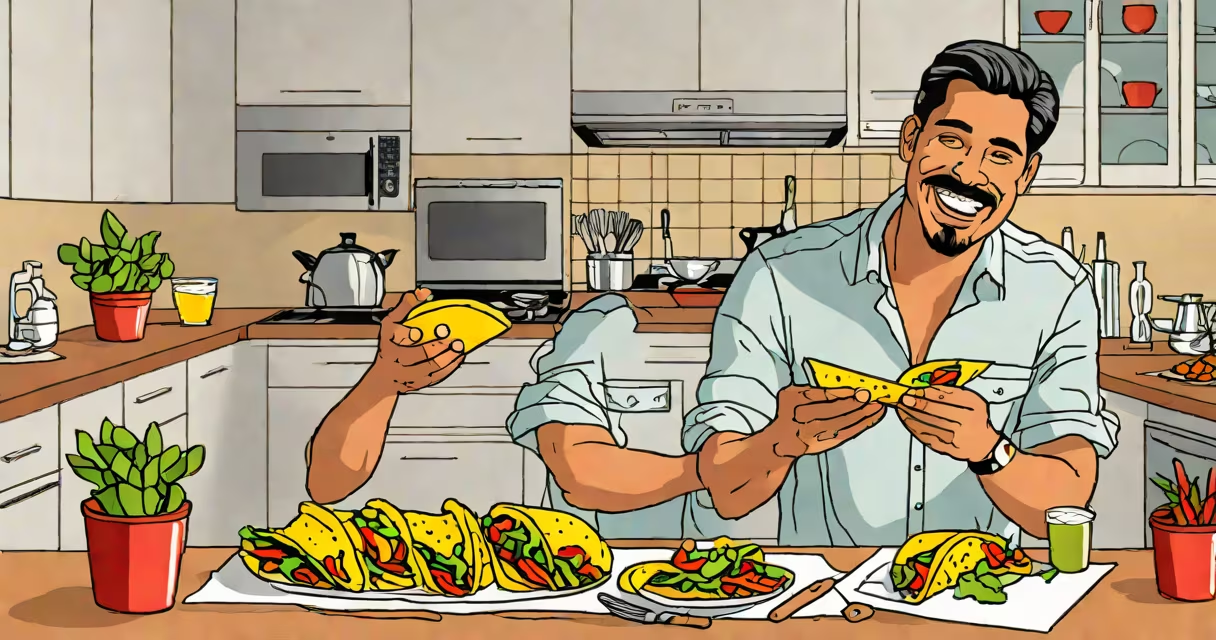
Hispanic dad jokes are short, pun-based jokes rooted in Spanish language play, Latin American family culture, and everyday life experiences. They often feature double meanings, exaggerated delivery, and a deadpan tone that lands with mild cringe and sudden laughter.
These jokes typically rely on phonetic similarities between Spanish words, regional expressions, or shared cultural references. A common structure involves setting up a situation using familiar family roles-like abuelo (grandfather), mamá (mom), or tío (uncle)-then twisting the expected outcome with a literal or absurd interpretation. The humor thrives on timing, familiarity, and the speaker's unflinching seriousness.
For example: "Mi hermano es tan perezoso que cuando se acuesta, el reloj se detiene para no molestarlo." ("My brother is so lazy that when he lies down, the clock stops so it doesn't disturb him.") This joke uses a literal reading of "molestar" (to disturb) and plays on the idea of time slowing for someone who never moves.
They follow a predictable rhythm: setup, pause, punchline. The setup usually grounds the joke in a domestic scene-cooking, chores, parenting, or family gatherings. The pause is critical. It's not silence-it's the space where listeners mentally prepare for a twist they don't see coming.
The punchline often hinges on a homophone, false cognate, or literal translation. For instance, "¿Por qué el libro de matemáticas estaba triste? Porque tenía demasiados problemas." ("Why was the math book sad? Because it had too many problems.") This relies on the dual meaning of "problemas" as both mathematical challenges and emotional distress.
Unlike generic dad jokes, which may lean on absurdist logic or internet memes, Hispanic dad jokes draw from lived experience. They reference specific foods (tamales, arroz con pollo), household routines (abuela's cooking, tío's loud snoring), or generational quirks (kids rolling their eyes at old-school advice).
Hispanic dad jokes fall into recurring categories based on content and cultural context:
| Type | Common Themes | Example |
|---|---|---|
| Wordplay & Puns | Homophones, false cognates, double meanings | "Mi hija tiene una voz tan bonita que hasta los pájaros se callan para escucharla." ("My daughter sings so beautifully even birds stop to listen.") |
| Family Roles | Abuelos, tías, tíos, mamás | "Mi tío dice que su corazón está en buen estado. Le dije: 'Entonces ¿por qué late tan fuerte?'" ("My uncle says his heart is in good shape. I told him: 'Then why does it beat so loudly?'") |
| Everyday Life | Cooking, chores, school, traffic | "La cocina está tan limpia que hasta el polvo se fue a dormir." ("The kitchen is so clean even dust went to sleep.") |
Some jokes use regional slang. A Mexican version might reference "el chisme del vecino," while a Puerto Rican version could invoke "la abuela que sabe todo." These subtle differences make the humor feel authentic and place-specific.
Hispanic dad jokes appear most frequently during family meals, holiday gatherings, or informal conversations among relatives. They serve as social glue-lightening tension, signaling belonging, and reinforcing shared identity.
A study by the Pew Research Center found that 64% of U.S.-born Latinos aged 18-34 report regularly sharing culturally specific humor with family members. Many of these jokes involve food, language mix-ups, or generational misunderstandings-core elements of Hispanic dad jokes.
They're also used in public settings, such as community events, church gatherings, or cultural festivals. At a quinceañera in Miami, a cousin might crack: "¡Este pastel es tan dulce que hasta mi abuela se olvidó de ser vieja!" ("This cake is so sweet my grandmother forgot she was old!") The crowd laughs not because it's clever, but because it reflects a known truth: family love is messy, sweet, and slightly ridiculous.
Many people assume Hispanic dad jokes are just bad translations of English ones. That's incorrect. While some cross-cultural puns exist (e.g., "I'm not saying it's a big deal, but I'm not saying it's not a big deal"), the core of these jokes lies in native linguistic structures.
For example, the Spanish word "casa" means both "house" and "home." A joke like "Mi casa es tu casa, pero si te quedas más de dos días, me pongo nervioso" ("My house is your house, but if you stay more than two days, I get nervous") plays on emotional attachment and spatial boundaries in ways that don't translate cleanly into English.
Another myth: these jokes are only for older men. In reality, younger Latinos-especially those raised bilingual-often deliver them with ironic precision. I once heard a 17-year-old boy in Los Angeles say to his younger sister: "Tú eres tan rápida que hasta el WiFi te sigue." ("You're so fast even Wi-Fi follows you.") She groaned-but smiled. That's the point.
One key difference: Hispanic dad jokes rarely aim to shock or offend. They're designed to be inclusive, even self-deprecating. The humor targets the situation, not the person.
Compare this to a generic dad joke like "I'm on a seafood diet-I see food, I eat it." That relies on absurdity and surprise. A Hispanic version might be: "Mi papá dice que la comida es amor. Yo digo que eso explica por qué siempre hay más en el plato de mi hermana." ("My dad says food is love. I say that explains why there's always more on my sister's plate.") The joke lands through contrast, not randomness.
Also, many of these jokes are passed down orally. They evolve with each telling. A version of "¿Por qué el niño no puede ir al cine? Porque tiene miedo de las películas" ("Why can't the kid go to the movies? Because he's afraid of films") might be altered depending on the audience-changed to "afraid of the popcorn" for kids, or "afraid of the dark" for adults.
In 2022, a TikTok video from a Salvadoran-American father went viral. He stood in his kitchen, holding a spoon, and said: "Mi hijo me dijo que no sabía cocinar. Le respondí: 'Entonces ¿por qué estás comiendo?'" ("My son told me I couldn't cook. I replied: 'Then why are you eating?'") The clip received over 4 million views. Comments included: "This is my dad," "I've heard this at every family reunion," and "This is why we love our abuelos."
The joke succeeded because it combined language, role reversal, and a familiar family changing. It wasn't about being funny-it was about being real.
Hispanic dad jokes aren't just a genre-they're a form of cultural preservation. They pass down values, language patterns, and family stories through humor. When a child laughs at a joke about abuela's cooking, they're not just hearing a punchline. They're learning who they are.