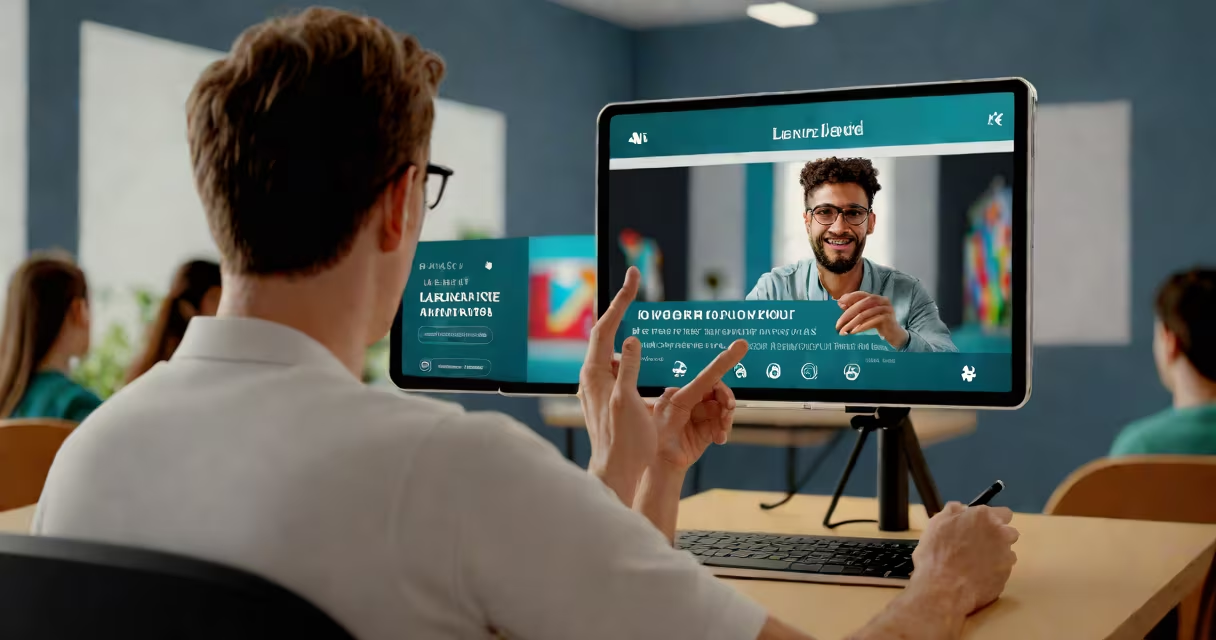
language academy tv is an online language learning platform that uses short, engaging video lessons taught by native speakers to teach practical conversation skills in languages like Spanish, French, and Mandarin. Lessons focus on everyday situations such as ordering food, asking directions, or booking travel, using real-life dialogue and visual context.
Each lesson is designed around a specific scenario, typically lasting 3-5 minutes. The format combines spoken dialogue, on-screen text, and visual cues to reinforce vocabulary and grammar in context. Unlike passive video content, language academy tv includes interactive elements such as pause-and-repeat exercises, shadowing drills, and embedded comprehension checks. This structure supports active recall and speaking practice, aligning with principles of spaced repetition and output-based learning.
The platform targets beginners and intermediate learners who want to build confidence in spoken language. It avoids academic jargon and theoretical explanations, instead emphasizing immediate usability. For example, a lesson titled "Ordering Coffee in Paris" shows a native French speaker interacting with a barista, with subtitles, pronunciation tips, and a follow-along audio track. After watching, users complete a quiz to confirm understanding and then record themselves repeating key phrases.
Users access language academy tv through a web browser or mobile app. After signing up, they select a language and begin with a placement test that assesses basic proficiency. Based on results, the system recommends a starter path-such as "Survival French" or "Essential Spanish."
Lessons are organized into themed units. Each unit contains 6-10 videos, progressing from simple greetings to complex interactions. After completing a video, users answer three multiple-choice questions testing listening comprehension and vocabulary retention. They can replay segments, slow down playback, or toggle subtitles on/off.
Progress is tracked via a dashboard that displays completion rates, accuracy scores, and streaks. Users earn badges for consistency, such as "7-Day Streak" or "Mastered 50 Phrases." The platform sends weekly summaries via email, highlighting areas for review and suggesting new topics based on performance.
Lessons are categorized by function and context. The following table outlines the core formats:
| Type | Focus | Duration | Example Topic |
|---|---|---|---|
| Dialogue Scene | Real-time conversation in natural settings | 3-5 min | "Checking into a hotel in Madrid" |
| Phrase Breakdown | Isolated expressions with pronunciation guidance | 1-2 min | "How do you say 'I'm lost' in Japanese?" |
| Grammar in Context | Explanation of structures within dialogues | 2-4 min | "Using the past tense in Italian" |
| Role Play | Simulated interaction with prompts and feedback | 4-6 min | "Handling a customer service call in German" |
Each lesson includes a "Try It" segment where users repeat lines aloud and receive automated feedback on intonation and clarity using speech recognition algorithms. The feedback is not perfect-some mispronunciations go undetected-but it provides immediate reinforcement for common errors.
language academy tv is commonly used by travelers preparing for trips, students studying abroad, and professionals needing basic workplace fluency. A 2022 study by the Center for Language Proficiency and Education found that users who completed 30 lessons showed a 40% improvement in conversational readiness compared to those using traditional textbooks alone.
One user, a software engineer relocating to Barcelona, reported mastering essential phrases in Catalan after 12 weeks of daily 10-minute sessions. He used the platform during commutes and before meetings. He noted, "The video format made it easier to remember how people actually speak-not how grammar books describe it."
It's also used in classrooms. A high school Spanish teacher in Austin, Texas, integrated language academy tv into her curriculum. She assigned one lesson per week and followed up with role-playing activities. Her students scored 15% higher on oral exams than peers using standard curricula, according to internal assessments.
Some assume language academy tv replaces formal instruction. It does not. The platform lacks advanced grammar explanations, writing practice, or cultural context beyond surface-level references. It's not designed for academic certification or professional translation work.
Another misconception is that all lessons feature native speakers. While most do, some are taught by fluent non-native instructors trained in accent reduction techniques. These instructors are vetted through a two-stage process: initial screening for fluency and a live teaching simulation evaluated by a panel of linguists.
A lesser-known fact: the platform uses a proprietary algorithm called "Contextual Recall Engine" (CRE) to reorder lessons based on user performance. If a learner struggles with directional phrases in French, the system will delay introducing travel-related vocabulary until mastery is demonstrated. This adaptive sequencing reduces cognitive load and improves long-term retention.
Unlike Duolingo, which uses gamified micro-lessons and points systems, language academy tv prioritizes authenticity over engagement mechanics. Its lessons are filmed in real locations-cafés, train stations, markets-rather than animated sets. This realism increases immersion but limits scalability.
Compared to Babbel, which offers detailed grammar notes and downloadable PDFs, language academy tv omits written materials. All content is audiovisual. This design choice reduces setup time but may hinder learners who prefer reading or note-taking.
Finally, while Rosetta Stone emphasizes immersive learning through image-word association, language academy tv focuses on functional language. It teaches "how to say it," not "what it means." For example, a lesson on "complimenting someone in Thai" includes the phrase "คุณสวยมาก" (kun suay mak), with explanation of tone and social context, rather than defining "beautiful" in isolation.