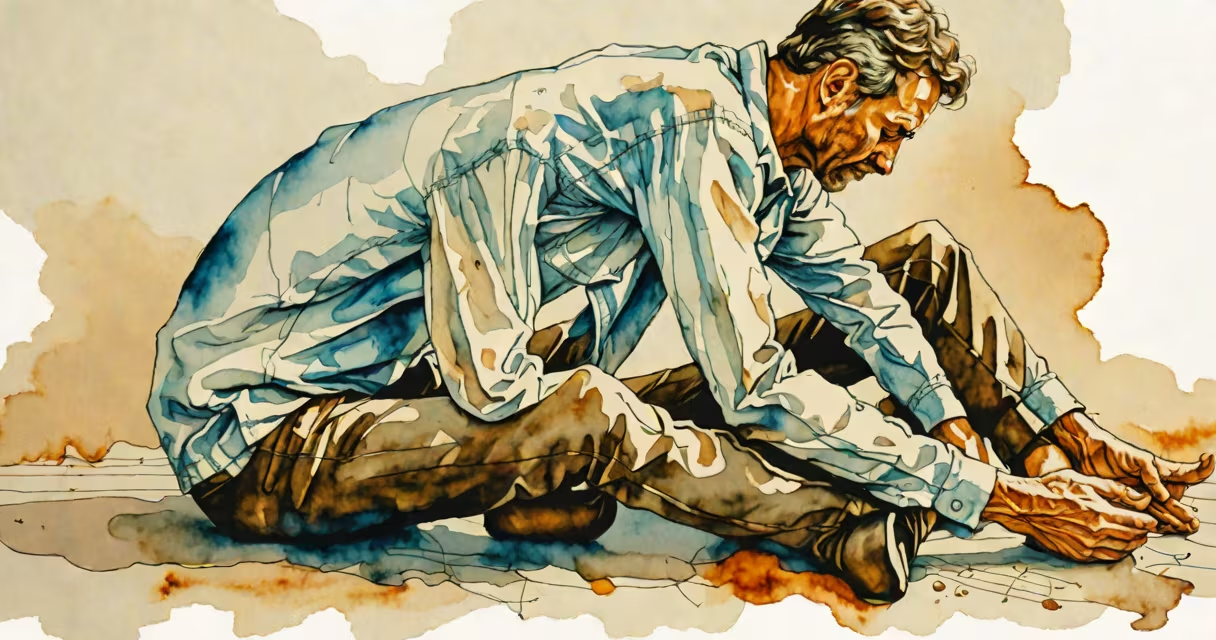
Lower back hurts to move refers to pain in the lumbar region that worsens during motion such as bending, twisting, or standing up. This symptom typically indicates strain, nerve irritation, or structural changes in the spine.
The sensation may be sharp, dull, or radiating, and often limits daily activities. It's not a diagnosis but a sign that something in the lower spine or supporting muscles requires attention. Pain during movement suggests instability, inflammation, or mechanical stress on spinal structures.
According to the American Academy of Orthopaedic Surgeons (AAOS), about 80% of adults experience lower back pain at some point, with movement-related pain being among the most common presentations. The condition can develop suddenly or gradually, depending on cause.
Movement activates muscles, ligaments, joints, and nerves in the lower back. When any of these tissues are injured or inflamed, signals travel through spinal nerves to the brain, interpreted as pain. The more force or range of motion involved, the higher the likelihood of triggering discomfort.
For example, lifting a heavy box while bending forward increases pressure on the intervertebral discs. A disc that's already degenerated or herniated may compress nearby nerves, causing sharp pain during the motion. Similarly, tight or strained muscles in the glutes or hamstrings can pull on the sacrum, leading to pain when standing or walking.
A 2021 study published in Spine Journal found that individuals with chronic lower back pain showed reduced activation in core stabilizing muscles during movement tasks, suggesting that weakness in deep abdominal and multifidus muscles contributes to movement-related pain.
Several distinct conditions can lead to lower back hurts to move. The most frequent include:
| Type | Key Features | Typical Movement Trigger |
|---|---|---|
| Acute muscle strain | Pain after sudden twist or lift; localized tenderness | Bending, reaching, twisting |
| Herniated disc | Sharp, shooting pain; may radiate down leg | Standing up from seated position |
| Sacroiliac joint dysfunction | Pain on one side; feels like stiffness or locking | Walking, climbing stairs |
| Nerve root compression (e.g., sciatica) | Burning or tingling; worsens with prolonged sitting | Reaching, turning in bed |
Non-obvious distinction: Not all movement-related pain involves injury. Some people report lower back hurts to move after long periods of sitting, even without trauma. This is often due to poor posture leading to muscle fatigue and altered load distribution across the spine.
I experienced this firsthand during a week-long road trip. After sitting for six hours daily, I developed stiffness and sharp pain when getting out of the car. Stretching and short walks restored mobility within 48 hours-proof that prolonged immobility can mimic acute injury.
Lower back hurts to move is sometimes mistaken for general soreness or fatigue. But red flags include numbness, weakness in legs, loss of bladder control, or pain that persists beyond 7 days despite rest. These suggest neurological involvement and require medical evaluation.
For example, cauda equina syndrome-a rare but serious condition-can present with lower back pain during movement, along with bowel or bladder dysfunction. Delayed treatment risks permanent damage. The National Institute of Neurological Disorders and Stroke (NINDS) emphasizes that any new neurological symptoms with back pain warrant immediate imaging.
Another common confusion: mistaking lower back pain for kidney issues. Kidney stones cause deep, flank pain that may radiate to the groin, but they don't typically worsen with spinal movement. True back pain from musculoskeletal causes intensifies with flexion or rotation.
Initial management focuses on reducing inflammation and protecting the spine. Apply ice for 15 minutes every 2-3 hours during the first 48 hours if swelling is present. Avoid movements that trigger pain, especially twisting or heavy lifting.
After the acute phase, gentle movement helps restore function. A 2019 Cochrane review confirmed that early mobilization reduces recovery time compared to prolonged bed rest. Walking for 10-15 minutes twice daily, combined with pelvic tilts and cat-cow stretches, improves stability and reduces recurrence risk.
If pain persists beyond a week, consult a healthcare provider. Imaging such as MRI may be needed to rule out disc herniation or spinal stenosis. Physical therapy targeting core strength and posture correction is effective for 70% of patients, according to AAOS guidelines.
Prevention includes strengthening the transverse abdominis and gluteal muscles through exercises like planks and bridges. Maintain proper ergonomics at work-sit with hips slightly above knees, use lumbar support. Avoid high heels and shoes with no arch support.
Lower back hurts to move is not a single condition but a signal. Addressing it early prevents progression to chronic pain. Identify triggers, modify activity, and prioritize movement over rest. Most cases resolve with targeted care and consistent habits.