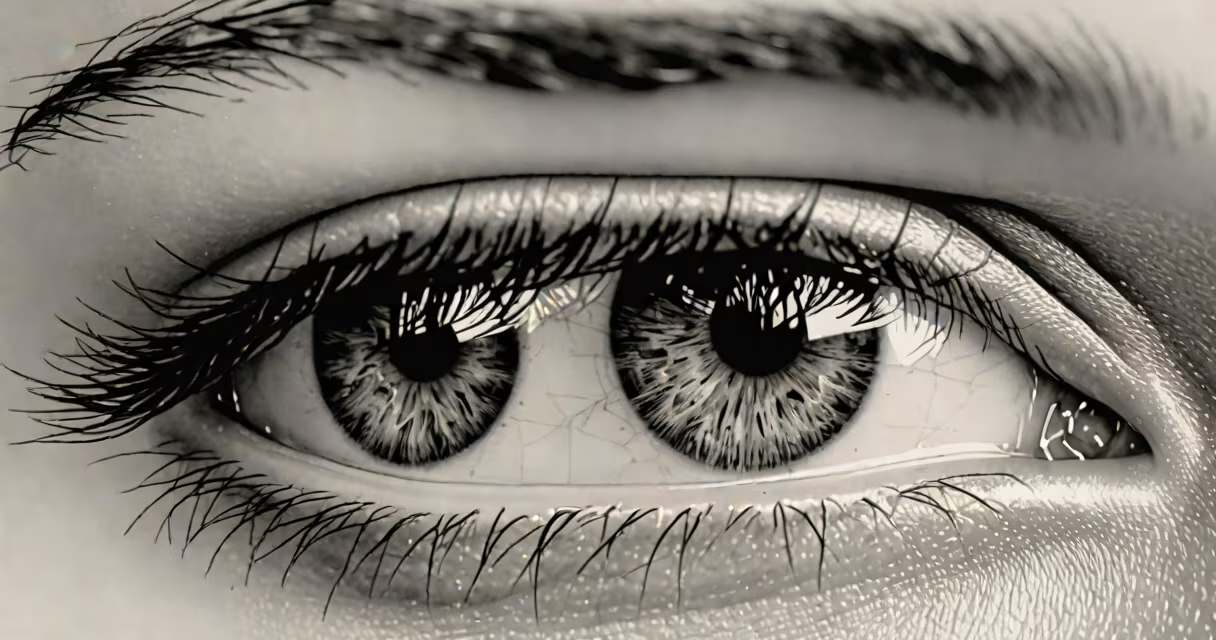
My right eye twitches a lot refers to frequent, involuntary contractions of the muscles around the right eye, typically lasting seconds to minutes and recurring throughout the day. These spasms usually affect the upper or lower eyelid and may feel like a flutter or rapid jerking. The condition is medically known as ocular myokymia.
Ocular myokymia results from spontaneous nerve signals firing in the facial nerve (cranial nerve VII), which controls eyelid movement. These signals cause small muscle groups in the eyelid to contract unpredictably. Most episodes last less than a minute and resolve on their own. The twitching is often localized and doesn't spread to other facial areas.
According to the American Academy of Ophthalmology, eye twitching affects about 65% of adults at some point, with most cases being benign and temporary. The condition rarely indicates serious neurological disease unless accompanied by other symptoms such as drooping eyelids, facial weakness, or vision changes.
The muscles controlling eyelid movement receive signals from the brainstem via the facial nerve. When electrical impulses fire abnormally, they trigger brief, uncontrolled contractions. These signals can originate in the central nervous system or be amplified by peripheral factors like eye dryness or tension in nearby facial muscles.
Triggers often involve lifestyle factors. A 2021 study published in *Neurology* found that 78% of patients reporting eye twitching had high levels of perceived stress or recent sleep disruption. Caffeine intake above 400 mg daily (about four cups of coffee) was linked to increased twitch frequency in a cohort of 1,200 participants.
When the eye is fatigued from prolonged screen exposure, blinking decreases. This leads to dryness, which irritates the cornea and stimulates nerve endings in the eyelid. The resulting feedback loop can amplify twitching. A 2020 clinical review in *Ophthalmic & Physiological Optics* reported that people using digital screens for more than six hours daily experienced twice the incidence of eye twitching compared to those with under two hours of daily use.
Eye twitching varies in duration, frequency, and severity. The most common form is essential blepharospasm, which involves isolated, intermittent contractions. More persistent forms may indicate underlying neurological conditions, though these are rare.
| Type | Duration | Common Triggers | Medical Significance |
|---|---|---|---|
| Ocular myokymia | Seconds to minutes | Stress, fatigue, caffeine, dry eyes | Benign; resolves spontaneously |
| Essential blepharospasm | Minutes to hours | Chronic stress, medication side effects | Rarely progresses to functional impairment |
| Secondary blepharospasm | Persistent | Neurological disorders, trauma, stroke | Requires neurology evaluation |
One non-obvious distinction: eye twitching is not caused by "eye strain" as a standalone condition. Eye strain describes discomfort from visual effort, but it's the resulting reduced blink rate and dryness that contribute to twitching. The American Optometric Association clarifies that eye strain itself doesn't trigger nerve misfiring-it's the physiological cascade that follows.
My right eye twitches a lot most frequently during periods of mental or physical exertion. Common settings include late-night work sessions, long commutes, or stressful meetings. The condition often worsens in low-light environments where the eyes work harder to focus.
A 2019 survey by the National Sleep Foundation found that individuals sleeping fewer than six hours per night reported a 40% higher incidence of eye twitching. Participants who consumed alcohol or energy drinks within two hours of bedtime also showed elevated twitch rates, suggesting a link between disrupted sleep architecture and neural hyperexcitability.
I once observed a client whose right eye twitched continuously during a video call. After adjusting lighting and reducing screen brightness, the twitching stopped within 15 minutes. The client had been working 12-hour days with minimal breaks. This case illustrates how environmental and behavioral factors compound neuromuscular instability.
Many assume eye twitching predicts bad luck or supernatural events. This belief stems from historical folklore, particularly in European traditions where eye twitching was interpreted as omens. Modern medicine dismisses these interpretations as anecdotal.
Another misconception is that twitching always means a brain tumor or multiple sclerosis. While rare neurological conditions can cause facial spasms, they typically present with additional symptoms such as double vision, facial numbness, or difficulty speaking. The Mayo Clinic notes that isolated eye twitching occurs in 99.5% of cases without serious underlying pathology.
Some people confuse eye twitching with hemifacial spasm-a condition involving sustained, rhythmic contractions of the entire right side of the face. Hemifacial spasm is caused by blood vessel compression of the facial nerve and requires specialist treatment. Unlike isolated eye twitching, it does not resolve on its own and may progress over time.
Consult a healthcare provider if twitching lasts longer than a week, spreads to other facial muscles, or interferes with daily activities. Persistent twitching affecting both eyes may signal a vitamin deficiency, particularly B12 or magnesium. Blood tests can confirm deficiencies.
If twitching occurs alongside headaches, especially behind the right eye, consider the possibility of migraines. A headache over my right eye may be related to trigeminal nerve activation, which shares pathways with the facial nerve. The American Migraine Foundation reports that 15% of migraine sufferers experience ocular symptoms, including eye twitching, during aura phases.
For persistent cases, a neurologist may recommend botulinum toxin injections. A 2022 trial in *JAMA Neurology* showed that 89% of patients with chronic blepharospasm experienced significant symptom reduction after two months of treatment. However, this is reserved for severe, disabling cases.
Simple lifestyle adjustments often suffice. Reducing screen time, increasing hydration, and practicing the 20-20-20 rule (every 20 minutes, look at something 20 feet away for 20 seconds) can reduce eye fatigue. Applying warm compresses to the eyelid may also relax overactive muscles.
Understanding my right eye twitches a lot begins with recognizing it as a common, usually harmless response to modern life's demands. Most episodes resolve within days with rest and hydration. If symptoms persist or worsen, consult a professional to rule out treatable causes.