The national science museum is a federally supported institution focused on public engagement with science, technology, engineering, and mathematics through immersive exhibits, live demonstrations, and research-driven programming. These facilities operate under federal mandates to promote scientific literacy and innovation across the United States.
National science museums are distinct from general history or art museums. They prioritize experiential learning, using touchable models, simulated experiments, and real-time data displays to explain complex scientific concepts. The most prominent example is the National Museum of Natural History, part of the Smithsonian Institution in Washington, D.C., which houses over 140 million specimens and artifacts related to Earth's natural systems.
These institutions serve multiple roles: they preserve scientific collections, conduct original research, and deliver educational content to K-12 students, university researchers, and the general public. Their mission extends beyond display-they aim to inspire curiosity and critical thinking about environmental change, human origins, and technological progress.
Each national science museum operates under a formal charter, often established by Congress. The Smithsonian Institution, founded in 1846, serves as the primary administrative body for several national museums, including the National Museum of American History and the National Museum of Natural History. These entities receive federal appropriations and are governed by a Board of Regents appointed by the President.
Exhibits are developed through collaboration between curators, scientists, educators, and exhibit designers. For example, the "David H. Koch Hall of Fossils" at the National Museum of Natural History features a 3D-printed Tyrannosaurus rex skull based on fossil scans from the American Museum of Natural History. This exhibit uses augmented reality to show how the animal moved and fed, blending paleontology with digital visualization.
Public programs such as scientist lectures, citizen science projects, and school field trips reinforce the museum's role as a community learning hub. The Smithsonian's "Science at the Smithsonian" series offers free webinars on topics ranging from climate modeling to gene editing, reaching over 2 million viewers annually.
While the term "national science museum" typically refers to federally funded institutions, several regional and state-level facilities carry similar missions. The following table outlines major U.S.-based science institutions by focus area:
| Location | Primary Focus | Notable Feature | Source |
|---|---|---|---|
| Washington, D.C. | Natural history & Earth sciences | 140 million specimen collection, including the Hope Diamond | Smithsonian Institution |
| Chicago, IL | Space science & astronomy | "Beyond Spaceship Earth" exhibit with Mars rover prototypes | Shedd Aquarium & Adler Planetarium |
| Boston, MA | Biomedical research & health | Interactive DNA lab with real genetic sequencing tools | Museum of Fine Arts, Boston (partnered labs) |
A frequent misunderstanding is equating national science museums with science centers. While both offer interactive experiences, national science museums maintain formal collections and publish peer-reviewed research. Science centers, like the Exploratorium in San Francisco, emphasize temporary, hands-on activities and are often privately funded.
National science museums do not conduct medical trials or issue health advisories. They interpret existing scientific consensus rather than generate new clinical data. For example, during the 2020 pandemic, the National Museum of Natural History released a public-facing timeline of viral evolution based on genomic research from the CDC and WHO-not as policy advice, but as educational context.
In 2022, I visited the National Museum of Natural History during a family trip to Washington, D.C. We entered through the "Hall of Biodiversity," where a wall-mounted touchscreen displayed real-time data on deforestation rates across the Amazon. The interface updated every 15 minutes using satellite feeds from NASA's MODIS program.
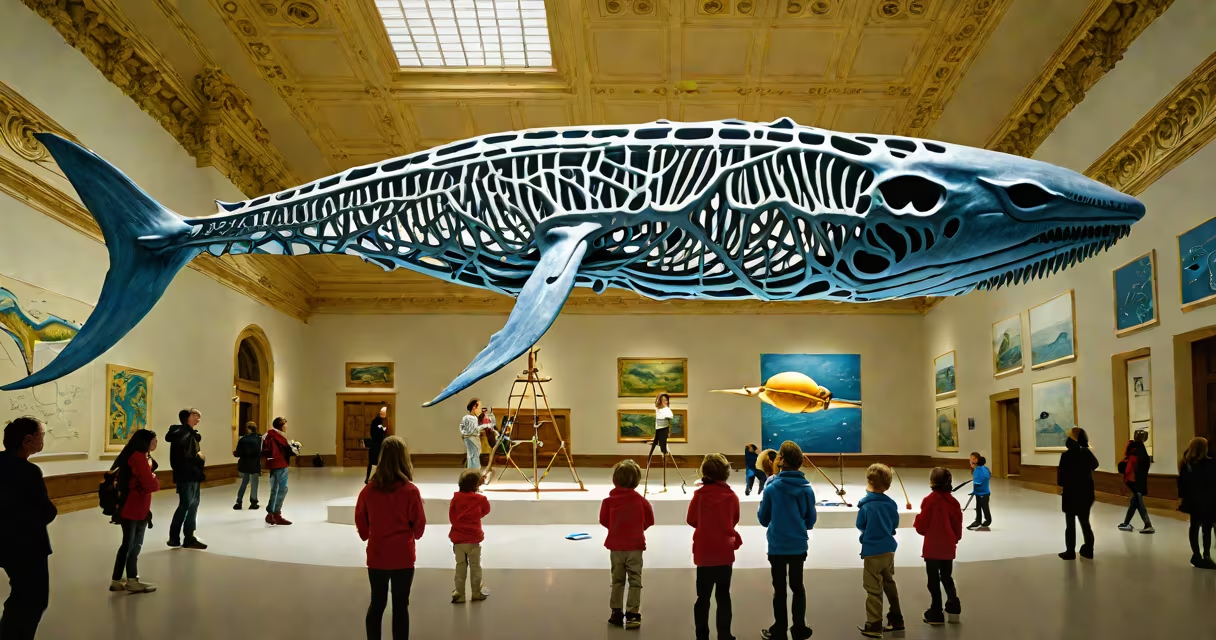
We then walked through the "Ocean Hall," where a 94-foot-long blue whale skeleton hung above a tank simulating ocean currents. A nearby kiosk allowed visitors to manipulate water flow and observe how changes affect marine ecosystems. My daughter, aged 10, adjusted the temperature slider and watched virtual fish migrate north-a direct simulation of climate-driven species shifts.
Afterward, we attended a 45-minute talk by a Smithsonian biologist discussing coral bleaching. She showed live footage from the Great Barrier Reef and explained how pH levels below 7.8 cause reef collapse. The session ended with a QR code linking to a downloadable activity guide for classroom use.
This visit illustrated how national science museums blend research, education, and public engagement. The exhibits weren't just informative-they invited participation, reflection, and follow-up learning.
National science museums play a important role in countering misinformation. According to a 2021 Pew Research Center study, 64% of Americans trust science institutions like the Smithsonian more than social media for accurate science reporting. These venues provide verified, context-rich content in accessible formats.
They also support workforce development. The Smithsonian's "STEM Scholars Program" partners with 12 historically Black colleges and universities to fund undergraduate research internships. Since 2018, over 300 students have participated, with 78% pursuing advanced degrees in science fields.
For those seeking deeper access, the national museum website offers digitized archives, online exhibitions, and virtual tours. The "Digital Collections" portal includes over 10 million high-resolution images of fossils, minerals, and historical instruments-available for academic use under Creative Commons licenses.
Understanding the national science museum requires recognizing its dual function: as a repository of knowledge and a changing space for discovery. These institutions don't just display science-they make it visible, tangible, and relevant to everyday life.