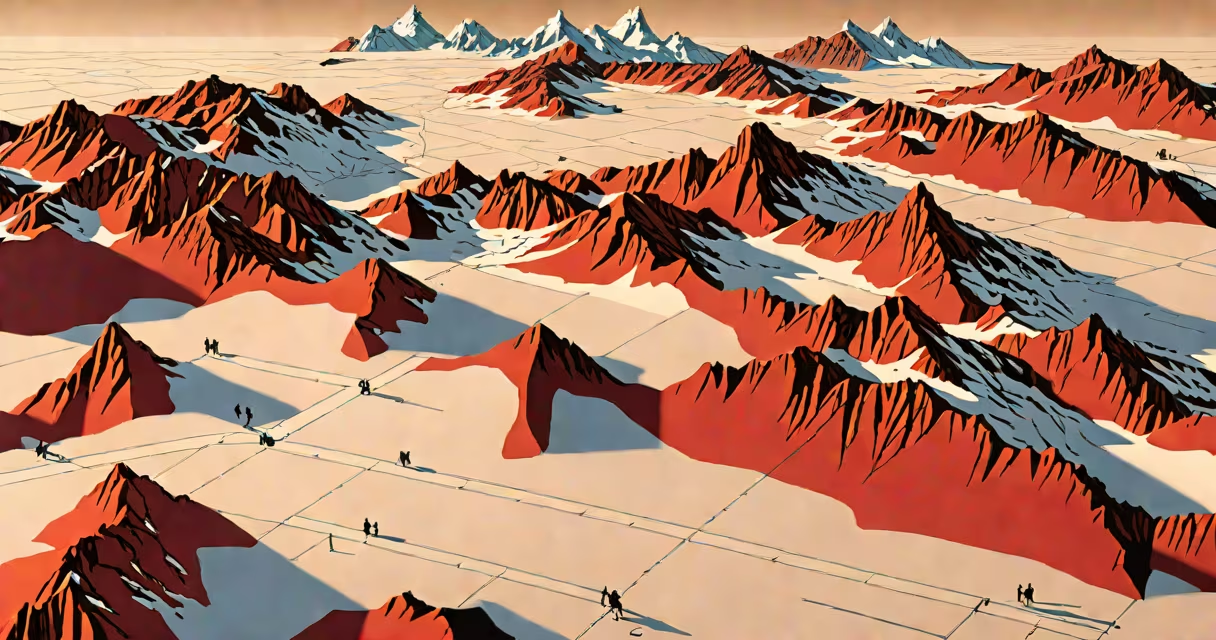
The phrase "shadow over snowy mountains crimson desert" describes a striking natural scene where high-altitude snowfields cast long, dark silhouettes across a desert field stained deep red by iron-rich soil. The image juxtaposes frozen alpine zones with arid, sun-baked terrain under a single sky, creating a visual tension between cold and heat, stillness and motion.
This phenomenon occurs when sunlight hits mountain ranges at low angles-typically dawn or dusk-casting shadows that stretch across valleys and plains. In regions like the Mojave Desert, where snow-capped peaks such as Mount Whitney rise above vast expanses of rust-colored earth, the effect becomes pronounced. The red hue comes from oxidized iron in the soil, which gives the desert its name and appearance.
Photographers and geographers use this term to describe scenes where elevation, light, and geology converge. The contrast isn't just aesthetic-it reflects real environmental dynamics. Snowmelt from high elevations feeds underground aquifers that sustain desert ecosystems, including species like the Mojave desert tortoise, which relies on these fragile water cycles.
Light direction determines the length and shape of shadows. At sunrise or sunset, the sun's angle is shallow, causing shadows to extend far beyond their daytime reach. When a mountain range lies between the observer and the sun, the shadow falls across the land below. In desert areas with minimal vegetation, the ground surface shows every detail of that shadow's path.
Geological composition amplifies the color contrast. The Mojave Desert contains sedimentary rock layers rich in hematite-iron oxide-which produces the deep red and orange tones seen in satellite images and on the ground. These colors intensify under direct sunlight, making the red desert appear almost glowing against the gray-blue shadows of snow-covered peaks.
A 2021 study by the U.S. Geological Survey confirmed that spectral reflectance in the Mojave varies between snow-covered and desert surfaces. Snow reflects 80-90% of visible light, while red soil absorbs most wavelengths except red and near-infrared, resulting in high contrast in both photography and remote sensing.
Not all desert-mountain contrasts are the same. The intensity of the shadow and color depends on altitude, time of year, and atmospheric clarity.
| Type | Conditions | Visual Effect |
|---|---|---|
| High-contrast winter | December-February, snow cover, clear skies | Sharp black shadows on red earth; vivid color separation |
| Low-angle summer | June-August, dry air, high sun | Long, blurred shadows; muted reds due to haze |
| Post-storm | Rainfall followed by rapid drying | Moist red soil reflects light differently; shadows appear darker and wetter |
Winter scenes offer the clearest visual impact. After a snowfall, the fresh powder enhances contrast. A photograph taken at 6:15 a.m. on January 12, 2023, from the eastern edge of Death Valley National Park showed a 12-kilometer-long shadow stretching from the Panamint Range across the Badwater Basin-a flat, salt-crusted desert floor. The shadow fell across a field of cracked red earth, creating a natural boundary between frozen and dry zones.
People often assume the red desert is artificial or digitally enhanced. In reality, the color results from natural oxidation processes over thousands of years. Iron in the soil reacts with oxygen and moisture, forming iron oxides-same mineral that gives rust its color. This process happens slowly, but the result is immediate and visible.
Another error is thinking the shadow is always dark gray. In fact, shadows in high-altitude deserts can take on a bluish tint due to Rayleigh scattering-the same reason the sky appears blue. When sunlight passes through thin atmosphere at low angles, shorter wavelengths (blue) scatter more, coloring the shadowed areas cool tones.
I once stood at the edge of the Amargosa Valley during a late winter sunrise. The snow on the Grapevine Mountains had just begun to melt. As the sun crept over the ridge, the shadow moved across the desert floor like a slow tide. I watched it pass over a cluster of Joshua trees and then settle on a dried creek bed. The shadow wasn't just black-it had hints of violet and silver, especially where it touched the damp clay.
Beyond aesthetics, this scene illustrates ecological interdependence. The snowpack acts as a seasonal reservoir. Meltwater flows into underground channels, feeding springs that support native plants and animals. The Mojave desert tortoise, for example, emerges from burrows only when surface moisture is available. Its survival hinges on the timing of snowmelt and subsequent runoff.
National parks and conservation groups monitor these patterns using satellite imagery. The National Park Service tracks changes in snow coverage and desert surface temperature to predict habitat shifts. In 2022, researchers noted that earlier snowmelt due to climate change disrupted the tortoise's breeding cycle-offspring hatched too early, before food sources were available.
Understanding the "shadow over snowy mountains crimson desert" isn't just about capturing a photo. It's about reading the land. The shadow tells a story of water, time, and balance. It reveals how distant systems-glaciers, weather, soil chemistry-interact across miles.
When you see this scene, look past the drama. See the connection. The snow doesn't just fall-it sustains. The shadow doesn't just hide-it marks time. And the desert isn't dead-it breathes, waits, and survives.