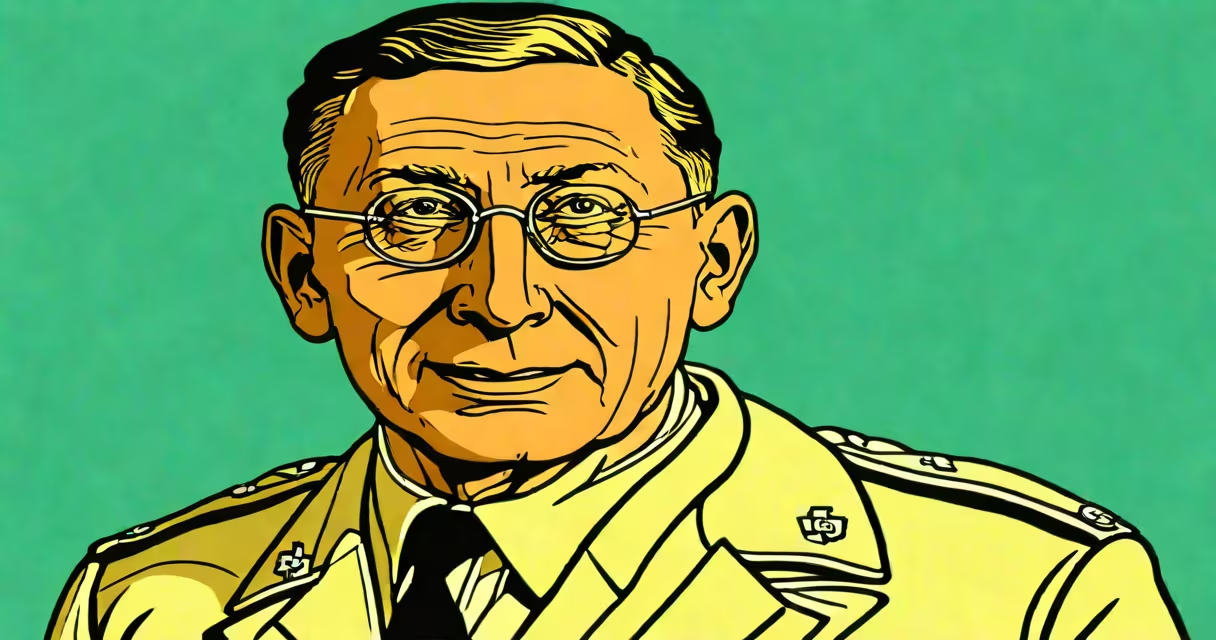
Sir Frederick Banting was a Canadian physician and scientist who, along with Charles Best, isolated insulin in 1921, transforming type 1 diabetes from a fatal diagnosis into a manageable condition. This breakthrough led to the first effective treatment for a disease that previously caused rapid decline and death in children and young adults.
Banting's work began at the University of Toronto, where he proposed that the pancreas contained a substance capable of regulating blood sugar. He secured laboratory space and a team, including Best, a medical student, to test his theory. After months of experimentation involving ligating the pancreatic ducts in dogs to destroy the digestive cells while preserving the insulin-producing islets, they successfully extracted a substance that lowered blood glucose levels in diabetic animals.
The first human trial occurred in January 1922, when Leonard Thompson, a 14-year-old boy with severe diabetes, received an extract from a calf pancreas. His blood sugar dropped dramatically within hours. Within days, his symptoms improved. The success of this treatment launched insulin into clinical use worldwide. By 1923, insulin was being manufactured under license and distributed globally.
Insulin is a hormone produced by beta cells in the pancreas. It signals cells to absorb glucose from the bloodstream, lowering blood sugar. In type 1 diabetes, the immune system destroys these beta cells, leaving patients unable to produce insulin. Without it, glucose builds up in the blood, leading to coma and death.
Banting and Best's method involved extracting insulin from animal pancreases-primarily beef and pork-then purifying it to reduce side effects. Early preparations were impure and caused allergic reactions, but purification techniques improved rapidly. By 1926, insulin was refined enough to be administered safely to thousands of patients.
Before insulin, children with type 1 diabetes typically survived less than two years after diagnosis. With insulin therapy, survival rates rose to decades. A 1930 study published in The Lancet documented that 70% of treated patients lived beyond five years-a dramatic improvement over the pre-insulin era.
Modern insulin therapy uses various forms based on onset, peak, and duration. These categories evolved from Banting's original animal-derived extracts:
| Type | Onset | Peak | Durability | Source |
|---|---|---|---|---|
| Regular (short-acting) | 30 minutes | 2-3 hours | 3-6 hours | Animal pancreas (early); recombinant DNA (now) |
| Intermediate (NPH) | 1-2 hours | 4-12 hours | 12-18 hours | Animal insulin modified with protamine |
| Long-acting (e.g., glargine) | 1-2 hours | No peak | 24 hours | Recombinant human insulin |
Today, most insulin is synthesized using recombinant DNA technology. Human insulin genes are inserted into yeast or bacteria, which then produce pure human insulin. This eliminated the risk of immune reactions seen in early animal insulin. The shift began in the late 1970s and was completed by the 1990s.
Insulin remains essential for managing type 1 diabetes and many cases of type 2 diabetes. According to the American Diabetes Association, over 1.6 million people in the U.S. have type 1 diabetes, and nearly all require daily insulin injections or pump therapy.
Global access remains uneven. The World Health Organization reports that insulin is included in the WHO Model List of Essential Medicines, yet 1 in 3 people with diabetes in low-income countries lack consistent access. In 2021, the average cost of insulin in the U.S. exceeded $300 per vial-up from $20 in 1980-due to patent strategies and pricing models.
Despite advances, insulin delivery methods still rely on injections or pumps. Continuous glucose monitors (CGMs) now pair with insulin pumps to automate dosing via closed-loop systems. The first FDA-approved artificial pancreas system launched in 2016, reducing hypoglycemia events by 40% compared to manual management.
Many assume insulin was discovered overnight. In reality, Banting spent over a year refining his hypothesis and securing support. He initially struggled to gain funding from the university and had to appeal directly to the Canadian government for resources.
Another myth is that Banting worked alone. He credited Charles Best, a 22-year-old medical student, as a key collaborator. Best performed most of the surgical procedures and daily monitoring. Banting later wrote in his memoirs that "without Best, we would have failed."
A lesser-known fact: Banting was awarded the Nobel Prize in Physiology or Medicine in 1923, shared with John Macleod. Banting felt Macleod had little direct role in the lab work. He publicly returned half his prize money to the University of Toronto and gave it to Best, who had not been recognized by the Nobel committee. This act underscored Banting's belief in fair credit.
I once met a man in Ontario whose father died of diabetes in 1948. He described how his father's last weeks were marked by confusion, weight loss, and dehydration-all classic signs of uncontrolled hyperglycemia. He said, "My dad never knew he could've lived longer. We didn't even know insulin existed until after he passed."
That story illustrates the life-or-death stakes of Banting's work. Before insulin, families faced the inevitability of losing loved ones within months. Afterward, survival became possible. In 1923, the Toronto General Hospital reported treating 200 diabetic patients with insulin within six months. By 1930, over 100,000 people in North America were receiving insulin therapy.
Banting's legacy extends beyond science. He was knighted in 1934 for his contributions to medicine. The Canadian government established the Sir Frederick Banting Research Foundation in 1972 to fund ongoing diabetes research. The foundation has supported over 1,200 projects since its founding.
His name appears on monuments, schools, and hospitals worldwide. The Banting House in London, Ontario-the site of his early experiments-is preserved as a national historic site. Visitors can see the original notebook entries detailing his 1921 trials.
He also contributed to wartime medicine. During World War II, Banting advised the British Ministry of Defence on nutrition and wound healing. He helped develop high-protein diets for soldiers and advocated for better medical supplies in combat zones.
Today, insulin remains central to global health. The International Diabetes Federation estimates that 537 million adults live with diabetes, and 90% of them require insulin at some stage. The continued relevance of Banting's work underscores the lasting impact of a single scientific insight.
Sir Frederick Banting's name is inseparable from the story of insulin. His collaboration with Charles Best, persistence through institutional resistance, and commitment to equitable recognition set a standard for scientific integrity. The treatment he helped create continues to save lives daily across continents and generations.